Playing at an online casino usually starts out as fun and simple. You play a few rounds, win a little, and it seems like you’re almost there. But that’s when things start to change. Most players don’t lose money just because of the games; they lose money because gambling changes how they make decisions over time.
It’s not just about the odds. The American Psychological Association says that gambling activates the brain’s reward system, and studies suggest that as many as 5% of teens and young adults who gamble develop a disorder. In simple terms, your brain starts chasing the feeling of winning, not thinking logically about money. That is why even with a plan, emotions can take over quickly, and losses start adding up.
Psychological Factors Behind Why Players Lose Money in Online Casinos
Fast Gambling Weakens Judgment
Online casino play is fast by design. Players can move from one bet to the next in seconds, often without any natural pause. This speed matters because quick gambling reduces reflection. Instead of stopping to think about money, odds, or limits, the player stays locked into momentum.
That is one reason online gambling can feel more intense than expected. A person may start with a small amount of money, but repeated betting adds up quickly. In a physical casino, there may be breaks between games, social interruptions, or environmental cues to stop. In an online casino, those stopping points are often missing. Another overlooked factor is casino withdrawal time. When withdrawals are not instant, players often continue gambling instead of stopping, which increases total spending during a session.
Chasing Losses Turns a Bad Session Worse
One of the clearest psychological reasons players lose money is chasing losses. This happens when someone continues gambling to recover what they have already lost. It feels logical at the moment because the player sees one more win as a way to “fix” the session. But the odds have not improved, and the house still holds the same advantage.
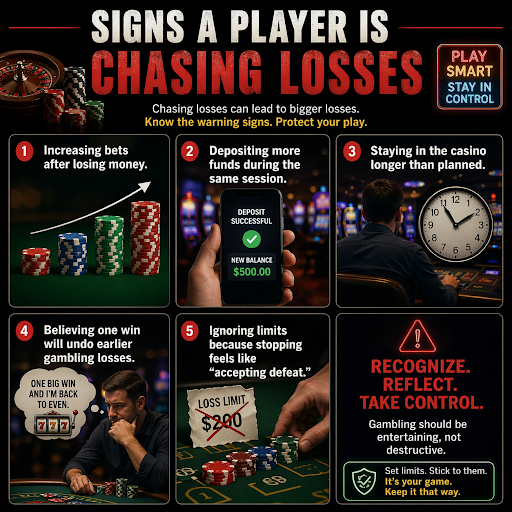
Real data backs this up. A 2022 study using account-based data from 16,771 online casino players found that frequent session depositing was the strongest indicator of chasing losses and was more common among high-risk players. In that study, frequent session deposits appeared in 18% of sessions among high-risk players, compared with only 5% among low-risk players.
The Brain Misreads Odds
A major part of gambling psychology is that people often misread odds when emotion is involved. Players may believe that a win is “due” after several losses, or that a near-miss means success is getting closer. In reality, most casino outcomes do not work that way.
distorted thinking is one reason gambling is different from many other habits. UCLA Health notes that gambling is strongly associated with cognitive distortions, especially the belief that if someone keeps gambling, they will eventually win back what they lost. That belief can keep players risking more money even when the house remains in control.
The Responsible Gambling Council also explains that dopamine is released during gambling and that this excitement can occur even when players are not winning. That helps explain why casino sessions can continue even while money is going down.
Common Thinking Errors in Gambling
- “A win must be close now.”
- “I almost won, so I should keep going.”
- “I know this casino game better than most players.”
- “If I stay longer, I can beat the odds.”
- “The house cannot keep winning forever.”
Early Wins Can Create Overconfidence
Every problem doesn’t start with a loss. Some players lose money because they win early and get too sure of themselves. Even when the odds are still in the house’s favor, a short winning streak can make a casino game feel like it can be beaten.
That too much confidence can make people act differently very quickly. Players start to raise the stakes, play longer, and trust their gut over their head. They don’t leave with their money; they stay because the session feels personal now. In a lot of cases, the player stops following the odds and starts to think they are reading the momentum correctly.
Player Insight: Winning early is good for your mind because it makes you feel in control. But in a casino, feeling in charge and really being in charge are not the same thing.
Digital Money Feels Less Real
Another psychological reason people lose money at casinos is that spending money online doesn’t always feel like spending money. Players can see chips, cash, or tokens leaving their hands in a real casino. When you use cryptocurrency at casino sites, the money often shows up as numbers on a screen. This can make each bet feel less important.
A lot of players don’t realize how important this small change in thinking is. People are more likely to gamble when money doesn’t seem real, and they don’t notice their losses until later. When you make a deposit, it may seem like you’re just doing something with your account instead of making a real financial decision. Because of this, the player might spend more money than they meant to before they realize how much they have lost. Behavioral patterns seen when money feels less real:
- Players underestimate total spending during a session.
- Small deposits are treated as harmless.
- Repeated bets feel less serious than cash spending.
- Gambling continues because the balance does not feel immediate.
- Losses feel delayed until the session ends.
Repetition Creates a Trance-Like Pattern
One of the less obvious psychological reasons players lose money in online casinos is repetition. The repeated cycle of spin, result, and replay can gradually pull a player into a rhythm where gambling starts to feel automatic rather than intentional. At first, each action may feel like a separate choice. But after enough rounds, the process becomes so smooth and familiar that the player stops thinking carefully about each bet.
This trance-like pattern is especially common in online casino environments because the design supports continuous play. There are very few natural breaks between actions, and the player can move from one round to the next almost instantly. When this happens, attention shifts away from important questions like how much money has been spent, how long the session has lasted, or whether the odds still make sense. The player is no longer fully evaluating each decision. Instead, they are following the rhythm of the game.
That automatic rhythm can reduce self-awareness. A person may keep gambling not because they made a clear decision to continue, but because the next click feels like a natural extension of the last one. In that state, time can feel shorter, losses can feel less immediate, and the value of money may start to blur. What should be an active decision turns into a passive habit, and that is where the casino gains an even stronger advantage.
Another issue is that repetition dulls emotional resistance. In the beginning of a session, a player may notice each loss and react carefully. But after many rounds, losses can start to feel routine rather than important. This makes it easier to keep going without stepping back. The player becomes focused on continuity rather than control, and that shift often leads to more gambling than originally planned.
Practical Tips for Safer Play
If someone chooses to play at an online casino, staying safe is not only about using a licensed platform or checking site features. Online casino safety depends on personal discipline just as much as technology. That is because most gambling losses do not happen in one dramatic moment. They build through small, emotional decisions made over time.
Understanding gambling psychology only helps when players actually use that knowledge during a session. It is one thing to know that the house has the advantage, but it is another thing to stop when frustration kicks in, avoid chasing losses, or stick to a spending limit after a few quick wins. In simple terms, safer play comes down to creating habits that protect both your money and your judgment before emotions start taking over.
Actionable Tips
- Set a fixed money limit before starting any casino session. Decide in advance how much money you can afford to lose, and treat that amount as final.
- Choose a stop point for both wins and losses. Many players only plan for losing, but winning can also lead to overconfidence and bigger bets.
- Never deposit again just to recover earlier losses. Once gambling becomes about getting money back, decision-making usually gets worse.
- Take a break after a losing streak. A short pause can help reset your thinking and stop emotional betting from building.
- Learn the odds before spending money on any game. Even a basic understanding of how a casino game works can help you make smarter choices.
- Track deposits, not just wins or withdrawals. Players often remember what they won, but overlook how much money they kept adding during the session.
- Stop immediately if frustration starts driving decisions. The moment gambling feels emotional instead of entertaining is usually the moment risk starts rising.
Final Thoughts: Emotion Is Often the Real Cost
Players lose money in online casinos because gambling blends two powerful forces: unfavorable odds and human psychology. The house keeps its advantage in the background, while the player experiences excitement, urgency, frustration, and hope in the foreground. That gap is where many casino losses happen.
When players understand how the house edge works, how chasing losses grows, and how the brain misreads odds, they are better prepared to protect their money. The smartest approach to any casino is to treat gambling as entertainment, not as a strategy for income.