Casinos accept Litecoin because it costs almost nothing to settle, cannot be reversed once confirmed, and does not require a card processor willing to work with gambling. Speed and low fees for players are a side effect of decisions made for other reasons.
What Does It Cost a Casino to Accept Your Money?
More than most players realise, and the cost varies enormously by method. Understanding that gap is most of the answer to why casinos accept Litecoin in the first place.
A card deposit passes through a payment processor. The processor takes a percentage, and gambling is classed as a high-risk industry, which means the percentage is higher than it would be for a shop selling shoes. Some banks decline to process gambling payments at all, which limits which processors an operator can even approach. This is one of the structural reasons crypto casinos and fiat casinos operate differently.
Then there is the reversal risk, covered in the next section.
A Litecoin deposit moves from a wallet to an address. The network takes a fee measured in fractions of a cent. There is no processor, no merchant account, and no third party deciding whether the transaction is acceptable.
That gap is the starting point for everything else.
Chargebacks: The Risk Litecoin Removes
Here is the part almost nobody writes about, and it matters more than speed.
A card payment can be reversed after the fact. A player deposits, plays, loses, and then disputes the charge with their bank. Depending on the card network and the reason given, that dispute can be filed long after the money has been spent. The casino has already paid out winnings or absorbed the loss, and the deposit gets clawed back anyway.
Operators handle this with fraud checks, verification requirements and reserves held against disputes. All of that costs money and adds friction for legitimate players.
A confirmed Litecoin transaction is irreversible. Not by the player, not by a bank, not by the casino. Once it has enough confirmations, it is settled permanently.
This is not a feature anyone designed for gambling. It is how the blockchain works. But for an operator it removes an entire category of loss, and that alone explains a large part of why casinos accept Litecoin and other crypto alongside it.
The same finality applies to you, incidentally. A Litecoin deposit sent to the wrong address is gone in exactly the same way.
Why Litecoin Specifically and Not Just Any Crypto?
Every cryptocurrency removes chargebacks. That does not make them equally useful as a cashier.
Bitcoin carries the strongest brand recognition, which matters for conversion. It also gets congested, and when it does, fees rise and confirmations slow. An operator processing thousands of small withdrawals feels that immediately.
Ethereum used to have this problem badly and no longer does. Network upgrades and the shift of most activity to Layer 2 have left mainnet fees at cents or less for a plain transfer. What remains is unpredictability. Fees still climb during congestion, and an operator planning payout costs prefers a rail that does not move.
USDT solves the price problem but introduces network complexity. It exists on Tron, Ethereum, Solana and several other chains. Each one is a separate integration for the operator, and a separate support ticket when a player sends to the wrong one.
Litecoin sits in a useful middle. Blocks land roughly every 2.5 minutes. Fee can change when prices change. There is one network, so there is nothing for a player to select incorrectly. The network handles well over fifty transactions per second, which means it does not clog under normal load.
For litecoin casino payments specifically, that combination means fewer failed deposits, fewer support tickets, and micro-withdrawals that do not cost more to send than they are worth.
LTC Settlement and the Casino’s Treasury Problem
There is a catch on the operator side, and it explains something players often notice without understanding.
A casino takes deposits in Litecoin but has obligations in fiat. Staff, licensing, game providers, marketing. If LTC drops fifteen percent over a week, the operator’s holdings drop with it while the bills stay the same.
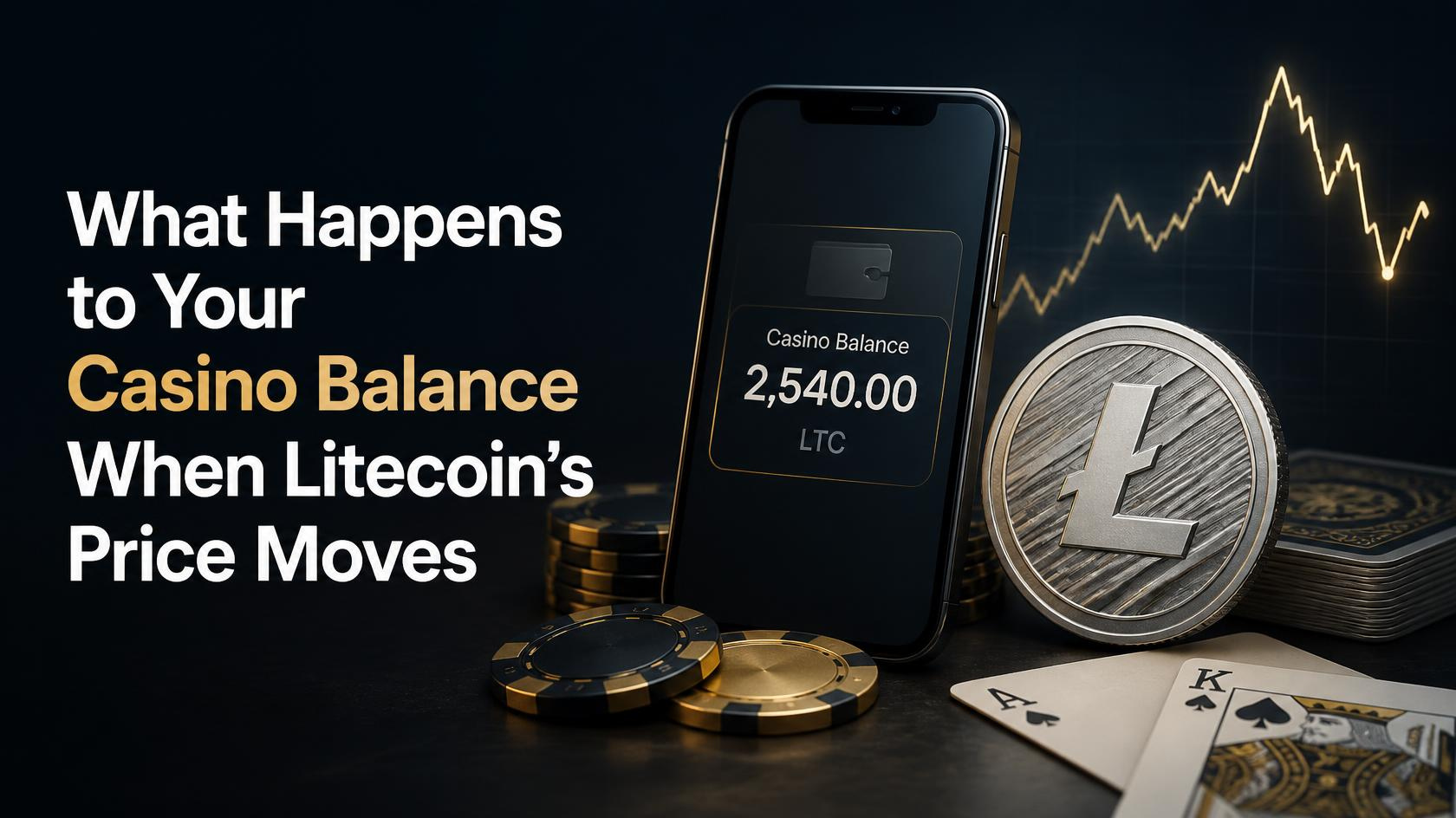
Most operators handle this by converting deposits to an internal balance denominated in dollars or euros. Your LTC arrives, gets valued at that moment, and your account shows a fiat figure. When you withdraw, the balance converts back at whatever the rate is then.
This is why your balance often does not move when the LTC price does. Some platforms let you hold and view balances in crypto units instead, but that is a specific choice rather than the default, and the cashier will tell you which applies.
LTC settlement being cheap and fast is what makes the conversion practical. On a chain with high fees, converting small deposits would not be worth the cost of doing it. This is a structural point about litecoin casino payments rather than a policy any individual operator chose.
Why Do Casinos Prefer Traceable Payments?
This one surprises people. A casino wants transparent payments, not private ones.
Licensed operators run anti-money-laundering checks. That requires being able to see where funds came from and where they went. A payment method that obscures the trail creates a compliance problem rather than solving one, which is part of why casinos accept Litecoin more readily than genuinely private coins.
Litecoin is transparent by default. Every transaction sits on a public ledger, which fits how a casino’s compliance systems already work. Even platforms that skip upfront identity checks still run these background checks, which is worth understanding before assuming no-KYC casinos operate without any oversight at all.
Litecoin does offer an optional privacy layer called MWEB, and most gambling platforms do not support it for exactly this reason.If you send from an MWEB-enabled wallet, most casinos will not credit the deposit
How Many Casinos Accept Litecoin?
More than most players assume.
Over 1,100 online casinos accept Litecoin, which works out at roughly 63% of all tracked online casinos. That puts it ahead of most alternative coins and, interestingly, ahead of USDT on acceptance breadth even though stablecoins move far more money by deposit value.
Two different numbers there and both are worth understanding. Litecoin is accepted more widely. USDT carries more volume. Wide acceptance suggests operators find litecoin casino payments straightforward to integrate and support, which is a different signal from players choosing to move large sums through it.
What Litecoin Acceptance Means for You as a Player
The useful thing about knowing why casinos accept Litecoin is that it shows you where your interests actually line up with theirs.
Both sides want settlement to be cheap. The operator saves on processing, you keep more of a small deposit.
Both sides want it fast. The operator wants deposits credited without support intervention, you want to play.
Both sides want it final. The operator is protected from reversals, and you get withdrawals that cannot be pulled back once sent.
Where they diverge is the conversion question. Converting your deposit to a fiat balance protects the operator’s treasury. Whether it suits you depends on how long your balance sits and what you expect the price to do. Our guide to Litecoin casino platforms covers what to check in the cashier before you deposit.
Cheap to Settle, Impossible to Reverse
Ask why casinos accept Litecoin and the marketing answer is speed and low fees. The real answer is that a confirmed transaction is permanent and costs almost nothing to process.
Everything players like about paying with LTC follows from that. Fast deposits because there is no processor in the middle. Small fees because the network is cheap. Straightforward withdrawals because there is nothing to dispute afterwards.
It is a rare case where the operator’s interests and the player’s point in the same direction. Worth knowing which parts do, and which part, the conversion of your balance, does not.
Responsible Gambling Notice: For players 18+ (or 21+ where required). The payment method you use has no effect on the house edge or your chances in any game.