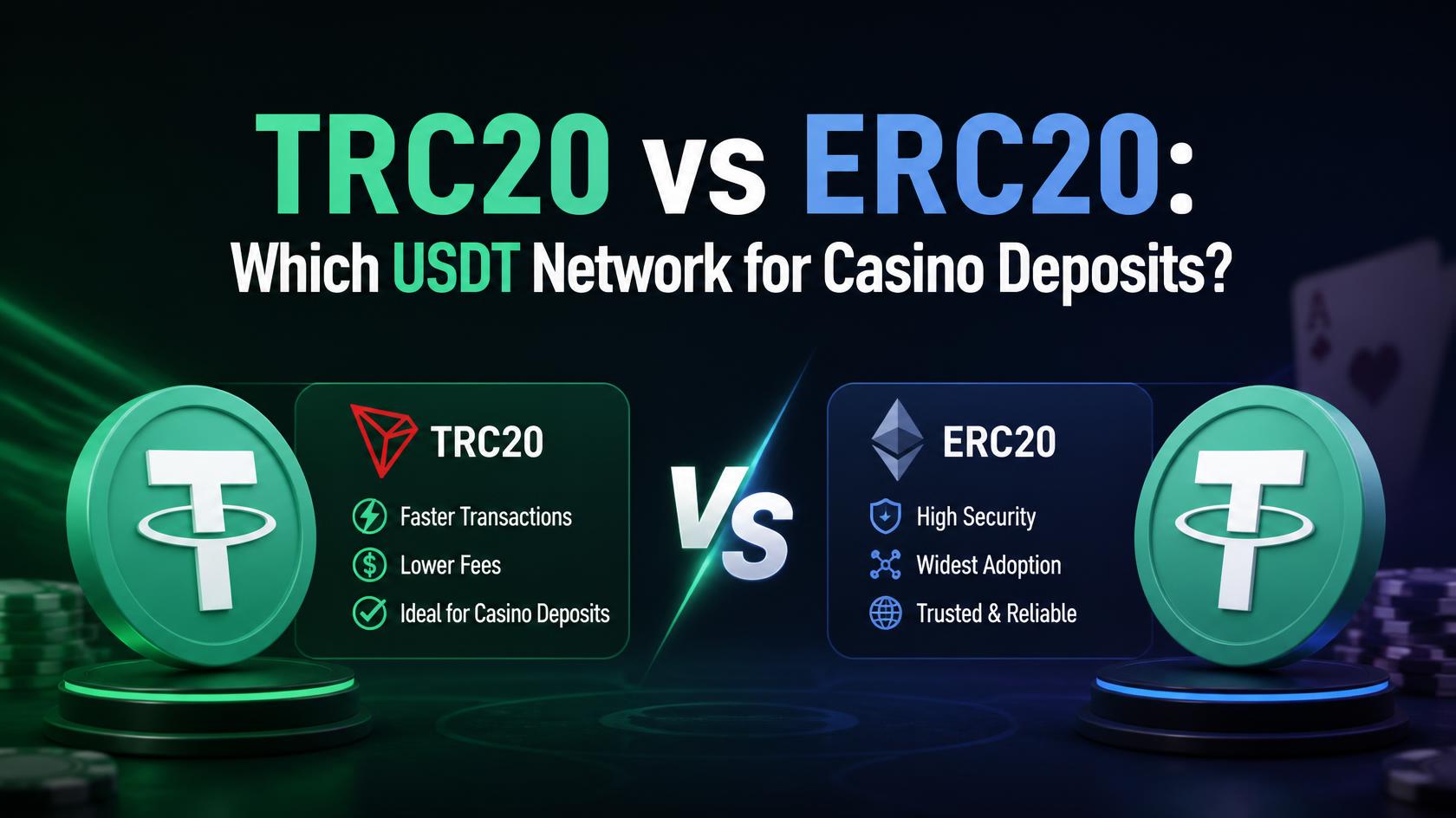
TRC20 vs ERC20 is a choice you make in a dropdown, not a debate about blockchains. You go to move USDT out of an exchange, and the screen asks which network to send it on. Pick TRON and you pay one fee. Pick Ethereum and you pay another. The USDT still aims to hold the same dollar value either way.
Both are versions of Tether’s dollar-pegged token sitting in separate contracts on separate chains. That is precisely why the choice matters, because the two are not interchangeable. A TRON transfer settles in about a minute. It costs roughly 2 to 4 dollars when you burn TRX, or under a dollar if you already hold energy. An Ethereum transfer runs anywhere from 2 to 20 dollars and takes longer to finish settling. So for most casino deposits, TRON is the cheaper pick.
That is the short answer, and it holds most of the time. The rest of this guide covers the cases where it does not, because Ethereum is sometimes the right call. It also covers the one mistake that quietly costs people their whole deposit.
What Is the Difference Between TRC20 and ERC-20?
Neither one is a currency. Both are token standards, which is just a shared rulebook that tells a blockchain how a token should behave.
TRC20 in plain terms
TRC-20 is the token standard on the TRON network. A TRC20 wallet address always starts with the letter T. When somebody says “send me USDT on TRON,” they mean TRC-20.
ERC20 in plain terms
ERC-20 is the token standard on Ethereum. Those addresses start with 0x. It came first, and thousands of tokens still use it.
Here is the part that trips people up. TRON USDT and Ethereum USDT are both Tether’s dollar-pegged tokens, but they sit in separate contracts on separate chains. They are meant to hold the same value. They are not interchangeable on their own. The standard tells you which road the token is travelling on, and you need a supported conversion or bridge to move it from one road to the other.
The Same Token on Two Separate Chains
Tether mints USDT on more than a dozen networks. Each copy holds the same peg and the same redemption promise. What changes is the rail it travels on.
TRON has quietly become the busier USDT network of the two. USDT supply on TRON passed 85.3 billion dollars in March 2026, which put it ahead of Ethereum for the first time. That shift explains something you have probably noticed. Open almost any crypto cashier and TRON sits at or near the top of the network list.
None of this makes one copy safer than the other. It just means more people are already holding the TRON version, so more services default to it. If you want the wider background on why operators lean on dollar-pegged coins at all, the piece on stablecoins covers that ground.
TRC20 vs ERC20 Fees: What a Transfer Costs in 2026
This is where most guides are out of date. The familiar line goes like this. TRON costs pennies, Ethereum costs a fortune. That was true a few years ago. It is not a safe assumption now.
What a TRC20 USDT transfer costs
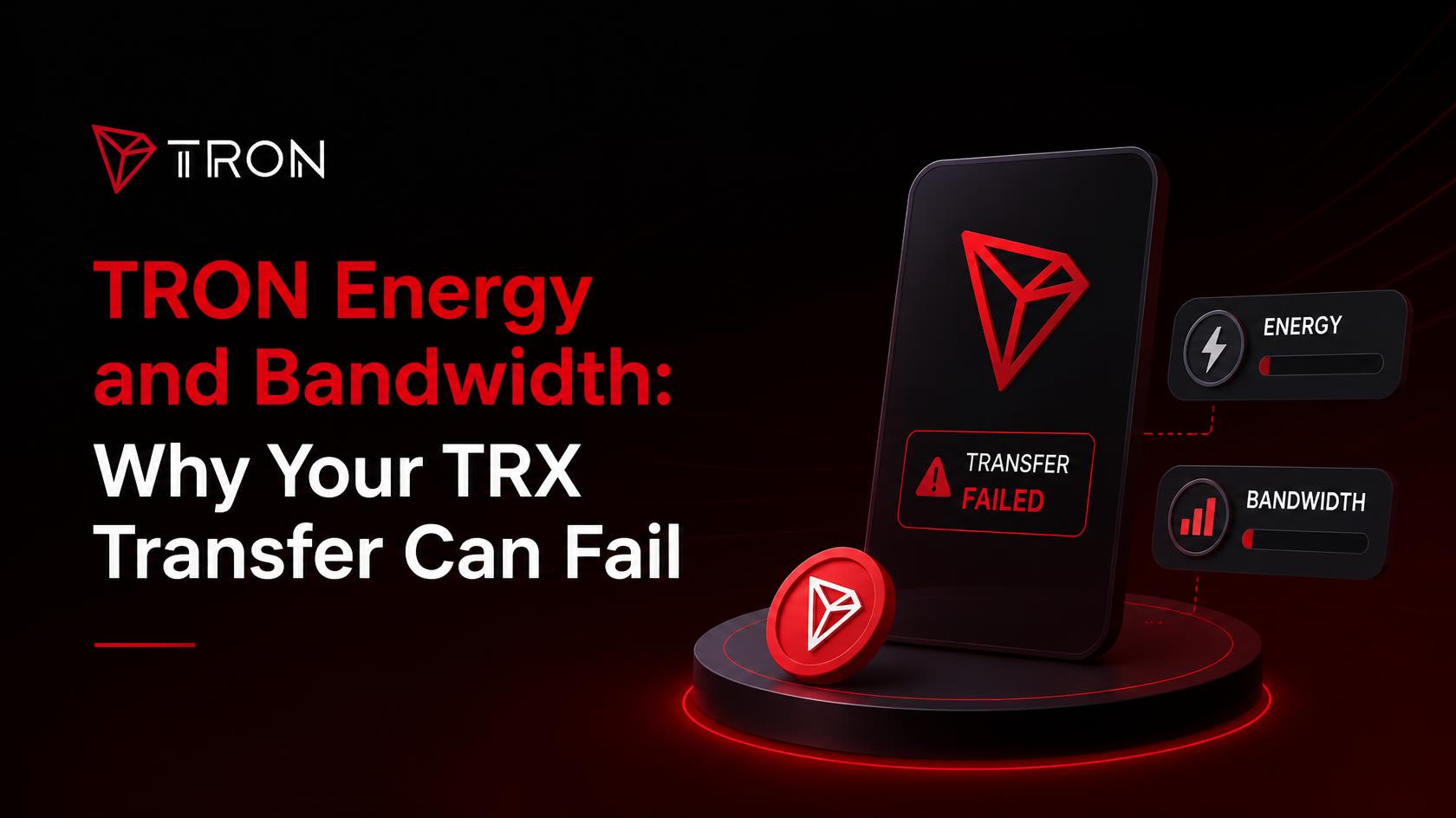
TRON does not charge a gas fee. It charges two resources called energy and bandwidth, and a token transfer eats energy.
A USDT transfer to an address that already holds USDT needs around 65,000 Energy. Sending to an address with a zero USDT balance can cost roughly double. The address may already exist on TRON. The extra cost comes from the USDT contract creating a new balance record for it.
There are three ways to cover that, and the price swings hard between them.
- Burn TRX. A normal transfer can burn roughly 6.5 TRX when you have no Energy ready. With TRX near 32 cents, that comes to about 2.08 dollars. A transfer to an address with a zero USDT balance can need roughly twice as much. Check the wallet estimate before you confirm. The Energy requirement moves, and so does the price of TRX.
- Rent energy. Usually lands under a dollar.
- Stake your own TRX. Routine transfers then cost you nothing extra.
So a TRON transfer can cost four dollars or it can cost nothing, and both figures are honest. It comes down to how you cover the energy. Setting that up is its own job, and the guide to energy and bandwidth walks through it.
What an ERC20 USDT transfer costs
Ethereum works differently. There is no fixed resource requirement to plan around. You pay gas, and gas is priced by live demand for block space.
As of August 2026, a USDT transfer on Ethereum typically ran between 2 and 20 dollars. Quiet hours sit at the low end. Busy hours push it up fast, and you have very little control over which one you get.
One habit is worth keeping whichever chain you use. Always check the date next to a fee figure, including the ones in this article. Both numbers above move with market conditions, and most pages quoting them carry no date at all.
Speed and Confirmation Times Compared
Put TRC20 vs ERC20 side by side on speed and TRON has the edge. Both are quick enough that you will not sit around waiting, though. They just get there by different routes.
TRON produces a block every three seconds. A block becomes irreversible once 19 of the network’s 27 Super Representatives have built on top of it, which normally takes about a minute.
Ethereum produces a block every 12 seconds. Full finality arrives later, around 12.8 minutes.
Now the practical part, which almost nobody mentions. Casinos do not wait for chain finality. They credit your balance after a set number of confirmations, and every operator picks its own number. So the wait you actually feel comes from the cashier policy as much as from the network. A fast chain with a cautious confirmation rule can feel slower than you expect.
TRC20 vs ERC20 Compared Side by Side
| Factor | TRC20 (TRON) | ERC20 (Ethereum) |
| Address starts with | T | 0x |
| Block time | 3 seconds | 12 seconds |
| Practical settlement | About 1 minute | About 13 minutes to full finality |
| Typical transfer cost | 2 to 4 dollars burning TRX, under 1 dollar with energy | 2 to 20 dollars |
| What sets the cost | Fixed energy requirement | Live gas demand |
| Fee paid in | TRX; some wallets and services can handle the network fee and deduct a USDT charge instead | ETH only |
| Suits | Deposits and payouts | Balances already sitting on Ethereum |
Fee and speed figures reflect July and August 2026. Check current costs before a large transfer.
Which Network Is Safer, TRC20 or ERC-20?
People often treat TRC20 vs ERC20 as a security question with an obvious answer. It is not quite that simple.
Ethereum is secured by a very large validator set spread across the world. TRON runs on 27 elected Super Representatives that take turns producing blocks. By the usual measure of decentralization, Ethereum is the more distributed of the two.
Here is the honest answer for somebody funding a casino account. The difference in how the two chains are built matters less than getting the deposit details right.
What affects you is far more ordinary. Copying an address wrong. Picking the wrong network. Sending to a deposit route the casino does not support. Leaving a wallet with no way to pay its own fees. Those are the risks worth your attention.
Can You Send TRC20 USDT to an ERC20 Address?
No. They are separate chains and the funds do not cross on their own.
That said, this particular pairing is harder to get wrong than people assume, and it is worth knowing why. USDT exists on more than a dozen chains, and the wrong network problem is not equally risky across all of them.
Why the address format protects you
TRON addresses start with T. Ethereum addresses start with 0x. They look nothing alike. Most wallets and exchanges check the format before releasing a withdrawal. So a TRON address pasted into an Ethereum withdrawal usually gets rejected on the spot.
In other words, the TRC20 vs ERC20 mix-up tends to fail loudly rather than quietly. That is the outcome you want.
The network pairs that actually lose money
The dangerous mistakes happen elsewhere. Ethereum, BNB Smart Chain, Polygon and Arbitrum all use the same 0x address format. Send to the right address on the wrong one of those chains and nothing blocks you. The transfer completes, and the money sits on a chain the recipient was not watching.
Whether you get it back depends on who controls the private key at the other end. If that is a casino, you are filing a support ticket and hoping. Treat it as recoverable only sometimes.
What about BEP-20, Solana and the layer twos?
Your cashier may list several more options. Solana and the Ethereum layer twos are genuinely cheap and quick, and BEP20 sits in similar territory. They are reasonable choices when both ends support them.
The rule holds regardless of which you choose. Match the USDT network on the sending side to the one the receiving address was issued for. Nothing else matters as much as that.
Should You Pick TRC20 or ERC20 for a Casino Deposit?
For most players, most of the time, TRON. That is the short version of TRC20 vs ERC20 for a deposit. The reasoning matters more than the verdict, though, because your situation might point the other way.
When TRC20 is the better pick
Choose TRON when the deposit is small or mid-sized and you want the balance playable quickly. Choose it too when you would rather know the fee in advance than find out at the last step. Predictability is the underrated part here. The Energy requirement is easier to estimate than Ethereum gas once you know whether the receiving address already holds USDT and how your wallet covers the cost. Gas demand gives you no such comfort.
When ERC20 makes sense
Choose Ethereum when your USDT already lives in an Ethereum wallet. Moving it to TRON first means an extra conversion, and that can easily cost more than the fee you were trying to avoid. Also choose it when the cashier simply does not list TRON, which still happens.
At a TRON casino like Twinqo, the native coin and TRC20 tokens share the same deposit flow. So the network question comes up before you even reach the cashier.
Let your wallet have a say
There is a quieter factor in this decision. Whatever wallet you already use has probably settled it for you.
TRON wallets such as TronLink handle TRC20 natively and show your energy balance. Ethereum wallets hold ERC20 tokens and pay fees in ETH. Some wallets support both chains, many do not. Before you plan around the cheapest network, check that your wallet actually speaks it.
Do You Need TRX to Send TRC20 USDT?
Usually yes, and this catches a lot of people out. Your USDT balance cannot pay its own transfer cost on TRON. Energy comes from TRX, so a wallet holding nothing but USDT can end up stuck.
Some wallets and services offer Gas Free to soften that. They handle the network cost for you and take a fee from the USDT you are sending. You still pay something. You just may not need TRX in the wallet to do it.
One limitation to be clear about. Gas Free only works where it is supported, and support across wallets and services is still patchy. So treat it as a useful convenience rather than something you can count on. Keeping a small TRX reserve remains the safer habit.
Is TRC-20 Always the Better Choice for Withdrawals?
Not automatically, and the reason is worth understanding.
On a deposit, you pay the network fee directly. Pick the cheaper chain and you keep the difference.
Withdrawals work the other way round. The casino sends the transaction, and most TRON casino cashiers apply their own withdrawal fee for each supported network. That figure is set by the operator. It may sit close to the real chain cost, or it may not track it at all.
So network choice does more for you on the way in than on the way out. For withdrawals, read the cashier fee table for each network and compare those numbers. The chain comparison tells you less than the operator’s own pricing does.
Picking Your Rail Before You Fund the Cashier
The TRC20 vs ERC20 question mostly answers itself once you do things in the right order. There is a simple sequence that avoids nearly every problem in this article.
Open the casino cashier first. See which networks it lists for USDT and copy the deposit address it gives you. Only then go to your exchange or wallet and start the withdrawal, matching the network exactly.
Doing it the other way round is how people end up with funds on a chain nobody is watching. A wrong send is not something you can reverse yourself, and that is the whole argument for spending thirty seconds on the check.
Beyond that, keep a little TRX aside if you plan to use TRON regularly. And glance at the date on any fee figure you read, including the ones here.
Responsible gambling notice. Deposits should only ever come from money you can afford to lose. Set a limit before you play and stick to it.