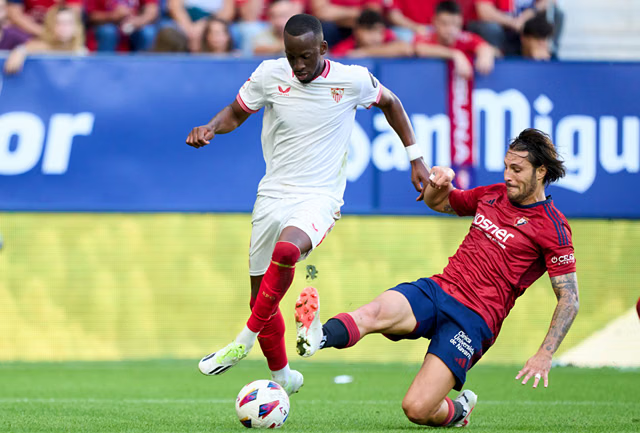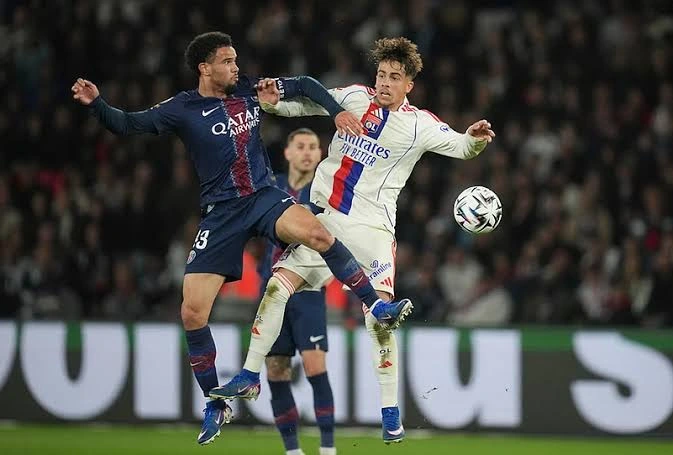
UEFA Champions League betting means knowing which market fits the question you’re asking, and how to read the odds behind it. This guide covers how to bet across individual matches, knockout ties, player performances, league-phase results, and full-tournament outcomes, along with how decimal, American, and fractional odds each present the same implied probability. If you’re specifically weighing which clubs progress through the qualifying rounds before the league phase begins, our uefa champion league Qualification page tracks the current picture.
Key Takeaways: UEFA Champions League Betting
|
What Is the UEFA Champions League
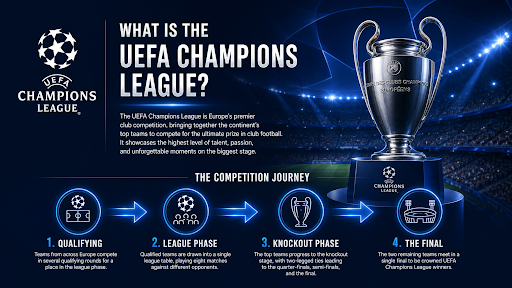
The UEFA Champions League is Europe’s top annual club football competition, organized by UEFA and open to clubs that qualify through their domestic league position, cup success, or European coefficient ranking. Each season culminates in a single final that decides the continent’s champion club.
This League has several stages, and each can create different betting opportunities. You can bet on one match, the team that qualifies from a two-leg tie, the club that finishes highest in the league phase, or the team that eventually wins the trophy.
The market should always match the question you are trying to answer. A 1X2 bet focuses on normal time. A to-qualify bet focuses on progression from a knockout tie. An outright winner bet focuses on the full competition.
What Makes Champions League Betting Different?
- League-phase teams face eight different opponents rather than competing in small groups.
- Knockout ties are usually played over two legs before the final.
- A draw can have a different meaning in a 1X2 market, a qualification market, and a final.
- Team rotation can be affected by domestic league games, cup ties, injuries, travel, and league-phase position.
- Player markets need lineup and role information, not only player reputation.
UEFA Champions League 2026/27 Season Calendar
The 2026/27 UEFA Champions League begins with qualifying games in July and ends in Madrid in June 2027. Different stages create different market types and team motivations.
| Competition period | Dates | Betting context |
| Qualifying and play-offs | 7 July to 26 August 2026 | New squads, early-season form, travel and two-leg ties |
| League phase | 8 September 2026 to 27 January 2027 | Eight matches against different opponents in one 36-team table |
| Knockout phase play-offs | 16 February to 24 February 2027 | Teams compete for places in the round of 16 |
| Final | 5 June 2027 | One match at Estadio Metropolitano in Madrid |
games can change, so always confirm the date and kick-off time before betting.
History of the UEFA Champions League
The competition began in 1955 as the European Champion Clubs’ Cup, usually called the European Cup. It originally used a straight knockout system for domestic league champions.
UEFA renamed the tournament the Champions League in 1992 and gradually expanded entry to include more clubs from Europe’s strongest leagues. The modern competition now includes qualifying rounds, a 36-team league phase, knockout ties, and a one-match final.
Real Madrid are the competition’s most successful club with 15 European Cup and Champions League titles.
Teams in the 2026/27 UEFA Champions League League Phase
The 2026/27 UEFA Champions League league phase features 36 clubs. The teams are divided into four draw pots of nine clubs.
| Association | Clubs in the league phase |
| England | Arsenal, Aston Villa, Liverpool, Manchester City, Manchester United |
| Spain | Atlético de Madrid, Barcelona, Real Betis, Real Madrid, Villarreal |
| Germany | Bayern Munich, Borussia Dortmund, RB Leipzig |
| Italy | Como, Inter Milan, Napoli, Roma |
| France | Lens, Lille, Paris Saint-Germain |
| Netherlands | Feyenoord, PSV |
| Portugal | Porto, Sporting CP |
| Türkiye | Fenerbahçe, Galatasaray |
| Belgium | Club Brugge |
| Czechia | Slavia Prague |
| Ukraine | Shakhtar Donetsk |
| Norway | Bodø/Glimt, Viking |
| Slovakia | Slovan Bratislava |
| Greece | AEK Athens |
| Austria | LASK |
| Azerbaijan | Sabah |
UEFA Champions League Winners From the Last Six Seasons
| Season | Winner | Runner-up | Final result |
| 2025/26 | Paris Saint-Germain | Arsenal | 1-1 after extra time, Paris Saint-Germain won 4-3 on penalties |
| 2024/25 | Paris Saint-Germain | Inter Milan | Paris Saint-Germain won 5-0 |
| 2023/24 | Real Madrid | Borussia Dortmund | Real Madrid won 2-0 |
| 2022/23 | Manchester City | Inter Milan | Manchester City won 1-0 |
| 2021/22 | Real Madrid | Liverpool | Real Madrid won 1-0 |
| 2020/21 | Chelsea | Manchester City | Chelsea won 1-0 |
Paris Saint-Germain begin 2026/27 as two-time defending champions. That history gives context, but the next tournament will depend on the league-phase draw, player availability, tactical matchups, fixture pressure, and knockout path.
How to Read UEFA Champions League Odds
Champions League odds can appear in decimal, American, or fractional form. They all price the same possible outcome, but each format presents the potential profit, total return, or stake requirement differently. For football odds and market basics, read How to bet on football.
The example below uses the same fictional Champions League fixture throughout: Madrid FC vs London United.
Odds Example
| Selection | Decimal odds | American odds | Fractional odds | $10 stake total return | Potential profit |
| Madrid FC to win | 2.20 | +120 | 6/5 | $22.00 | $12.00 |
| Draw | 3.50 | +250 | 5/2 | $35.00 | $25.00 |
| London United to win | 3.00 | +200 | 2/1 | $30.00 | $20.00 |
The table shows three formats for the same match-result market. The total return includes the original $10 stake, while potential profit is the amount gained after subtracting that stake.
Decimal Odds
Decimal odds show the full amount returned for every unit staked. The number includes both the original stake and the potential profit, making this format quick to calculate.
Using the Madrid FC example, decimal odds of 2.20 mean every $1 staked would return $2.20 if successful. A $10 bet would return $22, made up of the original $10 plus $12 potential profit.
Formula:
Total return = stake x decimal odds
Potential profit = total return minus stake
A lower decimal number normally indicates the market views that result as more likely. It does not mean the outcome is certain.
American Odds
American odds use the plus and minus signs to express potential profit or the amount needed to make $100 profit. Positive odds usually identify a less-favoured outcome, while negative odds usually identify a more-favoured outcome.
Using the Madrid FC example, +120 means a $100 winning stake would create $120 profit. A $10 stake creates $12 potential profit, returning $22 in total. If Madrid FC were priced at -125, a $125 stake would be needed to make $100 profit.
Fractional Odds
Fractional odds express potential profit as a ratio against the stake. The first number represents profit, while the second number represents the amount needed to produce that profit.
Using the Madrid FC example, 6/5 means a $5 stake would make $6 profit if successful. A $10 stake would make $12 profit and return $22 in total. The original amount is returned separately from the stated profit.
Market Probability View
It explains what percentage chance the displayed odds suggest according to the sportsbook’s pricing, not the actual certainty of an outcome.
Formula:
Market probability = 1 divided by decimal odds x 100
| Selection | Decimal odds | Market probability view |
| Madrid FC to win | 2.20 | 45.5 percent |
| Draw | 3.50 | 28.6 percent |
| London United to win | 3.00 | 33.3 percent |
In this example, the percentages total more than 100 percent. This difference is known as the sportsbook margin. It means the prices should be treated as a market estimate, not as a perfectly balanced forecast.
The League Phase and Why It Matters for Betting
The Champions League league phase contains 36 clubs in one table. Each team plays eight different opponents, split across four home games and four away games.
The top eight clubs qualify directly for the round of 16. Teams placed ninth to 24th enter knockout phase play-offs. Clubs placed 25th to 36th are eliminated.
League-Phase Position and Match Incentive
| Situation | What can affect the match |
| Club chasing the top eight | Need for points, goal difference and direct round-of-16 qualification |
| Club targeting a top-24 place | Pressure to avoid elimination |
| Club already secure | Possible rotation and player-minute management |
| Club near elimination | More urgency to score or win |
| Final matchday fixture | Simultaneous results can change the live table |
A team’s league position should be read alongside opponent quality, remaining games, domestic commitments, travel, squad depth, and injuries.
How the Final Matchday Creates Different Betting Conditions
The final league-phase matchday is unique because every game is played at the same time. A goal in another stadium can change a club’s live position and alter its match incentive.
A team may begin the night in the top eight, then need another goal after a rival scores elsewhere. A club that believed a draw was enough may need to search for a winner as the live table changes.
| Live league-phase situation | Possible effect |
| Team moves outside top eight | Greater need for a late goal |
| Team falls toward elimination | More attacking urgency |
| Team becomes mathematically secure | Potentially reduced risk-taking |
| Rival result changes | Tactical plan may change during the match |
| Goal difference becomes important | Margin of victory can matter |
A live score is not enough on its own. Check the full table, goal difference, goals scored, and other simultaneous results before reacting to a final-matchday event.
UEFA Champions League Betting Types Explained
UEFA Champions League betting includes markets for the tournament winner, individual matches, goals, player performances, knockout qualification, cards, corners, and goal margins. Each market settles differently, so check whether it applies to normal time, a full two-leg tie, or the complete tournament. For additional football markets, browse Football betting.
| Betting type | What it covers | Example selection |
| Tournament winner | Club that wins the Champions League | Madrid FC to win the tournament |
| Stage reached | Club reaching a specific round | London United to reach the semi-final |
| League-phase winner | Club finishing first in the 36-team table | Madrid FC to top the league phase |
| Top goalscorer | Player with the most tournament goals | Alex Silva to finish top scorer |
| 1X2 | Home win, draw, or away win | Madrid FC to win |
| Double chance | Two normal-time outcomes | Madrid FC or draw |
| Draw no bet | Team win with draw protection | London United draw no bet |
| Pick’em | Level handicap with draw refund | Madrid FC pick’em |
| Over and under | Total goals in a match | Over 2.5 goals |
| BTTS | Whether both teams score | Both Teams to Score Yes |
| Team goals | Goals scored by one team | Madrid FC over 1.5 goals |
| Asian handicap | Virtual goal line with two-way settlement | Madrid FC -1.5 |
| European handicap | Three-way handicap market | Madrid FC -1 |
| To qualify | Club advancing from a two-leg tie | Madrid FC to qualify |
| Aggregate score | Combined score across both legs | Madrid FC to win on aggregate |
| Goalscorer | Player to score goals | Alex Silva anytime goalscorer |
| Player shots | Player shots or shots on target | Alex Silva over 2.5 shots |
| Cards | Player, team, or match cards | Over 4.5 cards |
| Corners | Team or match corner events | Over 9.5 corners |
Tournament and Season Markets
Tournament Winner Betting
The tournament winner market asks which club lifts the UEFA Champions League trophy. The selection remains active across the full campaign, from the league phase to the final, and settles only when the tournament winner is confirmed.
Example: Madrid FC to win the Champions League succeeds only if Madrid FC win the final. A semi-final or final appearance is not enough. Squad depth, injuries, draw path, domestic workload, and current odds should be reviewed before considering an outright selection.
Stage Reached Markets
Stage reached market focus on whether a club reaches the semi-final or final. They do not require the team to win the tournament, making them different from an outright winner selection.
Example: London United to reach the semi-final wins when London United qualify for the final four. If they lose the semi-final, the selection still succeeds. Review the draw, potential opponents, home and away order, and squad availability.
League-Phase Winner Market
The league-phase winner market asks which club finishes first in the 36-team Champions League table after eight league-phase matches. It settles before the knockout rounds begin.
Example: Madrid FC to top the league phase wins if Madrid FC finish Matchday 8 in first place. They do not need to win the Champions League. Assess fixture difficulty, away trips, goal difference, rotation, and current injuries.
Top Goalscorer Market
The top goalscorer market selects the player who scores the most goals during the UEFA Champions League season. It usually settles after the final, based on the tournament’s overall scoring standings.
Example: Alex Silva to finish top goalscorer wins if no other player scores more Champions League goals. A player’s team reaching later rounds provides more scoring opportunities, so review starting roles, penalty duty, fitness, and team strength.
Match Result Markets
1X2 Betting
The 1X2 market covers three normal-time outcomes: home win, draw, or away win. It normally settles after 90 minutes plus added time, excluding extra time and penalty shoot-outs.
Example: Madrid FC to win succeeds with a 2-1 score after 90 minutes. If the match ends 1-1 and Madrid FC later win on penalties, the 1X2 result is still recorded as a draw.
Double Chance
Double chance combines two normal-time outcomes in one selection. It provides additional draw or winner coverage compared with a single 1X2 pick, which usually results in lower odds.
Example: Madrid FC or draw wins if Madrid FC win 1-0 or if the match ends 1-1. It loses only if London United wins. The selection is settled after normal time.
Draw No Bet
Draw no bet removes the draw as a losing outcome. The selected team must win for the bet to succeed, while a normal-time draw normally returns the original stake.
Example: London United draw no bet wins if London United win 2-1. A 1-1 draw returns the stake. A 2-0 Madrid FC victory loses the selection. Check individual sportsbook settlement rules.
Pick’em Betting
Pick’em, also called PK or Asian handicap 0.0, gives neither team a virtual goal advantage. It works similarly to draw no bet, because a normal-time draw generally results in a stake refund.
Example: Madrid FC pick’em wins if Madrid FC win 1-0. A 0-0 or 1-1 result refunds the stake. A London United victory loses. Extra time usually does not count in this market.
Goals and Scoring Markets
Over and Under Goals
Over and under markets assess the total goals scored by both teams in normal time. The number after the decimal determines the exact scoring requirement for the selection to win.
Example: Over 2.5 goals needs three or more goals, such as a 2-1 result. Under 2.5 goals wins with a 1-1 result. The 0.5 prevents a tie because a match cannot finish with half a goal.
Both Teams to Score
Both Teams to Score asks whether each club scores at least once. BTTS Yes requires a goal from both teams, while BTTS No succeeds when at least one team fails to score.
Example: BTTS Yes wins in a 2-1 or 1-1 scoreline. It loses if Madrid FC win 2-0 or the match ends 0-0. This market normally settles using the normal-time result.
Team Goal Markets
Team-goal markets focus on the number of goals scored by one club instead of the total match score. They can include team totals, first-half goals, and scoring in both halves.
Example: Madrid FC over 1.5 goals needs Madrid FC to score twice, such as in a 2-0 or 2-1 result. A 1-0 Madrid FC win loses because the team scored only once.
Handicap and Margin Markets
Asian Handicap
Asian handicaps apply a virtual goal adjustment before the match. They are two-way markets that can include full wins, losses, refunds, half-wins, or half-losses depending on the handicap line.
Example: Madrid FC -1.5 needs Madrid FC to win by two or more goals. A 2-0 win succeeds, but a 1-0 win loses. London United +1.5 wins with a draw, victory, or one-goal defeat.
European Handicap
European handicaps also use a virtual goal adjustment, but unlike Asian handicaps they retain three possible outcomes: home handicap win, handicap draw, or away handicap win.
Example: With Madrid FC -1, a 2-0 Madrid FC win settles as a Madrid FC handicap win. A 1-0 win becomes a handicap draw. A 1-1 result settles as a London United handicap win.
Knockout Tie Markets
To Qualify Market
The to-qualify market selects the club that advances from a two-leg Champions League knockout tie. It is based on aggregate results, not simply the winner of one individual match.
Example: Madrid FC won the first leg 2-0 and lost the second 1-0. Madrid FC won 2-1 on aggregate, so Madrid FC qualified. Extra time and penalties may count depending on market rules.
Aggregate Score Market
Aggregate score markets focus on the combined total across both legs of a knockout tie. The team with the higher overall score progresses unless a specific market states otherwise.
Example: Madrid FC win 2-1 at home and draw 1-1 away. Their aggregate score is 3-2, so Madrid FC to win on aggregate succeeds. Check whether extra-time goals affect the market.
Player and Match Event Markets
Goalscorer Markets
Goalscorer markets cover player scoring outcomes, including anytime scorer, first scorer, last scorer, and two or more goals. They require attention to lineups, expected minutes, and player roles.
Example: Alex Silva anytime goalscorer wins if he scores once or more. Alex Silva’s first goalscorer requires him to score first. Alex Silva needs at least two goals from him.
Player Shots Markets
Player-shots markets measure total attempts or shots on target by a named player. Official statistics providers decide which attempts qualify, so definitions can differ between sportsbooks.
Example: Alex Silva over 2.5 shots requires three or more attempts. Over 1.5 shots on target requires two. Review expected minutes, position, team possession, and the opponent’s defensive shape.
Cards Markets
Cards markets cover player bookings, team cards, or total match cards. They can be influenced by referee approach, tactical fouls, defensive roles, direct matchups, and match intensity.
Example: Over 4.5 cards require five qualifying cards in the match. Jordan Reed to be booked wins if he receives a card under sportsbook rules. Check how second yellows and red cards are counted.
Corners Markets
Corners markets cover total corners, team corners, first corner, or race-to-corners selections. They are often influenced by wide attacks, crossing volume, possession, and the need to chase a result.
Example: Over 9.5 corners requires at least 10 corners. Madrid FC first to five corners succeeds if Madrid FC reach five corners before London United, regardless of the final corner total.
The 90-Minute Rule Can Change Your Bet
One of the most important Champions League betting details is knowing what happens when a knockout game goes beyond normal time.
Most standard match markets settle after 90 minutes plus stoppage time. Extra time and penalties normally do not count unless the market specifically includes them.
How Common Markets Usually Settle
| Match event | 1X2 | Over and under goals | To qualify |
| Goal in normal time | Counts | Counts | Counts |
| Goal in stoppage time | Counts | Counts | Counts |
| Goal in extra time | Usually excluded | Usually excluded | Can count |
| Penalty shoot-out winner | Usually excluded | Does not count as a goal | Can decide qualification |
A final that ends 1-1 after 90 minutes is normally settled as a draw in the 1X2 market. The team that later wins the trophy after extra time or penalties does not change that match-result settlement.
Always read the market rules, as sportsbook terms may vary.
Top Picks for Bet on the UEFA Champions League Title
Early 2026/27 tournament markets place Paris Saint-Germain, Arsenal, Bayern Munich, Barcelona, Real Madrid, Manchester City, Liverpool, and Inter Milan among the leading teams to assess. Paris Saint-Germain enter as back-to-back champions, while Arsenal begin after reaching the 2025/26 final. The tournament remains open, and no team should be treated as a guaranteed winner.
Paris Saint-Germain
Paris Saint-Germain are a natural outright contender after winning the previous two Champions League titles. Their recent European success, squad quality, and experience in high-pressure matches make them a team to assess once current odds are available.
Review squad continuity, key injuries, domestic workload, league-phase opponents, and whether the outright price reflects the difficulty of winning a third consecutive title.
Arsenal
Arsenal should be assessed after reaching the 2025/26 final. Their run to the final showed they can compete in the later stages, but their 2026/27 prospects still depend on squad depth, player fitness, and performance in difficult away matches.
Check the fixture sequence, defensive availability, results against high-pressing teams, attacking depth, and current outright price before considering a tournament market.
Bayern Munich
Bayern Munich remain a major Champions League contender because of their knockout experience, attacking options, and record of competing deep into European football. Their title potential relies on defensive consistency and availability in key positions.
Review away form, injury situation, domestic fixture pressure, likely lineup strength, squad depth, and the potential knockout route. A strong team can still be priced too short in an outright market.
Barcelona
Barcelona are likely to attract title-market interest because of their technical quality, attacking options, and ability to control possession. Their Champions League outlook should be judged through defensive performance, midfield availability, squad balance, and ability to manage away knockout ties.
Assess their tactical setup, injury list, league-phase opponents, fixture pressure, and market probability before making a team-specific decision.
Real Madrid
Real Madrid’s European record gives them clear tournament credibility, but current squad information matters more than historical titles. Their experience in knockout football can make them relevant for outright, qualification, and stage-reaching markets.
Check key-player fitness, defensive depth, midfield balance, away fixtures, domestic demands, and the price available. Reputation should provide context, not replace current analysis.
Manchester City
Manchester City remains a team to assess because of their possession-based style, squad depth, and recent experience in major European ties. Their tournament outlook depends on rotation, current form, defensive-midfield availability, and performance in away matches.
Review domestic workload, injuries, tactical matchups, league-phase draw, and whether the market price reflects the uncertainty of a long tournament.
Liverpool
Liverpool can be relevant in tournament markets because of their European experience, attacking threat, and ability to compete in high-tempo matches. Their prospects depend on defensive consistency, squad depth, travel demands, and results against elite opposition.
Check how their defensive structure handles fast counter-attacking teams, whether key attackers are available, and whether the current odds reflect both their potential and tournament risks.
Inter Milan
Inter Milan should be assessed when reviewing teams capable of managing structured knockout football. Their tactical discipline, defensive organisation, and experience in high-pressure European matches can make them relevant for qualification and stage-reached markets.
Assess squad availability, domestic commitments, attacking output, away record, league-phase fixture list, and potential knockout route. Do not rely only on previous final appearances or historical European results.
A Responsible Team Prediction Framework
| Factor | Why it matters |
| Current odds | Shows the market’s implied probability |
| Player availability | Injuries and suspensions can change match strength |
| Fixture draw | Determines opponent and travel difficulty |
| Tactical matchup | Helps explain attacking and defensive strengths |
| Knockout path | Affects the route toward the final |
| Domestic schedule | Can affect rotation, fatigue and player minutes |
| Tournament experience | Gives context but does not guarantee success |
No team is a guaranteed winner. Passing on a market is a valid choice if the odds do not match the available information.
Champions League Research Tips That Improve Decision-Making
A clear process helps separate analysis from emotion. It does not remove the risk of betting.
Check Team News Close to Kick-Off
Confirmed lineups can change match-result, goals, handicap, and player markets.
A missing centre-back can affect defensive stability. A rested striker can change goalscorer and shots markets. A replacement goalkeeper may affect build-up and defensive confidence.
Wait for lineups where possible, particularly for player props and markets dependent on one key player.
Compare Tactical Matchups
Consider how the teams play rather than relying only on league position or club reputation.
Review:
- Build-up against pressing.
- Wide attackers against full-back depth.
- Set-piece attacking and defending.
- Counter-attacking opportunities.
- Midfield control.
- Defensive recovery speed.
- Goalkeeper distribution.
A possession-heavy team can still be exposed if it loses the ball high up the pitch against a fast counter-attacking opponent.
Put Recent Form Into Context
Do not use the last five results without context.
Check:
- Opposition quality.
- Home and away performance.
- Red cards.
- Penalty goals.
- Squad rotation.
- Injuries.
- Travel.
- Domestic schedule.
A 3-0 result can be misleading if the opponent played most of the game with 10 players. A narrow defeat may still include strong attacking performance.
Avoid Overloading One Match With Bets
One match view does not need to become a long accumulator of results, goals, cards, corners, and player selections.
Every added selection creates another condition that must happen. Understand each market separately before combining bets.
How to Place a UEFA Champions League Bet
Select the Correct Fixture
Choose UEFA Champions League from the football menu, then confirm:
- Match date.
- Kick-off time.
- Home team.
- Away team.
- Competition stage.
- First leg or second leg status.
For knockout games, check the aggregate score before choosing a market.
Choose a Relevant Market
Select a market based on the exact question you are assessing.
- Use 1X2 for normal-time results.
- Used to qualify for progression from a full tie.
- Use over and under goals for scoring view.
- Use Asian handicap for winning margin.
- Use player props after checking lineup information.
- Use an outright market for long-term tournament outcomes.
Read the Market Rules
Confirm:
- Does extra time count?
- Do penalties count?
- Is the selection settled after 90 minutes?
- Does the player need to start?
- Are shots, cards, and corners settled through official statistics?
- Can the handicap result in a stake refund?
Review Your Bet Slip
Check the fixture, market, selection, line, odds, stake, and potential return.
Potential return is not guaranteed. Keep the stake within your personal entertainment budget.
Responsible Champions League Betting Starts Before Kick-Off
Champions League matches can change quickly, especially during late goals, extra time, and penalty shoot-outs. Set your budget and time limit before kick-off, then stick to them regardless of the score. Do not chase losses or place unplanned live bets because a match feels exciting. Betting should stay entertainment, never a way to recover money or earn income. Use platform limits or take a break when needed.
Disclaimer: This content is for informational purposes only and does not constitute legal, financial, or gambling advice. Online gambling involves financial risk and may be restricted in your jurisdiction. Please check local laws before playing, set strict budget limits, and play responsibly. If you need support for problem gambling, visit NCPG or Gamblers Anonymous.