NBA betting goes beyond picking the winning team. A single game can offer moneyline, spread, totals, team-total, player-prop, live, and futures markets, each settled by a different result. Understanding NBA betting odds helps you compare potential returns, assess implied probabilities, and see how the price changes across markets. Before placing a bet, review confirmed player status, schedule pressure, expected roles, and the current odds. This guide explains how to bet on basketball through NBA-specific markets, odds formats, line movement, matchup research, and responsible betting habits. Getting comfortable with these fundamentals early is what makes NBA betting approachable instead of overwhelming for a first-time bettor.
NBA Markets and Odds
|
What Is the NBA?
The National Basketball Association is a professional basketball league made up of 30 teams. Its regular season consists of 82 games per team, followed by the Play-In Tournament and best-of-seven playoff series. The NBA’s dense schedule, high scoring, player-driven matchups, and frequent lineup news make it one of the most closely followed basketball betting competitions.
| Fact | Detail |
| Founded | 1946 as the Basketball Association of America; became the NBA in 1949 after a merger with the National Basketball League |
| Teams | 30 |
| Conferences | Eastern and Western |
| Games per team | 82 in a standard regular season |
| Total regular-season games | 1,230 |
| Postseason format | Play-In Tournament followed by best-of-seven playoff series |
| Overtime | Usually included in full-game markets unless the market rules state otherwise |
A Short History of the NBA and Why It Matters for Betting
From the BAA to 30 Franchises
The Basketball Association of America began in 1946 and merged with the National Basketball League in 1949 to form the NBA. The league has since expanded to 30 franchises, creating a large schedule with different travel demands, styles of play, roster construction, and market expectations.
For readers learning how to bet on basketball, the history matters mainly because today’s league is broad and schedule-heavy. A team’s location, travel pattern, market size, and playing style can all become relevant contexts when assessing a single game or a season-long market.
Conferences, Divisions, and the Schedule Behind the Betting Board
The NBA has two conferences, Eastern and Western, with three divisions in each conference. Conference standings influence playoff seeding, home-court position, Play-In participation, and late-season team decisions. This kind of context is exactly what separates informed NBA sports betting from simply picking a favorite team out of habit.
This can matter when you are deciding how to bet on NBA games late in the regular season. A team chasing a seed may approach a fixture differently from a team whose position is fixed or whose priority is player health. That is context, not an automatic betting rule. Always confirm the current standings, schedule, and player status.
Regular Season, Play-In, and Playoffs – How Each Changes the Market
The regular season runs across 82 games per team. The top six teams in each conference qualify directly for the playoffs, while teams ranked seventh through tenth enter the Play-In Tournament. The playoffs then use best-of-seven series.
The phase of the season can affect motivation, rotation choices, travel, and market availability. Full-game, quarter, player-prop, Play-In, and playoff-series markets can also have different overtime and settlement terms. Read the operator’s rules before placing a bet. Recognizing these seasonal shifts is a core part of smart NBA Betting, since motivation and rotation patterns change from October through June.
The NBA’s Most Famous Teams and What They Mean on the Betting Board
High-profile franchises such as the Los Angeles Lakers, Golden State Warriors, Boston Celtics, and Chicago Bulls have large global audiences. More public attention can mean more recreational interest in their game markets, particularly moneylines, spreads, player props, and parlays.
That does not prove that a popular team is overpriced or that betting against public sentiment is automatically correct. It means a reader learning how to bet on NBA games should separate a team’s popularity from the actual question asked by the market: who wins, by how much, or how many points are scored.
| Team | NBA championships | Why the franchise is widely known | Betting context to check |
| Boston Celtics | 18 | The Celtics are the NBA’s most successful franchise by championship count. Their history includes the Bill Russell era, the Larry Bird era, and the 2024 title-winning team. | Current health, defensive matchup, pace, rest, and whether a strong recent record is already reflected in the spread. |
| Los Angeles Lakers | 17 | The Lakers have one of basketball’s largest international followings, built through eras led by George Mikan, Magic Johnson, Kareem Abdul-Jabbar, Kobe Bryant, Shaquille O’Neal, and LeBron James. | Star-player availability, expected minutes, public interest, and whether the price has changed after lineup news. |
| Golden State Warriors | 7 | The Warriors became a global basketball brand through the Stephen Curry era, their high-volume three-point attack, and four championships between 2015 and 2022. | Three-point attempt volume, pace, opponent perimeter defense, rest, and player-prop lines connected to key scorers. |
| Chicago Bulls | 6 | The Bulls are closely associated with Michael Jordan and the six championships won in the 1990s. Their identity remains highly recognisable even across seasons with different competitive expectations. | Current roster quality, home and road split, schedule context, and whether reputation is being confused with the current team’s form. |
| San Antonio Spurs | 5 | The Spurs built a reputation for sustained success through the Tim Duncan, Tony Parker, Manu Ginóbili, and Gregg Popovich era, winning five titles from 1999 to 2014. | Young-player roles, development-driven rotations, minutes uncertainty, and how lineup changes affect props and game totals. |
High-Pace vs. Low-Pace Franchises and What That Does to Totals
Pace measures the number of possessions a team plays per game. More possessions generally create more chances for shots, free throws, rebounds, assists, and points. A slower game can reduce those opportunities.
A fast-paced team hosting another fast-paced team may produce a different total environment from a matchup between two teams that slow the game down and defend deep into the shot clock. Pace is not enough on its own, but it is relevant alongside injuries, shot profile, defensive rating, rest, and the listed total.
How NBA Betting Odds Work – American, Decimal, and Fractional
Odds are the terms attached to a possible result. They perform two jobs at once: they show the potential return and reveal how the market ranks the chance of that result compared with the alternative. In NBA betting, the same game price may appear in three formats depending on the platform setting. The format changes how the price looks, not the underlying market.
Hypothetical game: River City Comets at Desert Valley Scorpions. The Comets are priced as the stronger side before tip-off.
| Selection | American odds | Decimal odds | Fractional odds | Implied probability | Potential profit from $100 | Total return from $100 |
| River City Comets to win | -175 | 1.57 | 4/7 | 63.6% | $57.14 | $157.14 |
| Desert Valley Scorpions to win | +145 | 2.45 | 29/20 | 40.8% | $145.00 | $245.00 |
The implied probabilities add up to 104.4%. The extra 4.4 percentage points are the bookmaker’s margin, also called vig or overround. The table does not predict the winner. It explains how the price ranks the two outcomes.
American Odds: A $100 Reference Scale
American odds use $100 as a reference amount, but the reference changes according to whether the number is positive or negative.
- Negative price, Comets -175: You would need to bet $175 to make $100 potential profit. If the Comets win, the return is $275: the original $175 plus $100 profit.
- Positive price, Scorpions +145: A $100 bet makes $145 potential profit. If the Scorpions win, the return is $245: the original $100 plus $145 profit. Anyone comparing prices across sportsbooks is effectively practicing the same nba sports betting skill regardless of which format the odds are shown in.
Simple payout formulas:
- For negative odds: potential profit = bet amount × 100 ÷ absolute odds.
- For positive odds: potential profit = bet amount × positive odds ÷ 100.
Example at -175 with a $70 bet:
Potential profit = $70 × 100 ÷ 175 = $40.
Total return = $70 + $40 = $110.
Example at +145 with a $70 bet:
Potential profit = $70 × 145 ÷ 100 = $101.50.
Total return = $70 + $101.50 = $171.50.
Decimal Odds: The Return Multiplier
Decimal odds show the full return multiplier, so the calculation only needs one multiplication. The original bet is already included in the number.
- Comets 1.57: Every $1 bet returns $1.57 in total if successful.
- Scorpions 2.45: Every $1 bet returns $2.45 in total if successful.
Simple payout formula:
- Total return = bet amount × decimal odds.
- Potential profit = total return − bet amount.
Example at 2.45 with a $70 bet:
Total return = $70 × 2.45 = $171.50.
Potential profit = $171.50 − $70 = $101.50.
Decimal odds are especially useful when comparing the same NBA market across platforms. If the selection and settlement rules are identical, the higher decimal number gives the higher total return for the same bet amount.
Fractional Odds: The Profit Ratio
Fractional odds show the potential profit compared with the amount bet. The first number is the profit part; the second is the amount needed to generate that profit.
- Comets 4/7: Every $7 bet produces $4 potential profit. A $7 winning bet returns $11 in total.
- Scorpions 29/20: Every $20 bet produces $29 potential profit. A $20 winning bet returns $49 in total.
Simple payout formula:
- Potential profit = bet amount × numerator ÷ denominator.
- Total return = bet amount + potential profit.
Example at 29/20 with a $70 bet:
Potential profit = $70 × 29 ÷ 20 = $101.50.
Total return = $70 + $101.50 = $171.50.
Fractional odds explain the profit ratio directly, while decimal odds show the total return and American odds use the $100 reference. All three can represent the same NBA price.
Implied Probability: Turn the Price Into a Percentage
Implied probability changes an odds price into the market’s percentage estimate before the bookmaker margin is removed. It is useful for comparing prices, but it is not a forecast or certainty.
Simple implied-probability formulas:
- Negative American odds: absolute odds ÷ (absolute odds + 100) × 100.
- Positive American odds: 100 ÷ (positive odds + 100) × 100.
- Decimal odds: 1 ÷ decimal odds × 100.
- Fractional odds: denominator ÷ (numerator + denominator) × 100.
Comets at -175:
175 ÷ (175 + 100) × 100 = 63.6%.
Scorpions at +145:
100 ÷ (145 + 100) × 100 = 40.8%.
The combined 104.4% is not a prediction that both teams can win. It reflects the margin built into the two-way market.
The NBA Betting Markets You Will See Most Often
For anyone learning how to bet on basketball, understanding these differences makes it easier to choose a market that matches the outcome being assessed. One can focus on the final winner, another on the winning margin, another on how a game is played, and another on whether a player reaches a statistical target. The table below uses one fictional matchup to show the difference.
One NBA Game, Multiple Market Questions
Hypothetical fixture: River City Comets at Desert Valley Scorpions.
| Market | Example selection | The question behind the market | Winning result in this example |
| Moneyline | Comets -175 | Which team is ahead when the game ends? | Comets win by any margin |
| Point spread | Comets -5.5 | Does the final margin beat the handicap? | Comets win by 6 or more |
| Game total | Under 218.5 | Does the game finish below the scoring target? | Combined score is 218 or fewer |
| Team total | Scorpions over 106.5 | Does one team reach its scoring target? | Scorpions score 107 or more |
| Player points prop | Comets guard under 27.5 points | Does a player finish on one side of a stat line? | Guard scores 27 or fewer |
| Player PRA prop | Scorpions centre over 31.5 PRA | Does a player clear a combined workload line? | Points + rebounds + assists total 32 or more |
| First-half spread | Scorpions +2.5, first half | Which team owns the halftime margin? | Scorpions lead or trail by 2 or fewer at halftime |
| First-quarter total | Over 52.5, first quarter | How much scoring occurs in the opening 12 minutes? | First quarter produces 53 or more points |
| Same-game parlay | Comets win + under 218.5 + centre 10+ rebounds | Can linked outcomes in one game all happen? | Every listed selection wins |
| Live moneyline | Scorpions +105 in the third quarter | Who wins after the current game state is priced in? | Scorpions win the game |
| Season future | Comets over 47.5 regular-season wins | Does a team clear a season target? | Comets finish with 48 or more wins |
Moneyline: The Final-Siren Question
A moneyline strips a game back to its final result. It does not care whether the winning team dominates, survives a close finish, or wins in overtime if the rules include it. The only question is which side is ahead when the market is settled.
In the Comets versus Scorpions example, Comets -175 wins if the Comets win by one point or 21 points. The Scorpions moneyline wins only if the Scorpions win the game. This is different from a spread, where a team can lose on the court but still cover the handicap. This distinction is one of the first things worth mastering when learning how to bet on nba games, since moneyline and spread settle differently.
Point Spread: The Score Gap Test
A point spread creates a target margin rather than asking only for the winner. It is designed to make a mismatch more balanced as a betting market.
Comets -5.5 means the Comets need a six-point win. Scorpions +5.5 wins if the Scorpions win outright or lose by five or fewer. A -5.5 or +5.5 line cannot push because the half-point separates the outcomes.
NBA spreads are distinct because the final minutes can change the result without changing the winner. Intentional fouls, free throws, late three-pointers, and bench players scoring during a large lead can decide whether a team covers.
Game Totals: The Possession and Scoring Test
A total does not ask which team is better. It asks whether the game produces more or fewer points than the listed target.
Under 218.5 wins if the Comets and Scorpions combine for 218 points or fewer. A final score of Comets 110, Scorpions 107 produces 217 points, so the under wins. A final score of 113-108 produces 221 points, so the underdog loses.
NBA totals are shaped by possessions, transition play, three-point volume, free throws, injury-driven rotation changes, and late-game fouling. A faster pace can create more opportunities, but the line already reflects market expectations, so pace should be assessed with the price rather than in isolation.
Team Totals: Isolate One Offence
A team total removes the opponent’s score from the question. Scorpions over 106.5 wins if the Scorpions score at least 107, even if the Comets score more and win the game.
This can be useful when a matchup creates a specific question about one offence: a player absence, a new starter, a defensive matchup, or a changed pace environment. It is not the same as betting the full-game over because only one side’s points determine the result.
Player Props: Measure a Player’s Job, Not Just Their Average
A player prop asks whether a player reaches a listed statistical threshold. The best starting point is the player’s expected job in that specific game, not only their season average.
The Comets guard under 27.5 points wins at 27 or fewer. The Scorpions centre over 31.5 PRA wins if points, rebounds, and assists combine for 32 or more.
Before assessing a player, confirm starting status, expected minutes, role changes, possible minutes limits, opponent defensive scheme, and the operator’s rules on late scratches, participation, and overtime.
Half and Quarter Markets: A Smaller Clock, Different Variables
Half and quarter markets settle before the final buzzer. Scorpions +2.5 in the first half is decided at halftime. Over 52.5 in the first quarter is decided after the first 12 minutes.
These markets can be influenced by starting-unit patterns, early fouls, bench rotations, and the opening tempo. They are not simply shorter full-game bets. Overtime cannot change a first-quarter or first-half result.
Parlays and Same-Game Parlays: Combine Conditions, Not Certainty
A parlay joins several selections. A same-game parlay joins selections from the same fixture. Every leg normally has to win, so the potential return rises because the route to success is more demanding.
In the example parlay, the Comets must win, the total must stay under 218.5, and the Scorpions centre must collect at least 10 rebounds. If one leg fails, the full parlay normally loses. Some combinations cannot be added because they are too closely related, and operators can use different rules for correlated selections. Same-game parlays are a popular entry point into nba sports betting, though the added risk deserves the same scrutiny as any single bet.
Live Betting: A New Price for the Game in Progress
Live betting re-prices a game after tip-off. The Scorpions might move to +105 in the third quarter after a scoring run, foul trouble, or a shift in the rotation. That price is a response to the current score and game conditions, not a guarantee that the Scorpions will win.
Live markets can move between selection and confirmation. Check the line and odds on the accepted bet slip, and avoid reacting to a previous loss by increasing the amount bet.
Season Futures: A Long-Term Team or Player Question
A future is a market that stays open beyond one game. Comets with over 47.5 regular-season wins are settled only after the regular season ends. Championship, conference, division, awards, and stat-leader markets follow the same long-term format.
Futures require patience because injuries, trades, roster changes, rest patterns, and playoff seeding can affect the position long after the bet is placed. Review terms for player movement, ties, participation, and settlement before entering a season market.
Opening Week Predictions For NBA 2026/27: Who Wins and Why
Six games headline the start of the 2026-27 season, each carrying tracked betting lines well ahead of tip-off. The numbers below show the fair win probability for each side once the bookmaker’s margin is stripped out.
| Matchup (Date) | Favorite (Fair Win %) | Underdog (Fair Win %) |
| Celtics vs Pistons (Oct 20) | Pistons, 53.2% | Celtics, 46.8% |
| 76ers vs Knicks (Oct 20) | Knicks, 60.4% | 76ers, 39.6% |
| Thunder vs Spurs (Oct 20) | Spurs, 53.2% | Thunder, 46.8% |
| Timberwolves vs Heat (Oct 21) | Heat, 53.2% | Timberwolves, 46.8% |
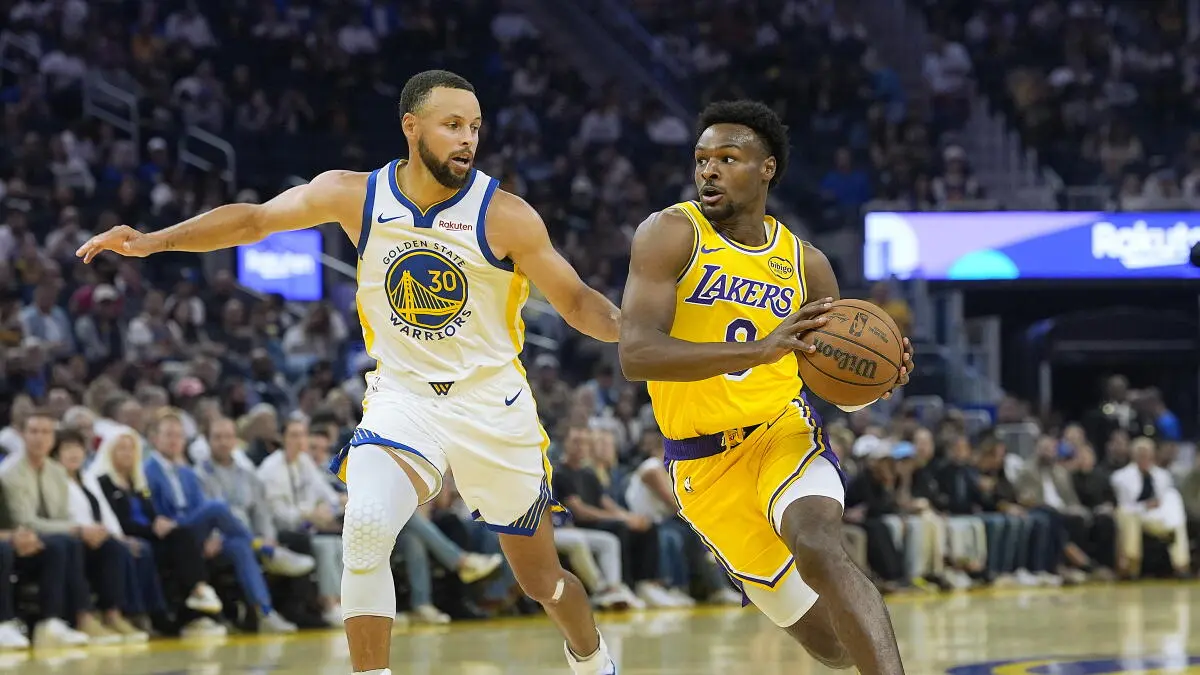
| Warriors vs Lakers (Oct 21) | Warriors, 60.3% | Lakers, 39.7% |
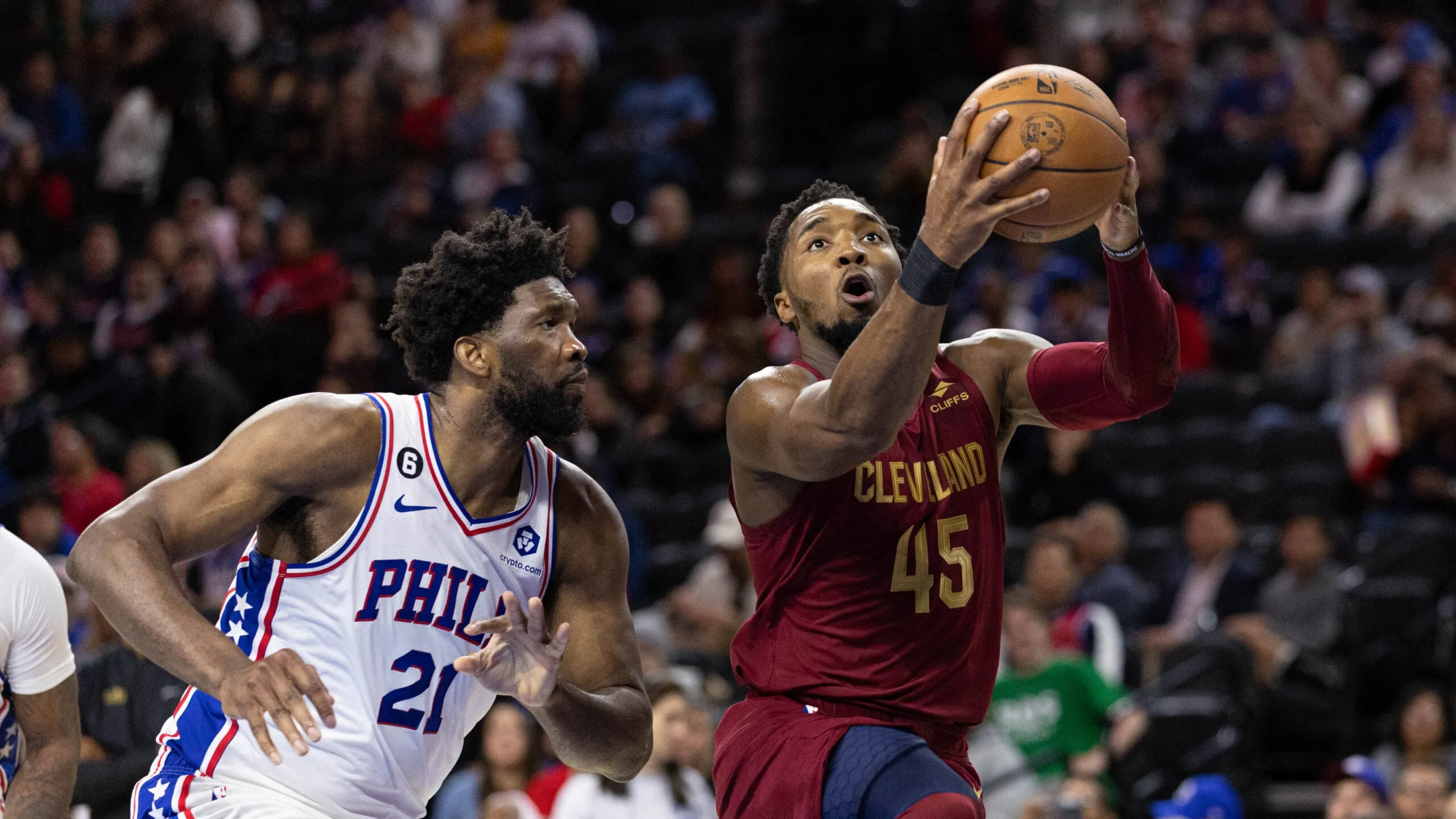
| Cavaliers vs 76ers (Oct 22) | 76ers, 60.7% | Cavaliers, 39.3% |
Why Are They Favourites?
Each favorite below carries the higher win probability in its matchup, largely built on home court, roster continuity, or recent postseason success. None of these edges are guaranteed outcomes, so treat them as a market lean rather than a settled result.
- Pistons: Detroit enters as last season’s East No. 1 seed and hosts the opener at home, giving them a modest edge in a matchup the market still views as close.
- Knicks: New York raises its championship banner and returns its full title winning starting lineup, supporting a stronger home favorite price against a Philadelphia roster still finding its rotation.
- Spurs: San Antonio hosts a rematch of the Western Conference Finals it won in seven games last season, with Victor Wembanyama getting more offensive support around him this year.
- Heat: Miami hosts Giannis Antetokounmpo’s franchise debut alongside Bam Adebayo, giving the home side a slight favorite tag for the opener.
- Warriors: Golden State travels as the clear favorite behind a settled core built around Stephen Curry’s continuity.
- 76ers: Philadelphia is favored at home for a marquee debut game, backed by the offseason additions of LeBron James and Jaylen Brown.
Why Are They Underdogs?
The underdogs here range from teams facing a genuine talent gap to teams simply priced cautiously while a new roster finds its footing. The size of the gap matters as much as which side carries it.
- Celtics: Boston is priced as a slight underdog for the road opener, with the gap kept tight rather than wide despite offseason roster changes.
- 76ers (vs Knicks): Philadelphia’s newly assembled roster around LeBron James is priced as a bigger underdog than its overall talent might suggest, reflecting the time a retooled group typically needs to build chemistry.
- Thunder: Oklahoma City is breaking in a changed bench after moving on from several rotation pieces, which keeps them as a moderate road underdog.
- Timberwolves: Minnesota travels as a slight underdog, with Antetokounmpo’s own health status worth confirming again closer to tip-off.
- Lakers: Los Angeles is priced as a clear underdog while still building its offense around Luka Doncic in his first full season as the primary option.
- Cavaliers: Cleveland is priced as a bigger underdog than its recent playoff pedigree might suggest, a gap worth checking against confirmed lineup news before relying on it.
NBA Championship Predictions and Winning Favorites
The championship race sits tighter at the top than in recent years, with two Western Conference teams essentially tied for the favorite spot. Everything below reflects where the field currently stands, months before the postseason picture starts to sharpen.
| Team | Championship Odds | Tier |
| Oklahoma City Thunder | Around +250 to +270 | Co-favorite |
| San Antonio Spurs | Around +260 to +270 | Co-favorite |
| New York Knicks | Around +750 to +900 | Second tier |
| Philadelphia 76ers | Around +750 to +900 | Second tier |
| Boston Celtics | Around +600 to +1400 | Third tier |
| Denver, Toronto, Minnesota, Detroit, Cleveland | Around +2200 to +2800 | Long shots |
Why Are They Favourites?
The top two teams are separated by only a handful of points on the moneyline, which is close enough that most books are treating a head to head meeting as a near coin flip rather than a clear favorite scenario.
- Oklahoma City Thunder: sit at or near the top of the board after retaining its core roster, including a key rotation piece who missed extended time last postseason through injury and is now expected back at full strength.
- San Antonio Spurs: priced almost identically to Oklahoma City after eliminating the Thunder in a seven game Western Conference Finals last season, with Victor Wembanyama now getting more offensive weapons around him.
Why Are They Underdogs?
The teams below the top tier each carry a specific story behind their price, whether that is title defense fatigue, a retooled roster, or a wider rebuilding timeline still playing out.
- New York Knicks: sit behind the top two as the defending champion, still priced as a live contender after returning the exact starting group that won last season’s title.
- Philadelphia 76ers: moved up sharply from a longshot price after signing LeBron James and adding Jaylen Brown, now within range of the Knicks on several boards.
- Boston Celtics: sit a full tier down due to the scale of roster turnover the team is currently working through this offseason.
- Denver, Toronto, Minnesota, Detroit, and Cleveland: grouped as longer shot contenders, each carrying a specific unresolved question around health, roster fit, or proven playoff success against the league’s top tier.
What an ATS Record Actually Tells You Before a Bet
ATS stands for “against the spread,” and it is the record that tells you how often a team has beaten the point spread rather than simply won or lost outright. A team sitting at 30-20 ATS covered in thirty of fifty games, a 60 percent cover rate, and that number exists independently of the team’s actual win-loss record. A team can go 20-30 straight up and still post a winning ATS record if it kept losing by less than the spread predicted. This is what makes ATS a measure of how a team performs relative to expectations, not a measure of raw success.
Break the Record Down Before Trusting It
- Home versus road split. A team can cover reliably at home while struggling to do so on the road, and a single combined number buries that difference completely.
- Favorite versus underdog split. Covering as a heavy favorite is a different skill than covering while receiving points as an underdog. Blending the two into one figure erases the distinction that actually matters.
- Recent stretch versus full season. The last ten to fifteen games usually say more about a team’s current roster and coaching approach than a record that stretches back to games played under entirely different injury circumstances.
- Situational filters. Certain narrow slices of ATS data, such as short home favorites carrying heavy public betting support, have shown a meaningfully higher cover rate than a team’s overall seasonal number, which tells you the filter itself is doing the real work, not the raw record.
What Actually Counts as a Good ATS Record
The vig baked into every spread bet means a bettor typically needs to cover above roughly 52.4 percent over time just to break even. A record hovering near that line is closer to noise than skill, while a record sitting clearly above it across a large enough sample is a far more credible signal.
Treat It as One Input, Never the Whole Picture
An ATS trend is a snapshot of a specific roster facing a specific slate of opponents on a specific schedule, none of which is guaranteed to match the team stepping onto the court tonight. Weigh it alongside confirmed injury news, current pace, and how much of that trend the current line has already absorbed before it earns a place in your decision.
Step By Step Guide: How to Bet on NBA Games
Every NBA bet follows the same basic path once you strip away the specific market. The steps below apply whether you are betting a moneyline, a spread, a total, or a player prop, and they hold true across any platform you use. This is not a promotion of any particular operator, just the sequence that applies universally when learning how to bet on NBA games for the first time or refining a routine you already follow.
Step 1: Pick the Game and Confirm the Basics
Start with the specific fixture, not a general feeling about a team. Confirm the date, the tip-off time, and which side is designated home and away, since some markets settle differently depending on venue.
Step 2: Review Team News Before Looking at a Single Price
Check the injury report, expected starters, and any rest-day announcements before you look at odds. A number on a screen means nothing until you know who is actually on the floor that night.
Step 3: Decide Which Market Actually Answers Your Question
Moneyline, spread, total, team total, or player prop each ask a different question about the same game. Choose the market that matches what you actually believe about the matchup, rather than defaulting to whichever bet type feels most familiar.
Step 4: Compare the Price Across a Few Sources Before Committing
The same game can carry slightly different numbers from one platform to another. Checking more than one source before locking in a price is a habit that pays off gradually over a full season rather than on any single bet.
Step 5: Convert the Odds Into a Probability You Can Reason About
Whatever format the price is shown in, turn it into an implied percentage in your head. This step is what separates a bet based on a hunch from one based on whether the price actually represents fair value.
Step 6: Set the Stake Before You Open the Bet Slip
Decide the amount you are willing to risk before you start selecting markets, not after. A stake decided in the moment is far more likely to drift upward than one fixed in advance.
Step 7: Double-Check the Slip Before Final Confirmation
Verify the team, the market, the number, and the odds one more time before submitting. Lines can move in the seconds between opening a game and confirming a wager, so the price you see last is the one that matters.
Step 8: Record the Bet and Track the Outcome
Keep a simple note of the game, market, odds, and stake once the bet is placed. This record is what eventually tells you whether your process is working, far more reliably than memory alone.
Treating each of these steps as a checklist rather than a formality is what makes betting on NBA games repeatable. The market rewards a consistent process over time more than it rewards any single sharp read on one game.
Before You Place the Bet on NBA Games
The research is done. The market makes sense. Here is the final check before the bet is confirmed.
This is not a recap of everything covered above. It is the last sixty seconds of discipline that separates a well-placed bet from a careless one.
Pick One Market and Commit to It
Moneyline, spread, total, player prop, live bet, parlay, or futures. Choose one before you open the slip. Each market asks a different question, and switching between them at the last second usually means you are second-guessing your research rather than acting on it.
Run Through This Before You Tap Confirm
Go through each point once. If any of them give you pause, resolve it before confirming.
- Game and date – Confirm this is the exact fixture you researched, on the correct date.
- Market type – Confirm this is the bet type you intended, not one that looks similar.
- Selection – Confirm the correct team or player is shown on the slip.
- Line – Check whether the spread, total, or prop number has moved since you last looked.
- Odds – Check that the price on the slip is current. Odds can refresh at confirmation.
- Bet amount – Confirm this is the stake you planned, not a leftover figure from a previous slip.
- Settlement rules – Know how overtime, a push, or a void is handled for this specific market before confirming.
This applies equally whether you are betting NBA, doing WNBA betting, or playing any other market. The slip does not know which sport it is, and neither does the platform when it settles.
One Final Bankroll Check
Before confirming the amount, make sure the stake comes from money set aside for entertainment and nothing else. If you are thinking about increasing it to recover a previous loss, that is the one situation where you should reduce it instead, not increase it.
Keep a simple log of every bet you place. Market, odds, stake, and result is enough. It does not need to be detailed or tracked in a spreadsheet. Over time, that record will tell you more about your actual betting patterns than any pre-game research will.
Play the Long Game: Betting Responsibly on Every NBA Night
Gambling involves financial risk. No market, odds format, strategy, statistic, or line movement guarantees a profit. Set a fixed budget before you bet, keep bets within that budget, and do not chase losses. If betting causes stress or becomes difficult to control, take a break and use responsible-gambling tools and support.
For independent support, visit:
- International Center for Responsible Gaming offers research and education on gambling-related harm and responsible play.
- Gamblers Anonymous provides peer-support meetings for people who want help stopping gambling.
- National Council on Problem Gambling connects individuals and families with gambling education, helpline support, and treatment resources.