
Ice hockey moves quickly, and a single power play, breakaway, or late empty-net goal can change both the score and the betting picture. That is why hockey markets go beyond simply picking a winner. You can back a team to win in regulation, choose the eventual game winner, predict total goals, use the puck line, or focus on periods, players, goalies, and season-long futures.
Knowing how to bet on ice hockey starts with understanding how each market is settled. Overtime, shootouts, starting goalies, and sportsbook rules can all affect the outcome of a wager. This article breaks down hockey odds and the most common bet types, helping you read the board with more confidence while keeping expectations realistic.
Quick Hockey Betting Answers
|
Why Ice Hockey Is Popular for Betting
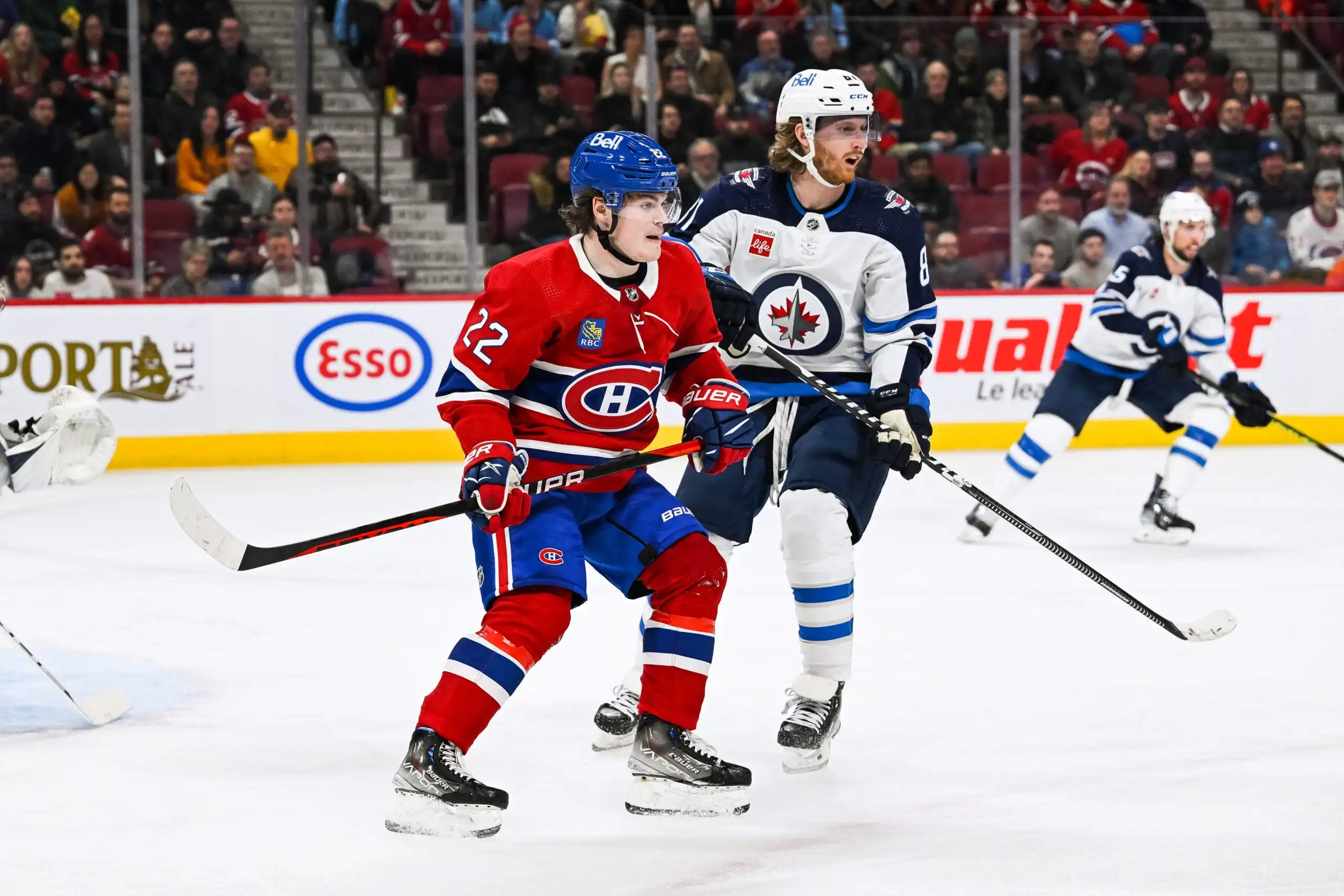
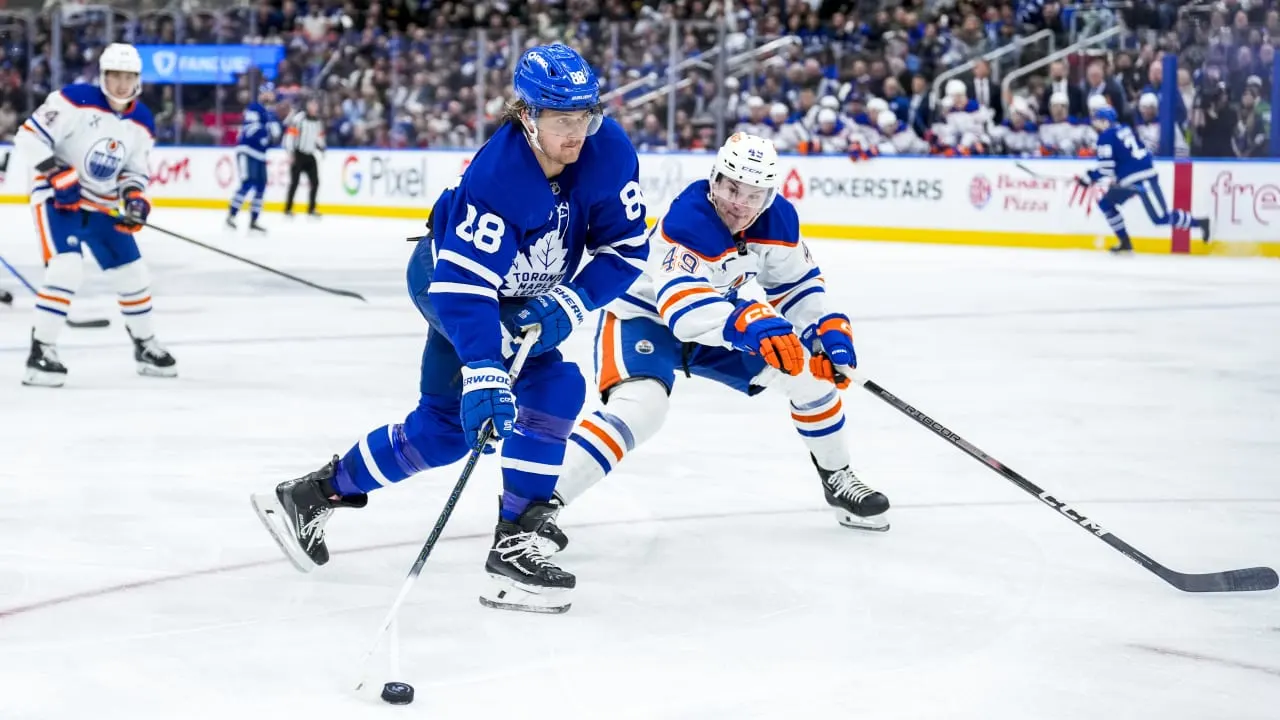
Ice hockey is fast, physical, and full of momentum shifts. A single penalty, goaltender change, or quick scoring run can transform a game. That pace creates a broad range of pre-match and live betting opportunities.
The NHL is the leading professional ice hockey league for many bettors, but betting markets are also available for European domestic leagues and international tournaments. Depending on the sportsbook and your location, you may find odds for competitions in Sweden, Finland, Switzerland, Czechia, Germany, Denmark, and other hockey-focused nations.
From Frozen Ponds to a Global Sport
Ice hockey took shape in Canada during the 19th century, evolving from earlier stick-and-ball games played on ice. A key milestone came in 1875, when James G. Creighton helped organise a recorded indoor game in Montreal, giving the sport a more structured competitive format.
As rules developed, hockey spread across Europe and North America. International growth accelerated with the formation of the sport’s global governing body in Paris in 1908. Ice hockey later became a Winter Olympics fixture, helping it reach audiences far beyond its Canadian roots. Today, professional leagues, national teams, and international tournaments make ice hockey a major worldwide sport and a popular choice for bettors.
Learn the Basics of a Hockey Game
How a Standard Game Is Played
A normal ice hockey game has three 20-minute periods. The score after these 60 minutes is called the regulation-time result.
If an NHL regular-season game is tied after 60 minutes, it moves to overtime and may go to a shootout if no team scores. NHL playoff games use repeated sudden-death overtime periods until a team scores, without a shootout.
This distinction is crucial because some bets are settled after 60 minutes, while others include overtime and shootouts.
Why Market Settlement Rules Matter
Before betting, identify exactly when and how your wager will be settled:
| Market type | What decides the result |
| Regulation market | The score after three periods |
| Full-game market | The official winner, commonly including overtime and shootouts, subject to the sportsbook’s rules |
| Period market | Scoring in the selected period only |
| Player prop | The player’s specified statistic or event |
| Team prop | The team’s specified event or scoring total |
A team may be level after three periods and win in overtime. In that situation, a regulation-time bet on the team loses, while its full-game moneyline may win.
Mastering and Reading Ice Hockey Betting Odds
Ice hockey odds show the return available from a successful selection while indicating how the betting market rates each team’s chance of victory. Sportsbooks can display the same hockey price in American, decimal, or fractional form.
Consider this example, a matchup between the Seattle Kraken and Vancouver Canucks. Seattle is the favorite, while Vancouver is the underdog.
| Team | American odds | Decimal odds | Fractional odds |
| Seattle Kraken | -140 | 1.71 | 5/7 |
| Vancouver Canucks | +120 | 2.20 | 6/5 |
These prices show the same match outcome in three odds formats. The display changes, and small rounding differences may appear, but each format indicates the potential return for the same selection.
American Odds Explained
American odds present each hockey team’s price from two different angles. A minus-priced favorite requires a larger stake for a $100 profit, while a plus-priced underdog can return more than the amount risked. The sign helps readers quickly distinguish between the team expected to win and the team being asked to upset the market.
In the Kraken versus Canucks example, Seattle is listed at -140. This means a bettor would need to risk $140 to make $100 profit if Seattle wins. If the stake is $100 instead, the potential profit is approximately $71.43.
Vancouver is listed at +120. This means a $100 bet would make $120 profit if the Canucks win.
| Selection | American odds | Stake | Profit if successful | Total return |
| Seattle Kraken moneyline | -140 | $100 | $71.43 | $171.43 |
| Vancouver Canucks moneyline | +120 | $100 | $120 | $220 |
Seattle’s minus price reflects its status as the market favorite. Vancouver’s plus price produces a larger potential return because the market considers the Canucks less likely to win.
Decimal Odds Explained
Decimal odds present a hockey selection as a total-return multiplier. Instead of showing how much you need to risk to win a fixed amount, the number tells you what every $1 on that team would return if it wins, with your original stake already included.
In this example, the Kraken is priced at 1.71. Every $1 staked on Seattle would return $1.71 if the Kraken wins. This amount includes the $1.00 stake and $0.71 profit.
Vancouver’s price of 2.20 works in the same way. Every $1 wagered on the Canucks would return $2.20 if Vancouver won, consisting of the $1 stake plus $1.20 profit. In most two-way hockey markets, decimal odds below 2.00 usually indicate the favorite, while prices above 2.00 commonly identify the underdog.
| Selection | Decimal odds | Stake | Profit if successful | Total return |
| Seattle Kraken moneyline | 1.71 | $10 | $7.10 | $17.10 |
| Vancouver Canucks moneyline | 2.20 | $10 | $12 | $22 |
Use this formula:
To work out your total return, multiply the amount you bet by the decimal odds. The result includes your original stake and the profit from a winning bet.
Decimal odds make it easy to compare returns. With the same stake, the higher decimal figure always delivers the higher total payout if the bet wins.
Fractional Odds Explained
Fractional odds compare the possible profit with the amount placed on a hockey selection. The number before the slash represents the possible profit, while the number after the slash represents the stake required to earn that profit.
Seattle at 5/7 means a bettor can make $5 profit for every $7 staked on the Kraken. A $14 bet would therefore make $10 profit. Including the returned stake, the total return would be $24.
Vancouver at 6/5 means a bettor can make $6 profit for every $5 wagered on the Canucks. A $10 bet would make $12 profit, producing a $22 total return if Vancouver wins.
| Selection | Fractional odds | Stake | Profit if successful | Total return |
| Seattle Kraken moneyline | 5/7 | $14 | $10 | $24 |
| Vancouver Canucks moneyline | 6/5 | $10 | $12 | $22 |
Fractional odds separate the possible profit from the original stake. This can help readers immediately see how much they may gain relative to the amount they risk.
Identifying Favorites and Underdogs
In the Seattle versus Vancouver example, the Kraken are the favorite because they have the shorter price in all three formats:
- Seattle Kraken: -140, 1.71, or 5/7
- Vancouver Canucks: +120, 2.20, or 6/5
Vancouver is the underdog because they have a longer price and a higher potential return.
A favorite is not guaranteed to win. It simply has a higher implied chance of success according to the betting market. An underdog’s larger payout reflects its lower estimated probability, not an automatic value opportunity.
Full Game Winner vs Regulation Betting
Understanding this difference is one of the most important parts of learning how to bet on ice hockey.
Full Game Moneyline
The full-game moneyline gives you two selections:
- Home team to win
- Away team to win
A standard full-game moneyline is usually settled on the official winner, including overtime and a shootout where the sportsbook’s rules allow. Check the market label before betting because settlement rules can vary.
Example:
| Final game situation | Home full-game moneyline |
| Home team wins 4-2 in regulation | Wins |
| Score is 2-2 after 60 minutes, home team wins in overtime | Wins |
| Score is 2-2 after 60 minutes, away team wins in a shootout | Loses |
How Do 3-Way Lines Work in Ice Hockey?
A 3-way line is a regulation-time market with three possible outcomes:
- Home team win
- Draw
- Away team win
This bet settles at the end of the third period. Overtime and shootout results do not count.
The 3-way line may also be called:
- Regulation-time betting
- 60-minute betting
- 1X2 betting
- Three-way moneyline
3-Way Line Example
| Result after 60 minutes | Home win selection | Draw selection | Away win selection |
| Home team leads 4-2 | Wins | Loses | Loses |
| Score is tied 3-3 | Loses | Wins | Loses |
| Away team leads 3-1 | Loses | Loses | Wins |
| Home team wins in overtime after a 2-2 tie | Loses | Wins | Loses |
A 3-way line can offer higher odds on either team than a full-game moneyline. However, that team must lead after regulation, so an overtime win will not be enough.
Main Ice Hockey Betting Markets
Ice hockey betting markets cover game winners, goal margins, scoring totals, periods, player performances, and long-term championship outcomes. Each market asks a different question: who wins, by how much, how many goals are scored, or whether a player reaches a specific statistic.
| Bet type | What you predict | Example | Key point |
| Moneyline | The eventual game winner | Seattle to beat Vancouver | Usually includes overtime and shootouts |
| Puck line | Whether a team covers a goal handicap | Seattle -1.5 vs Vancouver | Favorite must win by at least two goals |
| Total goals | Combined scoring by both teams | Over 6.5 goals | Requires seven or more total goals |
| Team total | Goals scored by one team | Vancouver Under 2.5 goals | Only one team’s scoring matters |
| 3-way line | The result after regulation | Seattle win, draw, or Vancouver win | Settles after 60 minutes |
| Period market | Result or total for one period | Over 1.5 first-period goals | Only selected-period scoring counts |
Moneyline Bets
A moneyline bet is a direct wager on the team that wins the game. You do not need to predict the exact score or winning margin. For example, if Seattle is priced at -135 and Vancouver is +115, a Seattle moneyline bet wins if Seattle becomes the official winner.
Most full-game moneyline markets include overtime and shootout results. This option can suit bettors who believe one team is stronger but do not want to guess whether the game will be decided by one goal or several goals.
Puck Line Bets
The puck line gives one team a 1.5-goal handicap. The favorite is usually set at -1.5, meaning it needs to win by at least two goals. The underdog receives +1.5, allowing it to win outright or lose by one goal and still cover the line.
For example, Seattle -1.5 wins with a 4-2 result but loses with a 3-2 result. Vancouver +1.5 wins if Vancouver loses 3-2 or wins the game. Puck-line prices can be more attractive than moneyline prices because the bettor must predict more than simply the winner.
Total Goals Bets
Total goals betting, commonly called Over/Under betting, focuses on the combined number of goals from both teams. The winner of the game is irrelevant. If the sportsbook sets the line at 6.5, Over wins with seven or more total goals, while Under wins with six or fewer.
For example, a 4-3 score produces seven goals, making Over 6.5 successful. A 3-2 result creates five goals, so Under 6.5 wins. Goal totals can be influenced by starting goalies, team tempo, defensive form, special-teams performance, travel, and fatigue.
Before selecting Over or Under, check whether the sportsbook includes overtime and shootout scoring in the total. The market rules, rather than the general bet name, decide how the wager is settled.
Team Total Bets
A team total focuses on how many goals a single team scores. This lets you avoid predicting the match winner or the combined score. You simply decide whether one club will score more or fewer goals than the listed line.
For example, Seattle Over 3.5 goals wins if Seattle scores four or more goals, regardless of Vancouver’s final total. Vancouver Under 2.5 goals succeeds if Vancouver scores zero, one, or two goals. Check whether the market applies to regulation time only or the full game.
3-Way Lines
A 3-way line offers three selections: home win, draw, or away win. It is settled after regulation time, which means the result at the end of the third period determines the winning selection.
If Seattle and Vancouver are tied 2-2 after 60 minutes, the draw selection wins. If Seattle scores in overtime, a Seattle 3-way selection still loses because Seattle were not ahead at the end of regulation. This market can offer longer odds than a full-game moneyline because the chosen team must win inside 60 minutes.
Other Important Ice Hockey Bets
These markets are widely available and can add variety after you understand the core hockey bets.
| Bet type | What it means | Example |
| Period winner | Pick the team that scores more in one period | Seattle to win the first period |
| Period total | Bet on goals in one specific period | Under 1.5 first-period goals |
| Next team to score | Pick the team that gets the next goal | Vancouver to score next |
| Anytime goalscorer | Choose a player to score at least once | Seattle forward to score |
| Player points | Bet on a player recording a goal or assist | Seattle defenseman Over 0.5 points |
| Goalie saves | Bet on a goalie’s total saves | Seattle goalie Over 27.5 saves |
| Game to overtime | Predict whether the score is tied after 60 minutes | Yes |
| Same-game parlay | Combine several outcomes from one game | Seattle win + Under 6.5 goals |
Period Winner
A period-winner bet uses only the scoring in one chosen 20-minute period. A Seattle first-period selection wins if Seattle scores more than Vancouver before the first intermission. It does not matter which team wins the match overall. This market can suit bettors who expect a fast-starting team to control the early stages.
Period Total
A period total is an Over/Under wager on goals during a single period. Under 1.5 first-period goals wins if there are zero or one goals in the opening 20 minutes. Over 1.5 wins if at least two goals are scored. Consider starting goalies, early team pace, power-play opportunities, and defensive setups.
Next Team to Score
This live market asks which team scores the next goal. The bet settles as soon as a goal is scored and does not depend on the final winner. For example, Vancouver can score next after trailing 2-1 and still lose the game later. Power plays, recent shots, offensive-zone pressure, and faceoffs can affect the market.
Anytime Goalscorer
An anytime goalscorer bet wins when the selected player scores at least one goal. The goal can come during regulation, overtime, or a power play, depending on sportsbook rules. Check the player’s line role, shot volume, power-play involvement, recent ice time, and the opposing goalie before choosing this market.
Player Points
A player-points bet covers goals and assists. Over 0.5 points wins if the selected player records one goal or one assist. For example, a Seattle defenseman who assists on a power-play goal earns one point. Top-line players and first power-play-unit skaters often receive more scoring opportunities.
Goalie Saves
A goalie-saves bet asks whether a netminder will make more or fewer saves than a listed line. Seattle goalie Over 27.5 saves wins with 28 or more saves. This market is affected by the opponent’s shot volume, game pace, defensive injuries, and power-play chances. Confirm that the named goalie is starting.
Game to Overtime
A game-to-overtime bet asks whether the score will be level after three periods. For example, a 2-2 score after 60 minutes makes the Yes selection successful. The market ends at regulation, so the eventual overtime or shootout winner does not change the outcome.
Same-Game Parlay
A same-game parlay combines multiple selections from one matchup. For example, you might choose Seattle moneyline, Under 6.5 goals, and Seattle’s goalie Over 27.5 saves. Every selection must win for the parlay to pay. Because several outcomes must happen together, same-game parlays carry higher risk than individual bets.
What to Research Before an Ice Hockey Bet
A better ice hockey betting decision comes from looking beyond a team’s position in the standings. Recent results can be useful, but they do not always show whether a team is playing well or simply benefiting from favourable matchups, hot goaltending, or a soft schedule.
Use the factors below to build a clearer picture of the matchup before choosing a market.
Look Beyond Recent Results
A three-game winning streak may look impressive, but it is worth checking how the team earned those wins. Did they face struggling opponents? Were they heavily outshot? Did their goaltender make an unusually high number of saves?
Focus on the overall performance behind the scoreline:
- Goals scored and allowed per game
- Shots created compared with shots conceded
- Scoring chances in dangerous areas
- Home-ice and road performance
- Quality of recent opponents
- Results in close games
- Recent overtime or shootout dependence
This context can help you avoid overreacting to short-term winning or losing streaks.
Check the Goalie Matchup
Goaltenders can strongly influence both the likely winner and the expected number of goals. A team may look much stronger with its first-choice netminder than with a backup starting after limited rest.
Before betting, check:
- Who is expected to start in goal
- Whether the starter played recently
- How many shots the goalie has faced in recent games
- Recent save performance
- Whether the goalie is returning from injury
- How well the team protects the slot and rebounds
- Whether a backup goalie is likely to be used
Do not judge a goalie using save percentage alone. A strong defensive team can limit dangerous chances, while another goalie may face difficult shots because of poor coverage around the net. Consider both the goalie’s form and the quality of defensive support in front of them.
Review Roster Changes and Special Teams
Hockey teams rely on line chemistry and role balance. One injury can change the quality of a scoring line, weaken a defensive pairing, or remove an important player from the power play or penalty kill.
Pay attention to:
- Absences involving top-six forwards or key defensemen
- Late goalie announcements
- Players moving into a top-line role
- Changes to the first power-play unit
- Penalty-kill results and discipline
- Players returning after missed games
- Reduced ice time or restricted roles after an injury
These updates are especially relevant for player props, team totals, and period markets.
Match the Game Style to the Market
The type of game you expect should guide the bet you consider. A fast, open matchup may suit a different market than a low-event contest between two defensive teams.
| Expected game pattern | Markets that may fit |
| Both teams play at a high pace and create frequent chances | Full-game Over, team totals, player shots on goal |
| Strong defensive systems and reliable starting goalies | Full-game Under, first-period Under, goalie saves |
| Clear favorite faces an opponent with limited scoring depth | Moneyline, puck line, underdog team total Under |
| Team is playing its second game in two nights | Opponent moneyline, tired team total Under, period markets |
| Elite power play faces a weak or undisciplined penalty kill | Team total Over, power-play point, player points |
| One team regularly allows many shots | Opposing player shots, opponent team total, or the team’s goalie save market |
The goal is not to find a guaranteed bet. It is to form a more complete view of the game, choose a market that matches that view, and only bet within a pre-set budget.
Finding Better Value in Hockey Odds
Comparing hockey odds means assessing whether the available price matches your own view of the matchup. A higher price can increase a potential return, but it does not make any outcome more certain.
A practical process is:
- Review the matchup, confirmed lineups, expected goalies, injuries, schedule, and recent performance.
- Decide whether the market and price make sense based on your research.
- Compare available prices across legal sportsbooks where permitted.
- Keep a record of the bet amount, market, odds, reasoning, and result.
- Treat every decision as uncertain and remain within your planned spending limit.
Comparing odds at reputable, legal sportsbooks can improve the price you receive on the same selection. Better prices may improve long-term value, but they do not remove the possibility of losses.
Pitfalls to Avoid Before Placing a Hockey Bet
Ice hockey betting mistakes often happen when bettors misunderstand the market rather than the game. First, check whether your bet covers regulation time only or includes overtime and shootouts. A 3-way line ends after 60 minutes, while a full-game moneyline usually follows the official winner.
Do not confuse winning a game with covering the puck line. A favorite at -1.5 must win by at least two goals, so a 3-2 victory is not enough.
Avoid betting based only on a recent winning streak, team reputation, or short odds. Review the opponent, starting goalie, injuries, travel schedule, and recent workload before making a decision. A last-minute goalie or lineup change can affect the likely winner and total-goals outlook.
Set a clear entertainment budget before betting and avoid changing your bet amount after a loss. Do not add poorly researched selections to a parlay just to increase a possible payout. Every hockey market carries risk, so only use money you are comfortable losing.
Responsible Ice Hockey Betting
Ice hockey betting should remain a form of entertainment. Set a spending limit before you begin, take breaks when it stops being enjoyable, and never use money intended for essentials. If gambling begins to affect your finances, wellbeing, work, or relationships, pause and seek professional or peer support.
- National Council on Problem Gambling: Provides confidential guidance and links people in the United States to treatment and recovery resources.
- Gamblers Anonymous: Offers peer-led meetings for people who want support to stop gambling and maintain recovery.
Frequently Asked Questions
“`html
Do shootout goals count in hockey betting?
What happens if an NHL game is abandoned?
Can a hockey total bet end in a push?
What does an alternate puck line mean?
Are hockey odds better before the game?
Do empty-net goals count toward totals?
Why are puck lines usually set at 1.5?
Can I bet on hockey without choosing a winner?
When are NHL starting goalies confirmed?
Why do hockey odds change before puck drop?
“`