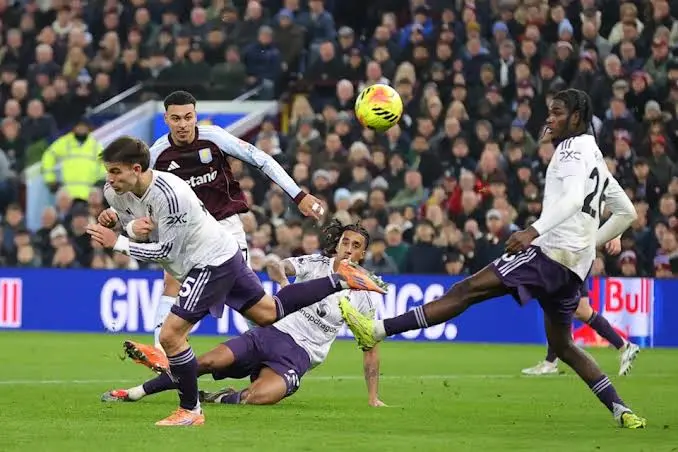



Real Madrid welcome PSV Eindhoven with a perfect European start and a recent Clásico victory behind them. Madrid have nine Champions League points from three matches, while PSV have four after winning at Porto. The contrast is clear: Madrid have scored ten European goals, while PSV’s three games have produced only four goals altogether. That makes the visitors’ defensive discipline important without dismissing the home attack. The prediction is Real Madrid 3–1 PSV, with Madrid to win preferred and over 2.5 goals the alternative. Both projected teams remain unconfirmed, and November’s results could change the picture before this fixture arrives.
Our Prediction
Real Madrid Vs. PSV Prediction and Betting Highlights
|
Real Madrid Vs. PSV Prediction: Does the Scoring Gap Decide It?
Madrid are predicted to win 3–1. Their five-match winning run and ten European goals give them the stronger attacking case. PSV’s narrow away results prevent assuming an easy start, while Madrid’s lack of European clean sheets leaves a visiting goal plausible. The main risk is PSV keeping the match much tighter.
Madrid’s Home Output Against PSV’s Recent Away Resistance
Madrid’s stronger scoring supports the home selection more clearly than a large winning margin. Their three recent home matches produced nine goals, compared with PSV’s two goals across three recent trips.
Both sides met Leipzig in the league phase: Madrid won 4–1 at home, while PSV lost 1–0 away. Venue and game circumstances differ, so subtracting those scores would be misleading. Still, Madrid have shown more ways to score against a European defence.
Porto have lost all three European games, which limits the comparison with Madrid. PSV need a similar defensive effort against a more productive attack.
Why the European Cup History Has Limited Predictive Weight
The old ties involved different players, managers and rules. Four historical regulation draws do not establish that a draw is likely between the current teams.
Current attacking roles and away scoring are more useful. The extra-time distinction keeps the history accurate without predicting individual scorers or a half-time leader.
The Final Result Call and the Market That Expresses It Best
The final forecast is Real Madrid 3–1 PSV Eindhoven. Madrid to win is the main selection. Goals and player markets offer alternative ways to back a view of the match, not a list of wagers to combine.
A different Madrid winning score can still reward the main result bet. Compare UEFA Champion league odds with the announced teams before deciding whether the potential return justifies the risk. A short price may offer little reward for accepting the possibility of a draw or a strong PSV defensive performance.
Why Does Real Madrid’s Attack Give PSV a Different European Test?
Madrid have scored ten times in three European matches and won their latest five competitive games. Mbappé supplies the central finishing, while Güler, Bellingham and Diomande give the attack different ways forward. PSV’s challenge is to restrict those combinations without retreating so far that their own forwards lose contact with the ball.
Madrid’s scoring supports the home preference in Champion league betting, but every European opponent has scored against them. A Madrid win does not require a clean sheet.
José Mourinho’s side beat Barcelona with 38% possession and three big chances. Against PSV, they can threaten through quick attacks without needing prolonged possession.
Madrid’s Five Latest Results Show Where the Momentum Comes From
Madrid have won all five matches in the table, including away games against Barcelona and Roma. Their attacking return has remained strong, and Villarreal were the only side Madrid kept goalless in that run.
| Date | Competition | Opponent | Home / away | Madrid score | Result |
| 25 October 2026 | LaLiga | Barcelona | Away | 2–1 | Win |
| 21 October 2026 | Champions League | RB Leipzig | Home | 4–1 | Win |
| 18 October 2026 | LaLiga | Sevilla | Home | 4–1 | Win |
| 14 October 2026 | Champions League | Roma | Away | 4–3 | Win |
| 10 October 2026 | LaLiga | Villarreal | Home | 1–0 | Win |
Five victories brought fifteen goals and six concessions. The three home matches supplied nine goals and two conceded; the two trips produced six goals and four concessions. Madrid’s scoring supports another home victory, but the Roma game shows why attacking success should not be confused with shutting down an opponent’s chances throughout the evening.
In Europe, Madrid beat Inter 2–1, Roma 4–3 and Leipzig 4–1. The two Bernabéu fixtures therefore produced six home goals and two concessions. Those are useful results, but two matches remain a small home sample.
Mbappé scored in the 41st and 87th minutes at Barcelona. Madrid recovered after Raphinha’s equaliser rather than needing uninterrupted control. Lunin’s five saves also mattered, showing that the goalkeeper and defensive work contributed alongside the winning finishes.
Real Madrid’s Champions League Personnel and the Availability Picture
The players below belong to Madrid’s current senior European selection. The groups follow competition categories; selection for the season does not confirm fitness or a starting place against PSV.
- Goalkeepers: Thibaut Courtois, Andriy Lunin.
- Defenders: Raúl Asencio, Éder Militão, Dean Huijsen, Trent Alexander-Arnold, Ibrahima Konaté, Marc Cucurella, Álvaro Carreras, Antonio Rüdiger, Denzel Dumfries.
- Midfielders: Jude Bellingham, Eduardo Camavinga, Federico Valverde, Aurélien Tchouaméni, Arda Güler, Bernardo Silva, Yan Diomande, Sergio Martínez.
- Forwards: Vinícius Júnior, Endrick, Kylian Mbappé, Rodrygo, Carlos Espí, Brahim Díaz.
Relevant List B options include goalkeepers Sergio Mestre and Javi Navarro; defenders Jesús Fortea, Joan Martínez and Mario Rivas; midfielders Thiago Pitarch, Jorge Cestero, Diego Villalba and Gabriel Valero; and forward Daniel Yáñez. Eligibility does not guarantee minutes.
Mbappé has three European goals from three appearances. Valverde, Güler, Bernardo, Diomande, Rüdiger, Endrick and Espí have one each, completing Madrid’s ten-goal total. Güler, Brahim and Diomande have two European assists apiece, giving Madrid several players capable of creating the final pass.
Courtois missed Barcelona with a flu-like illness, and Lunin started. That October absence does not establish his status for November. Rodrygo and Asencio were also absent from the Clásico squad during injury recoveries; neither is treated as a confirmed absentee for PSV.
Vinícius missed Barcelona through a domestic suspension. That is not evidence of a Champions League ban. He remains on Madrid’s European list and has appeared in all three games, so his potential return must remain part of the attacking discussion.
Madrid’s Possible Starting Team: Width, Midfield and the Central Finisher
A possible 4–2–3–1 follows the Barcelona starters, with Lunin retained from that match and Valverde at right-back. Every proposed player is on Madrid’s European list. Courtois and Vinícius are major alternatives, not confirmed November absentees.
- Goalkeeper: Andriy Lunin.
- Right-back: Federico Valverde.
- Centre-back: Ibrahima Konaté.
- Centre-back: Dean Huijsen.
- Left-back: Marc Cucurella.
- Central midfielder: Aurélien Tchouaméni.
- Central midfielder: Bernardo Silva.
- Right-sided attacker: Arda Güler.
- Attacking midfielder: Jude Bellingham.
- Left-sided attacker: Yan Diomande.
- Centre-forward: Kylian Mbappé.
Courtois would challenge for the goalkeeper position once recovered. Vinícius could change the wide arrangement, with Diomande or Güler facing a different role. This projection preserves a recent combination rather than assuming the same eleven will start a month later.
Dumfries, Camavinga, Alexander-Arnold and Espí came on against Barcelona. Rüdiger, Militão and Carreras were unused defensive alternatives, giving Mourinho other eligible combinations.
How Could PSV’s Defensive Organisation Challenge Real Madrid?
PSV can make this difficult by keeping their defensive lines close and retaining a reliable outlet when possession changes. They have conceded only twice in three European matches, with the Porto clean sheet the strongest away example. However, two goals scored leave little room for error if Madrid find their usual attacking rhythm.
Peter Bosz’s side are eighteenth in the current European table with four points. They are third domestically on twenty points from ten games, a separate record from their European results.
PSV need cover behind their full-backs when attacks end. Otherwise, Mbappé and Madrid’s wide runners can exploit the space before the defence regroups.
PSV’s Recent Scorelines Reveal a Tighter Margin for Error
PSV have two wins, one draw and two defeats in their latest five competitive games. They followed the Porto victory with a 1–1 home draw against Feyenoord, extending a sequence in which scoring has often been limited.
| Date | Competition | Opponent | Home / away | PSV score | Result |
| 25 October 2026 | Eredivisie | Feyenoord | Home | 1–1 | Draw |
| 20 October 2026 | Champions League | Porto | Away | 1–0 | Win |
| 17 October 2026 | Eredivisie | ADO Den Haag | Away | 1–2 | Loss |
| 13 October 2026 | Champions League | RB Leipzig | Away | 0–1 | Loss |
| 9 October 2026 | Eredivisie | Heerenveen | Home | 2–0 | Win |
Two wins, one draw and two defeats produced five goals and four concessions. PSV kept two clean sheets, but their three trips supplied only two goals. Porto offers encouragement, while the ADO and Leipzig defeats show how a narrow scoring return can leave them vulnerable.
PSV drew 1–1 with Shakhtar Donetsk before losing 1–0 at Leipzig and winning 1–0 at Porto. All three European games finished below 2.5 goals. That record conflicts with Madrid’s higher totals, giving the goals markets a genuine choice rather than a single obvious direction.
Against Feyenoord, Til scored after 21 minutes before Hadj Moussa equalised after the break. Van Bommel played centrally, and Til later explained that Van Bommel makes more runs behind the defence, while Mijnans contributes more to the build-up. Those differences could affect PSV’s attacking approach in Madrid.
PSV’s Champions League Personnel and the Availability Picture
PSV’s senior European options are listed below. The group includes players with few or no competition minutes, so registration alone should not be read as evidence of current fitness or a guaranteed place in the travelling party.
- Goalkeepers: Nick Olij, Matěj Kovář.
- Defenders: Lutsharel Geertruida, Yarek Gasiorowski, Armando Obispo, Ryan Flamingo, Sergiño Dest, Mauro Júnior, Filip Kostić, Kiliann Sildillia.
- Midfielders: Paul Wanner, Guus Til, Sven Mijnans, Kodai Sano, Ayoni Santos.
- Forwards: Ivan Perišić, Ruben van Bommel, Ricardo Pepi, Sami Ouaissa, Esmir Bajraktarević, Mikkel Bro Hansen, Dennis Man, Sam Lammers.
List B midfielders Noah Fernandez and Amir Bouhamdi have each made one European appearance. Shuryjano Cornecion appeared domestically against Feyenoord but has not yet played in Europe.
Til and Dest have scored PSV’s two European goals. Mijnans and Obispo have one assist each. Kovář has started all three European matches, conceding twice, while Til, Sano, Mijnans and Perišić have appeared in each game.
Pepi was ruled out of the Feyenoord match, while Lammers had been training with the under-21 group during his recovery. Van Bommel’s fitness was uncertain before that game, but he started against Feyenoord; Sildillia was on the bench.
Paul Wanner’s foot injury, first reported in September, kept him out of recent squads. Mijnans’s red-card suspension explained his absence from the Feyenoord team, not a European exclusion. None of those October developments establishes the final November availability picture.
PSV’s Expected Formation and the Choices Around Their Forward Line
A possible 4–2–3–1 keeps the Feyenoord starters, with Van Bommel centrally and Til behind him. The eleven are selected for PSV’s European campaign. Mijnans provides a significant alternative once available, while recovery updates could introduce other forwards.
- Goalkeeper: Matěj Kovář.
- Right-back: Sergiño Dest.
- Centre-back: Lutsharel Geertruida.
- Centre-back: Armando Obispo.
- Left-back: Filip Kostić.
- Central midfielder: Mauro Júnior.
- Central midfielder: Kodai Sano.
- Right-sided attacker: Esmir Bajraktarević.
- Attacking midfielder: Guus Til.
- Left-sided attacker: Ivan Perišić.
- Centre-forward: Ruben van Bommel.
Mijnans can offer a more creative central option, potentially changing Van Bommel’s role or the balance around Til. Bro Hansen and Man appeared as substitutes against Feyenoord, while Flamingo and Gasiorowski provide defensive alternatives from the European list.
Peter Bosz explained that Obispo did not start at Porto because that match came too soon after the ADO game. That was a selection decision rather than a reported injury. PSV have defensive choices, but the final combination must also handle Madrid’s pace after turnovers.
Real Madrid Vs. PSV Head-to-Head: Previous Meetings and European Results
Madrid and PSV have played four European Cup matches, with one Madrid victory and three draws. PSV eliminated Madrid in the 1988 semi-finals without winning either leg. Madrid won the following season’s quarter-final after extra time. The scoring record is four goals to three, including that extra period. These meetings concern different teams and rules from the current league phase.
| Date | Competition | Home team | Away team | Final score |
| 15 March 1989 | European Cup quarter-final, second leg | Real Madrid | PSV | 2–1 after extra time |
| 1 March 1989 | European Cup quarter-final, first leg | PSV | Real Madrid | 1–1 |
| 20 April 1988 | European Cup semi-final, second leg | PSV | Real Madrid | 0–0 |
| 6 April 1988 | European Cup semi-final, first leg | Real Madrid | PSV | 1–1 |
The 1988 Madrid Draw That Gave PSV an Away Goal
The first leg finished 1–1 at the Bernabéu on 6 April 1988. Hugo Sánchez scored from the penalty spot before Edward Linskens equalised for PSV, giving them an away goal that became decisive in the tie.
The away-goals rule then in use gave PSV an advantage before the return. Linskens’s finish proved more important than the level aggregate score suggested.
The Eindhoven Stalemate That Took PSV Into the 1988 Final
PSV and Madrid drew 0–0 on 20 April 1988, leaving the tie level at 1–1 on aggregate. PSV progressed on away goals despite winning neither leg, and then went on to win the 1988 European Cup final.
Madrid’s unbeaten match record therefore does not mean they won every tie. A league-phase game has no aggregate score or away-goals calculation.
The 1989 Quarter-Final Opener Left Both Sides Level
The first leg in Eindhoven ended 1–1 on 1 March 1989. Butragueño scored for Madrid before half-time, and Romário equalised for PSV in the second half. The draw left the quarter-final open, with Madrid taking an away goal into the second leg at the Bernabéu.
Unlike the previous semi-final, this tie concerned a place in the last four. Its score offers little guidance about today’s attacking players.
Extra Time Settled Madrid’s 1989 Return Match
Madrid won the return 2–1 after extra time on 15 March 1989, advancing 3–2 on aggregate. The score after ninety minutes was 1–1, so the official home victory was not a normal-time winning result.
Across the four old meetings, regulation time produced four draws. That history is useful context, but it does not establish that another draw is likely between entirely different squads.
Real Madrid Vs. PSV Betting Angles: Results, Goals and Player Contributions
Madrid to win is the leading result choice, with goals and player markets offering different conditions rather than extra bets to collect. The sections below are alternatives. Standard full-match selections cover ninety minutes plus stoppage time unless their terms say otherwise.
Full-Time Result: Madrid’s Winning Run Meets PSV’s Away Challenge
Madrid are preferred after five straight competitive victories and three European wins. PSV’s Porto success supplies a draw or upset argument through compact defending, but their limited away scoring makes the home side the stronger choice.
A home win needs Madrid to finish ahead, not score early or control possession throughout. Their Barcelona victory showed that a decisive late attack can settle an otherwise competitive match.
Recommended approach: Madrid to win, if the starting attack and return justify the draw and away-win risks rather than relying on the club’s reputation.
Draw No Bet: The Cost of Protecting Against a Level Finish
Madrid draw no bet refunds a draw, wins on a home victory and loses if PSV win. The protection answers one concern without removing the possibility of losing the stake.
PSV’s narrow European results make a level finish worth considering. The reduced payout must still make sense, especially if Madrid are already offered at a short outright price.
Recommended approach: Use Madrid draw no bet instead of the main winner selection when the refund is worth the smaller return. It is not a separate reason to back Madrid twice.
Double Chance: Broader Coverage Without Ignoring the Price
Madrid or draw covers a home victory and a level result. PSV winning is the losing outcome, so two covered results should not be confused with a risk-free wager.
The hosts’ recent sequence supports the broader home position. However, extra cover can leave little reward, and PSV have already shown they can win a European away game without scoring several goals.
Recommended approach: Consider Madrid or draw only when its return is worthwhile. A very short payout can make leaving the market alone preferable to buying protection automatically.
Asian Handicap: Finding a Margin the Evidence Can Support
Madrid minus one Asian handicap wins with a victory by at least two goals. A one-goal win returns the stake; a draw or PSV victory loses the wager.
The 3–1 forecast wins this line, but PSV have conceded only twice in three European games. That makes the handicap more demanding than simply preferring Madrid, despite the hosts’ stronger scoring.
Recommended approach: Madrid minus one is secondary and price-dependent. Keep the main result selection ahead of it when confidence concerns the winner more than the size of the winning margin.
Total Goals: Madrid’s Scoring Against PSV’s Lower European Totals
Over 2.5 goals is the total-goals preference, needing at least three. Every Madrid European game cleared that number, while none of PSV’s did, creating a genuine clash between the two records.
Madrid’s attack gives the over its strongest support. PSV can keep the total lower if they restrict central chances, slow the game and avoid a costly early concession.
Recommended approach: Over 2.5 goals fits the forecast without requiring all four predicted goals. Avoid moving to a higher line solely because Madrid scored four in one European appearance.
Both Teams to Score: Can PSV Supply the Visiting Goal?
Both teams to score, yes is secondary because Madrid have conceded in all three European matches. PSV have scored in two of theirs, with Til and Dest supplying the goals.
The concern is PSV’s modest away output, including the blank at Leipzig. A strong Madrid performance could still end with a home clean sheet, defeating this market while rewarding the main result selection.
Recommended approach: Both teams to score, yes requires a credible visiting attack and suitable price. The predicted PSV goal is plausible, not the strongest part of the forecast.
Madrid Team Goals: How Much Can the Home Attack Produce?
Madrid over 1.5 team goals requires at least two home goals, whatever PSV score. Madrid reached that figure in four of their latest five competitive matches and in all three European appearances.
PSV’s defending makes two a more measured request than expecting another four-goal evening. Madrid’s final creators and central finisher matter, particularly if the wide arrangement changes from the Barcelona team.
Recommended approach: Madrid over 1.5 team goals is the broader home-attacking option. It allows several possible scorers and requires neither a PSV goal nor a Madrid clean sheet.
PSV Team Goals: The Route to a Bernabéu Breakthrough
PSV over 0.5 team goals asks for one away goal, not a result. Madrid’s five European concessions provide an opening, while Til’s movement and the wide players offer different ways to support a breakthrough.
PSV scored only twice across their three recent trips. That record is a real limitation, even against a favourite that has not yet kept a European clean sheet.
Recommended approach: PSV over 0.5 is speculative and depends on attacking selections. It overlaps with both teams to score, so repeating the away-goal opinion adds exposure, not variety.
First-Half Result: Is an Early Madrid Lead Supported?
No first-half result is selected. Madrid led Barcelona at the break, while PSV also held a half-time advantage against Feyenoord. Those latest examples do not establish which side will lead this different match.
The full-time Madrid view allows patience, substitutions and a late breakthrough. Requiring an interval lead adds a condition that the complete-match form does not prove.
Recommended approach: Pass on the first-half winner. A broader opening-period record is needed before turning Madrid’s stronger overall results into a firm prediction about the first forty-five minutes.
First-Half Goals: Timing the Breakthrough Rather Than Guessing It
No first-half goals line is preferred from the present timing evidence. Both teams’ latest matches contained one opening-period goal, but that does not establish a reliable rate against each other.
The full-match forecast can still succeed after a quiet first half. A cautious PSV start or patient Madrid possession could delay the better chances without deciding the eventual total.
Recommended approach: Wait for broader timing records and a quoted line. Do not transfer the over 2.5 complete-match opinion directly into a shorter period simply because the forecast contains several goals.
Half-Time/Full-Time: Whether the Match Sequence Adds Too Much Risk
Madrid/Madrid needs a home lead at the interval followed by a home victory. Draw/Madrid requires a level half-time score and a Madrid win, making the route as important as the final result.
Either sequence could produce 3–1. PSV scoring first could create another path altogether, so the score prediction does not identify one supported sequence by itself.
Recommended approach: Pass on half-time/full-time. The main opinion concerns Madrid’s ability to finish ahead, not a particular order of goals or the precise stage at which they take control.
Correct Score: One Exact Finish From the Main Forecast
Real Madrid 3–1 PSV is the only exact-score selection. It reflects Madrid’s higher scoring and allows PSV a breakthrough against a defence that has conceded in every European appearance.
Both totals must be right. A different Madrid victory can win the main result bet while losing this one, making the larger potential payout a reflection of a narrower requirement.
Recommended approach: Madrid 3–1 is a small optional wager within the existing budget. Avoid adding several competing scores or increasing spending because the exact outcome offers a more eye-catching return.
Madrid Anytime Scorer: Selecting the Finisher, Not Just the Favourite
Mbappé is the Madrid scorer candidate after three European goals and two goals at Barcelona. His central starting role gives the selection more substance than simply naming the best-known attacker.
He scored in the 41st and 87th minutes at Barcelona. That return shows decisive finishing, not a conversion rate that should be expected to repeat against PSV.
Recommended approach: Mbappé anytime scorer depends on a central start and an acceptable price. Madrid’s team total is less restrictive because another player can supply the required goals.
PSV Anytime Scorer: Identifying Their Best Individual Scoring Route
Til is the PSV scorer candidate after his European winner at Porto and his opening goal against Feyenoord. His supporting role allows runs beyond the central forward rather than relying only on service into the striker.
Madrid can reduce those opportunities by restricting the passes into advanced midfield areas, particularly the balls played into Til’s channel.
Recommended approach: Til anytime scorer is speculative and requires a start with attacking freedom. PSV team goals covers other finishers if the visiting breakthrough matters more than its scorer.
Player Shots on Target: A Clear Requirement for One Named Attacker
Güler one or more shots on target is worth examining if he starts in an advanced role. He recorded three shots on target from five attempts against Barcelona, showing recent shooting involvement without guaranteeing a similar return against PSV.
One match is not a dependable average, and a deeper midfield position could reduce his opportunities. Starting on the right does not guarantee the same space or shooting volume against PSV.
Recommended approach: Güler one or more shots on target is conditional on role, minutes and price. Avoid higher requirements without broader accuracy evidence supporting the extra demand.
Goal or Assist: Which Madrid Creator Has the Stronger Case?
Diomande is the Madrid goal-or-assist candidate after one goal and two assists in three European appearances. His current wide role offers a route through either finishing or creating the final pass.
Vinícius returning could change his starting prospects, so competition involvement alone is insufficient. Assist-credit terms also matter because earlier passes and some deflections may not qualify with every provider.
Recommended approach: Diomande to score or assist only with a clear starting role and worthwhile return. Skip it if his expected minutes shrink or the qualifying contribution rules are unclear.
Goalkeeper Saves: PSV’s Defensive Workload and the Offered Number
Kovář’s saves market needs a specific offered number before a choice is justified. He made six saves against Feyenoord, but that home match does not predict his workload at the Bernabéu.
Madrid put five attempts on target against Barcelona. Some accurate efforts become goals rather than saves, and PSV’s defending will influence how many attempts reach their goalkeeper at all.
Recommended approach: Wait for Kovář’s confirmed start and saves line. A strong opposing attack creates possible work, not an automatic reason to back an unspecified over or repeat that total.
Corners: Whether Sustained Pressure Produces a Supported Selection
No corners total is selected. Madrid and PSV each took six corners in their latest matches, but adding those counts together would not create a sound forecast for this fixture.
Different opponents, score situations and defensive choices influence corner volume. Madrid can create dangerous central attacks without winning corners, while PSV may have less attacking territory than they did at home against Feyenoord.
Recommended approach: Pass until wider Madrid home and PSV away records support an available line. The winner prediction and the expectation of home pressure are not enough alone.
Cards: Referee Tendencies Before a Disciplinary Pick
No cards selection is preferred without the referee appointment, current disciplinary records and an actual line. Madrid’s domestic suspension situation does not establish how many cautions this European game will contain.
Cards and booking-points markets can count incidents differently, including dismissals and cards shown to substitutes. A close result can come from organised defending rather than repeated reckless challenges.
Recommended approach: Leave cards alone until the appointment and settlement terms support a specific requirement. Neither Madrid’s favourite status nor the importance of the match is enough to support a particular booking total.
Responsible Gambling: Keep Madrid Vs. PSV Within Your Limits
Only gamble where it is legal and if you meet the local minimum age. Set an affordable budget and protect essential spending.
- Use one match budget, including player wagers.
- Never borrow or chase losses.
- Take breaks and use spending limits or self-exclusion when needed.
Gambling Therapy offers free global online support. Gamblers Anonymous provides recovery meetings with varying attendance conditions. Gam-Anon supports family and friends affected by someone else’s gambling. Watching without betting remains an option.
Real Madrid Vs. PSV: Let the Announced Teams Settle the Final Decision
Knowing how to bet on football includes knowing when to leave a match alone. Compare the starters and prices with the original reasoning, keep the same budget and decline selections weakened by late changes.