
Crypto casino play in 2026 has become faster and more dynamic, mainly because transactions and gameplay cycles happen almost instantly. These are the best practices for managing your crypto casino bankroll, especially as this speed makes bankroll control more important than ever, particularly for players working with limited or structured budgets.
A $20 bankroll may seem simple, but without proper control, it can be used too quickly or without a clear plan. The goal of this guide is to explain how bankroll management works in a practical way for crypto casino players and why it matters in day-to-day play.
The focus is not on outcomes but on structure. By applying basic and consistent money management habits, players can approach gameplay in a more controlled and organised way.
Simple Rules for Better Bankroll Control
|
What Is Bankroll Management In Crypto Casinos?
Bankroll management in online casinos simply refers to a method of managing and controlling playing funds prior to and while gambling. It is not about predicting results or changing outcomes, but about using money in a structured and consistent way over time.
Basically, it’s the strategy a player uses to not bet more money than they can afford. Bankroll management is especially key to crypto casinos, given how quickly funds can be deposited and withdrawn, making decisions often appear instantly.
A clear bankroll approach helps players stay organised and avoid unplanned spending patterns. It also supports more stable gameplay sessions by reducing impulsive changes during play.
At its core, bankroll management is built on three ideas. First, setting a clear budget before playing. Second, dividing that budget into manageable portions for sessions. Third, maintaining control over how and when funds are used.
These concepts form the foundation of the best practices for managing your crypto casino bankroll, especially in fast-paced environments.
When applied consistently, it helps create structure in gameplay and supports better awareness of spending behaviour without adding complexity to the experience.
Effective Bankroll Management Strategies For Casino Players
The following strategies focus on maintaining structure and consistency across gaming sessions, helping players manage their funds in a more controlled and practical way.
1. Keeping Your Gaming Funds In A Separate Wallet
Keeping gaming funds separate from main crypto holdings helps bring more structure to bankroll control. When everything is stored in one place, it becomes harder to track how much is actually being used for gameplay. This often leads to weaker spending awareness and less discipline during sessions.
A separate setup for gaming funds helps create a clearer boundary between everyday crypto activity and entertainment use, making decisions more deliberate and controlled.
With a dedicated gaming wallet, the bankroll is treated as its own fixed budget rather than part of overall assets. This separation reduces emotional influence from market movements or investment performance and keeps focus on the actual session itself. For example, a player may assign one wallet exclusively for gaming, ensuring that all gameplay decisions stay within a predefined limit and do not affect other crypto holdings.
2. Setting A Fixed Budget For Each Session
Setting a fixed budget for each session helps create clearer structure and control over gameplay. Instead of tracking spending across the whole day, each session is treated separately with its own limit and time frame. This makes it easier to stay disciplined and avoid unplanned play.
| Session Type | Budget % |
| Short session | 10% to 20% |
| Standard session | 20% to 40% |
| Extended session | 40% to 60% (with strict stop limit) |
This structure helps players manage how much of their bankroll is used per session, ensuring spending remains controlled even when session length varies.
If you are exploring how to win at the casino with $20, session-based bankroll control is one of the most practical areas to focus on first.
3. Using Percentage Based Bet Sizing
Using a small percentage of the total bankroll per bet helps keep spending under control and more consistent across sessions. Instead of changing bet sizes randomly or using fixed amounts, this approach allows the bankroll to adjust naturally as it grows or reduces. It also helps reduce the risk of depleting funds too quickly during gameplay.
A commonly used guideline is to wager only a small portion of the bankroll on each bet or spin, ideally around 1% to 2% of the total amount.
For example, with a $100 bankroll, this would mean placing bets of around $1 to $2 per spin. Some players may extend this slightly to 1% to 3% per bet depending on their approach, which can help manage losing streaks without exhausting the bankroll too quickly.
4. Taking Profits Out At Set Milestones
Moving profits out of active play at defined milestones helps keep gains more secure and prevents them from being fully exposed again in gameplay. Instead of leaving all winnings in the bankroll, a portion is set aside once a certain growth level is reached. This creates a more controlled approach to managing outcomes over time.
It also helps reduce the risk of giving back gains through continued play. For example, a player may choose to withdraw part of their winnings after their bankroll increases by around 25 percent, keeping the remaining amount for future sessions while protecting the rest.
5. Matching Bankroll To Game Volatility
Matching bankroll allocation to game volatility helps create a more balanced and controlled approach to gameplay. Instead of using funds in one uniform way, the bankroll is split based on the level of risk associated with different game types. This allows players to manage exposure more effectively and avoid concentrating risk in a single category.
Low-risk games are generally used for more stable and steady play, while medium-risk options provide a balanced experience between stability and variation. High-risk games are typically used with smaller portions of the bankroll to limit exposure to faster fluctuations. This kind of distribution helps maintain structure across different gameplay styles.
| Game Type | Bankroll Allocation Approach |
| Low-risk games | Larger portion for stable play |
| Medium-risk games | Moderate portion for balanced play |
| High-risk games | Smaller portion for controlled exposure |
6. Managing Wins With A Balanced Rebalance Approach
After fast gains, it’s better not to increase bet sizes too aggressively. Fast bankroll growth can make higher risk feel safe, but it can also lead to quicker losses if not managed carefully. A more controlled approach is to adjust the bankroll instead of the stakes, keeping gameplay stable and structured.
One practical method is to move a portion of winnings out of active play once a clear growth point is reached. This helps protect gains and reduces pressure to keep scaling up bets. For example, a player may choose to withdraw half of the bankroll after it has doubled instead of increasing stake sizes, allowing the remaining balance to continue being used in a controlled way.
Tracking can also be structured in a few simple ways to maintain consistency over time:
- Logging each session outcome after play ends
- Noting overall bankroll movement over time
- Using recorded data to guide future decisions
- Maintaining awareness of sustained performance trends
This combined approach helps maintain better structure and long-term control over bankroll usage.
7. Using Rewards And Bonuses More Strategically
Casino reward systems and bonus features can be used as a supporting element within structured bankroll management when applied with clear intent. Instead of treating them as extra funds for unrestricted play, they work better when used to extend session value while staying within set limits.
Players often see better results when rewards are included in planned gameplay rather than used impulsively. This means using bonuses in a way that fits existing bankroll structure without changing normal spending behaviour during sessions. Some players also choose to secure part of their profits after reaching internal targets to maintain balance over time.
For example, converting 1,000 reward points into around $10 to $15 of extra play value, applying bonuses within the existing session budget, setting aside 25 percent of monthly profits after a target, and separating reward-based play from main bankroll tracking are practical ways to use rewards more strategically.
Set Win Goals and Stop-Loss Limits
Setting clear win goals and loss limits before a session helps create structure and keeps gameplay within set boundaries. It also prevents outcomes from affecting decisions during play and supports more controlled behaviour throughout the session.
Some players also use a profit-locking approach to separate gains from active bankroll usage. This helps protect winnings while still allowing continued play with limited exposure.
For example, a common method is moving 50 percent of profits after a 25 percent win, increasing it to 75 percent after a 50 percent win, and then cashing out 50 percent of the remaining balance after doubling the bankroll.
Stop-loss limits work as a protective boundary for losses, helping ensure that sessions end within planned levels rather than continuing under pressure or impulse.
Does Crypto Change Bankroll Management?
Crypto changes bankroll management mainly because it affects how quickly funds move and how easily players can access them. With faster deposits and withdrawals, spending decisions often happen in a shorter time frame, which makes structured control more important. This is also one of the reasons why players are switching to crypto, as the overall experience feels more immediate and flexible compared to traditional systems.
Because of these conditions, players need a plan to manage their money. Without clear structure, it becomes easier to lose track of spending or adjust behaviour too quickly during gameplay. As a result, bankroll management in crypto environments relies more on consistency, predefined limits, and controlled decision-making.
Traditional Casino Play vs Crypto Casino Play
This comparison helps explain how crypto changes the way players manage speed, spending, and control during gameplay.
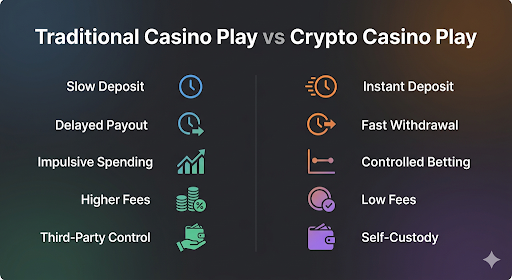
The key difference is not just transaction speed, but how quickly decisions are made around funds. This is why structured bankroll habits become more important in crypto-based environments.
Bankroll Discipline Is What Shapes Consistent Play
Bankroll management brings structure and clarity to online casino play, especially in fast-moving environments where decisions happen quickly. These are among the best practices for managing your crypto casino bankroll, as they help players stay consistent while keeping control over their funds. Simple habits such as setting limits, separating funds and controlling bet sizes make it easier for players to remain consistent and avoid unnecessary risk. The emphasis remains on maintaining control over the short-term results.
Disciplined bankroll management encourages a more measured and deliberate style of play over time. Small but consistent practices such as protecting profits, and sticking to predefined limits, help create long term stability in decision making.
For a deeper comparison of stable-value assets, also read our guide on USDC vs USDT.
If you want to apply structured betting habits in real time, Twinqo offers a practical way to explore gameplay through free spins without immediate deposit pressure. Sign up and start playing to experience controlled play.