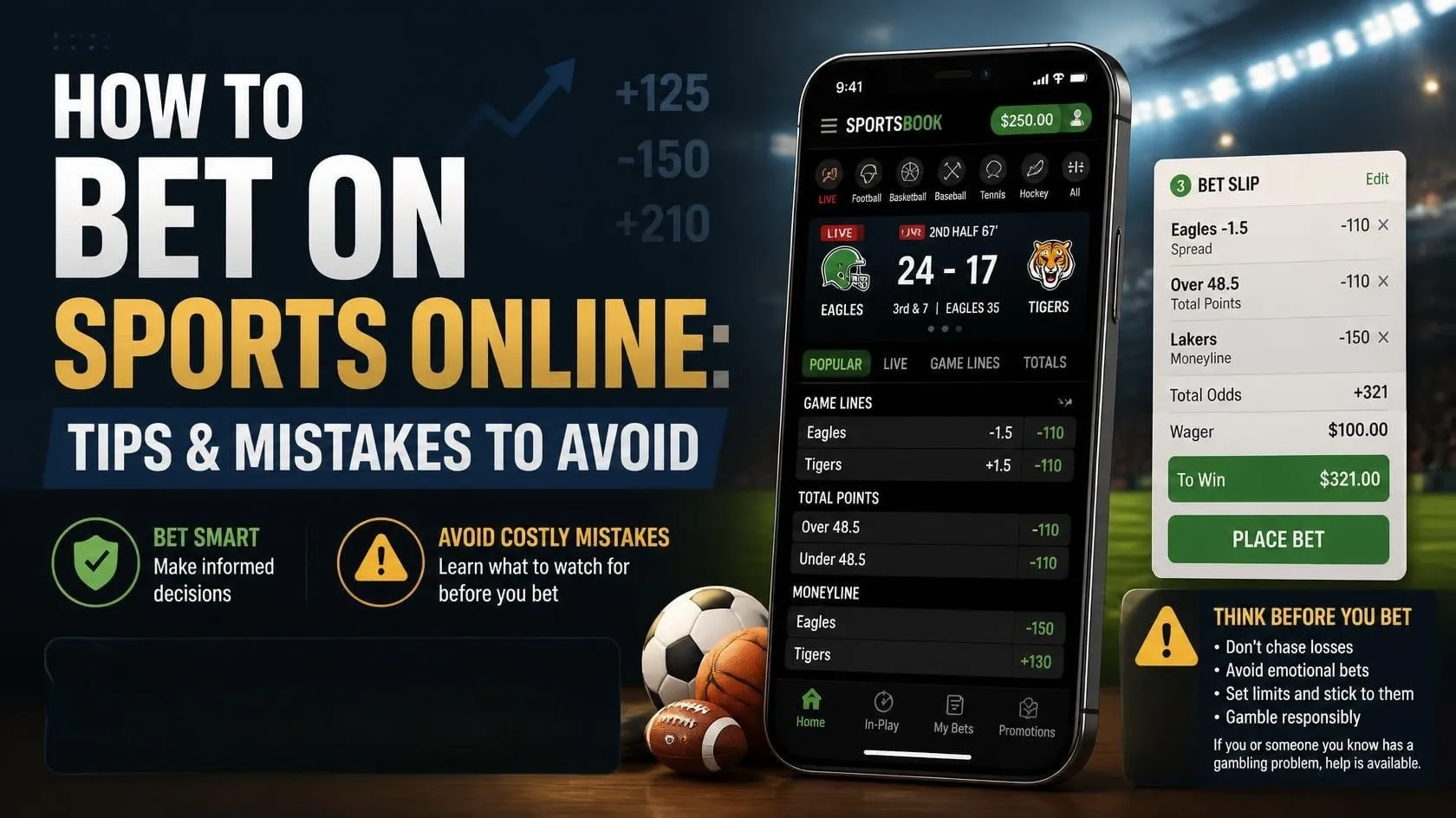
Online sports betting has never been more accessible, open an app, deposit money, and place a wager in minutes. But that convenience is exactly why so many new bettors lose money fast. Most losses don’t come from misunderstanding odds; they come from chasing bad bets, ignoring bankroll limits, or getting pulled into impulsive in-app wagers.
This guide walks through exactly how to bet on sports online: the platforms, the deposit process, the bet slip, and the mistakes unique to app-based betting. By the end, you’ll know how to sports bet smarter, not just more.
Bet on Sports Easily
|
Understanding Odds and Betting Lines
If you want to know how does sports betting work, odds are the first thing you need to understand. Odds tell you two things at once: how likely a sportsbook thinks an outcome is, and how much money you stand to win if you’re right.

How American Odds Work?
- A minus sign means the favorite. Minus 150 means you bet $150 to win $100.
- A plus sign means the underdog. Plus 130 means a $100 bet wins you $130.
- The bigger the number next to the minus sign, the heavier the favorite, and the smaller your potential profit relative to your stake.
Odds Breakdown
| Odds | Team Type | $100 Bet Wins | Implied Probability |
| minus 200 | Favorite | $50 | ~67% |
| minus 110 | Slight favorite | $91 | ~52% |
| plus 130 | Underdog | $130 | ~43% |
| plus 250 | Big underdog | $250 | ~29% |
What Is Implied Probability?
- It’s simply the odds converted into a percentage.
- It shows what the sportsbook thinks the actual chance of that outcome is.
- You don’t need to calculate this by hand. Free odds calculators do it instantly, and most betting apps display it right next to the line.
Why This Matters for Bettors
- Comparing implied probability across different sportsbooks is how sharp bettors find value.
- If one book has a team at minus 110 and another has the same team at minus 130, that gap adds up fast over time.
- Understanding this shifts your focus from “will this team win” to “is this bet actually worth the price I’m being asked to pay.”
Getting comfortable with odds and implied probability early is one of the most useful habits you can build before placing a single wager.
Types of Sports Bets
Once you understand odds, the next step in learning how to sports bet is knowing which bet types you’re actually choosing between. Online sportsbooks pack all of these onto one bet slip, so recognizing them quickly helps you avoid picking the wrong one by mistake.
| Bet Type | What You’re Predicting | Risk Level |
| Moneyline | Who wins outright | Lower |
| Point Spread | Margin of victory | Lower to Medium |
| Over/Under | Combined score | Medium |
| Parlay | Multiple outcomes at once | High |
| Props/Futures | Specific events or long-term outcomes | Medium to High |
Moneyline
- The simplest bet type. You’re just picking who wins the game outright.
- No point margin involved, just win or lose.
- Favorites pay less, underdogs pay more, based on the odds we covered earlier.
Point Spread
- The sportsbook sets a margin the favorite must win by.
- Betting the favorite means they need to win by more than the spread.
- Betting the underdog means they can lose by less than the spread, or win outright, and you still cash the bet.
- Most spread bets sit around minus 110 on both sides regardless of the matchup.
Over/Under (Totals)
- You’re betting on the combined score of both teams, not who wins.
- The book sets a number, and you bet whether the total goes over or under it.
- Popular for fans who don’t want to pick a side but still want action on the game.
Parlays
- Multiple bets combined into one, with a bigger payout if every leg wins.
- The catch: every single leg has to hit, or the entire parlay loses.
- Apps often push same-game parlays hard because they carry a much higher house edge than single bets.
Props and Futures
- Prop bets cover specific events within a game, like total points by one player or which team scores first.
- Futures are long-term bets placed well before the outcome, like picking a championship winner before the season starts.
- Futures tie up your money for weeks or months, so factor that into your bankroll planning.
How to Bet on Sports Online: A Step-by-Step Guide
If you’ve ever wondered how to bet sportsbook the right way from day one, this is the part that matters most.
Choosing a Legal, Licensed Online Sportsbook
- Check state licensing. In the US, each state regulates sports betting separately, so confirm the sportsbook is licensed in your specific state before signing up.
- Look up the regulatory body listed in the app’s footer or terms page. Legitimate books display this clearly, not buried three pages deep.
- Verify payout history. Search the sportsbook’s name alongside “payout complaints” or “withdrawal issues” to see real user experiences.
- Check app store ratings. A licensed sportsbook usually has thousands of reviews and a rating above 4.0. Very few or suspiciously generic reviews are a warning sign.
- Watch for red flags with offshore books. No visible license number, unclear company ownership, and withdrawal delays longer than a few business days are common signs of an unregulated platform.
- Confirm the book supports your state or country. Some apps operate in gray areas outside their licensed regions, which can create problems if you ever need to dispute a bet.
Doing this five-minute check before depositing a single dollar protects you from the platform-level risks that no amount of good betting strategy can fix later.
Setting Up Your Account and First Deposit
Once you’ve picked a licensed sportsbook, the next step in how to bet on sports online is getting your account verified and funded. This part feels tedious the first time, but knowing what to expect makes it go faster.
Verification (KYC) Steps to Expect
- You’ll be asked for basic details: full name, date of birth, address, and the last four digits of your SSN (for US platforms).
- Most books verify this instantly through a background database check, no documents needed.
- If instant verification fails, you may need to upload a photo ID or a selfie for manual review, which can take anywhere from a few minutes to 24 hours.
- Some apps ask for a utility bill or bank statement if your address doesn’t match on file. This is standard and not a sign of a problem.
Fastest Deposit Methods
| Method | Speed | Notes |
| Debit/credit card | Instant | Most common, but some banks block gambling transactions |
| Bank transfer (ACH) | 1 to 3 days | Reliable, but slower to hit your account |
| Play+ prepaid card | Instant | Sportsbook-branded card, avoids bank declines |
| PayPal/Venmo | Instant | Available on select platforms |
| Crypto (BTC, USDT) | Minutes | Fast but check if your book supports withdrawals in crypto too |
Cards and Play+ cards are usually your fastest, most reliable options if you want to start betting the same day.
Reading Odds Directly on the App/Site
You already know how odds work in theory. Now let’s look at how they actually show up once you’re inside a sportsbook app, because that’s where a sports bet gets made or messed up.
Where Odds Appear on the Bet Slip
- Open any game and you’ll see two or three columns side by side: moneyline, spread, and total. Each number sits right next to the team name.
- Tap any number and it auto-populates your bet slip on the right side (or bottom, on mobile) along with a stake field.
- The bet slip always shows your potential payout in real time as you type your stake, so you can confirm the math before submitting.
- Look for a small arrow or highlight next to a number. That usually flags a line that just moved, which matters more than it looks.
How Odds Shift in Real Time?
- Odds aren’t fixed. They move based on betting volume, injury news, and lineup changes right up until kickoff.
- During live betting, odds update every few seconds as the game plays out, since the win probability is constantly changing.
- If you’re mid-way through building a bet and the odds shift before you hit submit, most apps will flag it and ask you to accept the new number. Don’t just tap through this without checking what changed.
- This is exactly why hesitating on a live bet can cost you a better price. A five second delay can shift a line from plus 150 to plus 120.
Spotting a Worse Line Than a Competitor
- Open two sportsbook apps side by side for the same game before placing a bet.
- If one app shows minus 110 and another shows minus 125 for the identical spread, that’s a real difference in what you’d need to risk to win the same $100.
- Over a season of regular betting, always taking the worse price adds up to a meaningful loss with zero extra risk taken.
- Bookmark or screenshot better lines when you spot them, so comparing becomes a quick habit instead of a chore every time.
Placing Your First Bet Without Costly Errors
Understanding odds is one thing. Actually placing a clean bet without a slip up is where a lot of beginners trip on their first few tries. Here’s how to bet sportsbook the right way, step by step, so your first wager goes through exactly the way you intended.
Selecting the Bet Type on the Slip
- Tap the specific number for the bet you want (moneyline, spread, or total), not just the game itself. Tapping the wrong column is the single most common first-time error.
- Double check the team or side highlighted on your slip matches what you meant to pick. It’s easy to tap the away team when you meant the home team, especially on a crowded mobile screen.
- If you’re combining bets into a parlay, confirm each leg individually before moving to the next screen. Apps sometimes auto-suggest adding a same-game parlay leg, and it’s easy to accidentally include one you didn’t mean to.
Confirming Your Stake Before Submitting
- Enter your stake carefully. A stray extra zero turns a $10 bet into a $100 bet in one keystroke, and this happens more often than you’d think.
- Check the potential payout number that appears next to your stake. If it looks way higher or lower than expected, stop and recheck what you selected.
- Most apps show a final confirmation screen before the bet locks in. Read it once, even if you’re in a hurry. That five second pause has saved plenty of bettors from a costly typo.
Cash Out and Edit Options Mid-Game
- Many sportsbooks offer a cash out option once the game starts, letting you lock in a partial win or cut a loss early based on live odds.
- Cash out value updates constantly during the game, so the number you see is only good for that moment, not a fixed offer.
- Some apps let you edit a bet before it’s officially placed, but once it’s confirmed and live, you generally can’t change the bet itself, only choose to cash out if that option is available.
- Not every bet type supports cash out, so check for that option on the slip before assuming you can exit early if things start going wrong.
Bankroll Rules Specific to Online Betting
Generic advice like “manage your bankroll” doesn’t mean much until you see how easy it is to blow through one on an app. If you’re serious about how to bet on sports without wrecking your finances, the online-specific risks deserve their own rules, not just a vague budget in your head.
How One-Tap Betting Makes Overspending Easy
- Most sportsbook apps save your card or bank details after the first deposit, so placing a bet becomes a two-tap action: select the odds, confirm the stake.
- There’s no physical cash leaving your wallet, no line at a counter, nothing that slows you down before a bet goes through.
- This frictionless design is intentional. Apps want betting to feel effortless, which is great for user experience and terrible for your discipline if you’re not careful.
- A rough night watching a game can turn into five or six impulsive bets in an hour, each one feeling small until you check your balance afterward.
Using Deposit Limit Tools
- Every major licensed sportsbook has a deposit limit feature buried in account settings, usually under “responsible gambling” or “account controls.”
- Setting a limit here caps how much you can add to your account in a day, week, or month, regardless of how many times you try to deposit.
- This takes less than a minute to set up and works even if you’re tempted to keep depositing after a loss.
Setting a Per-Week Cap
- Decide on a fixed weekly amount you’re comfortable losing entirely, then set that exact number as your deposit limit.
- Treat this cap as non-negotiable. If you hit it, you’re done betting for the week, no exceptions and no “just one more deposit.”
- Revisit the limit only when you’re calm and clear-headed, never right after a loss when you’re tempted to raise it just to chase your money back.
Mistakes Unique to Betting Online (vs. In-Person)
This is where most generic guides stop short. Betting through an app doesn’t just make wagering easier, it introduces a whole set of mistakes that simply don’t exist at a physical sportsbook counter. If you want to know how to bet sportsbook without falling into these traps, this section is the one to actually pay attention to.
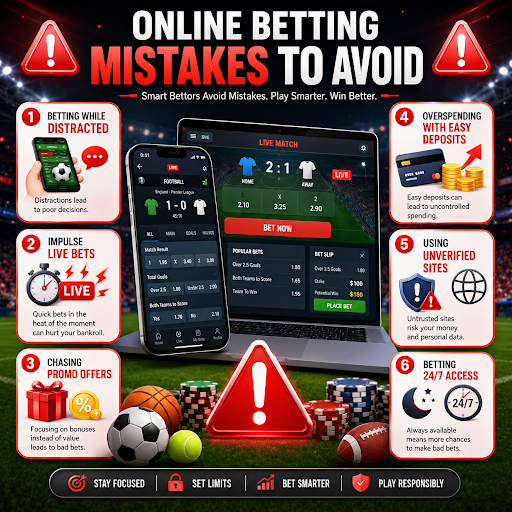
Live/In-Play Betting Impulse Bets
- Live betting lets you wager on a game while it’s happening, with odds updating every few seconds as the action unfolds.
- This constant motion creates pressure to react instantly, which leads to bets placed on emotion rather than any real analysis.
- A single bad quarter or missed shot can trigger a “revenge bet” mid-game that you’d never place if you’d taken even thirty seconds to think it through.
Auto-Suggested Parlays and Same-Game Parlay Upsells
- Most apps push same-game parlays front and center on the home screen, often bundling a favorite team’s win with a couple of player props.
- These are designed to look like easy, exciting wins, but they carry a much higher house edge than single straight bets.
- Tapping a suggested parlay without checking each leg individually is an easy way to end up betting on markets you didn’t actually mean to touch.
Notification-Driven Bets
- Odds boost alerts and push notifications are built to create urgency, often timed right before kickoff or during a big game.
- Getting a “boosted odds, expires in 10 minutes” alert while you’re doing something else can trigger a rushed bet with zero research behind it.
- Turning off promotional push notifications, while keeping account alerts on, removes a big chunk of this impulsive pressure.
Multi-App Account Sprawl
- Having accounts on three or four sportsbooks to compare odds sounds smart, but it also splits your bankroll across places that don’t talk to each other.
- It becomes easy to lose track of how much you’ve actually deposited or lost across apps, since each one only shows its own balance.
- Without a single tracking method covering every account, your real win/loss picture stays hidden until it’s too late to course correct.
Bonus and Odds-Boost Traps to Watch For
Bonuses and odds boosts are one of the biggest reasons people try a new sportsbook, but the fine print behind them trips up more bettors than any bad odds ever will. If you’re learning how to sports bet with promos involved, read the terms before you get excited about the headline number.
Wagering Requirements Hidden in T&Cs
- A “$200 bonus” almost never means $200 you can withdraw right away. It usually means you have to bet through that amount, sometimes several times over, before any of it becomes real cash.
- These rollover requirements are often buried several screens deep in the promo terms, not shown next to the offer itself.
- Some books only count certain bet types toward the rollover, so a string of low-odds bets might barely move the needle even if you’re betting frequently.
Odds Boosts With Limited Bet Type Coverage
- An odds boost banner might say “50% boost” in big letters, but that boost usually applies to one specific bet, like a particular player prop or a same-game parlay, not any bet you choose.
- Tapping into a boosted odds offer without checking which exact bet it’s tied to can leave you placing a completely different wager than you intended.
- Always confirm the boost is still active on your bet slip before submitting, since some expire the moment a line moves.
Bonus Bets That Expire Quickly
- Free bet credits and bonus bets commonly expire within 7 to 14 days if left unused, and that clock usually starts the moment the bonus lands in your account, not when you notice it.
- Letting a bonus sit untouched because you’re “waiting for the right game” is one of the most common ways bettors lose free money for no reason.
- Set a reminder the day you receive a bonus bet so it doesn’t quietly disappear before you get the chance to use it.
Using Betting Tracker Tools and Apps
“Keep records” is advice everyone gives and almost nobody actually follows through on. If you want a real edge in how you bet on sports, the fix isn’t a vague notebook, it’s a specific log you update after every single wager.
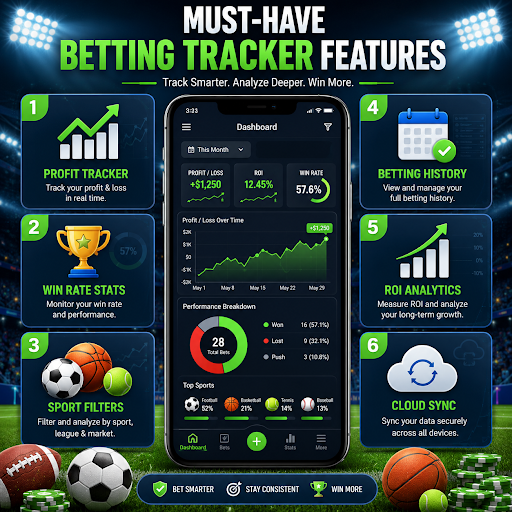
What to Actually Track
- Unit size: the exact dollar amount or percentage of your bankroll you staked on that bet, not just “small” or “big.”
- Odds taken: the exact number you got, so you can later see if you’re consistently taking worse prices than you should.
- Bet type: moneyline, spread, total, parlay, or prop, so you can spot which categories you actually win versus which ones just feel exciting.
- Result: win, loss, or push, along with the payout or amount lost.
- Date and sportsbook used: useful if you’re comparing performance across multiple apps.
Spreadsheet vs. App-Based Logs
- A simple Google Sheet with these six columns takes ten minutes to set up and works on any device.
- Apps like Action Network, BettorEdge, or even a sportsbook’s built-in bet history tab can auto-populate some of this, saving manual entry time.
- Whichever method you pick, update it within minutes of placing the bet. Waiting until the next day means you’ll forget the exact odds or second-guess the stake.
Why This Actually Changes Behavior
- After 20 to 30 logged bets, patterns show up fast: maybe parlays are quietly draining your bankroll, or you’re winning spreads but losing every total you bet.
- Seeing the numbers in front of you removes the guesswork that keeps most bettors stuck making the same mistakes month after month.
Bet Smart, Not Just Often
Learning how to bet on sports online really comes down to two things: understanding the platform you’re using and controlling your own impulses. Odds, bet types, and bonus terms matter, but most losses trace back to overspending or chasing a bad night after a loss.
Before your next wager, set a deposit limit inside your sportsbook app. Every major platform has one buried in account settings, and it takes thirty seconds to activate. If betting stops feeling fun or you notice yourself chasing losses, self-exclusion and time-out tools are built into most apps. Use them without hesitation, no explanation needed.
Ready to put this into practice? Compare licensed sportsbooks, claim a welcome offer that fits your budget rather than the biggest headline number, and start small. Smart bettors aren’t the ones who win every bet, they’re the ones still betting responsibly a year from now.