Money leaves your bank. Your casino balance doesn’t update. You refresh the page twice, maybe three times, and start wondering if something went wrong. Here’s the direct answer: online casino deposit processing time depends on your payment method, how the casino verifies transactions, and sometimes network conditions neither of you control and most of the time, nothing has actually failed. It’s just doing exactly what it’s designed to do. Here’s what’s actually happening behind that spinning loader.
What Happens Behind the Scenes When You Deposit
A deposit looks like one click. It isn’t.
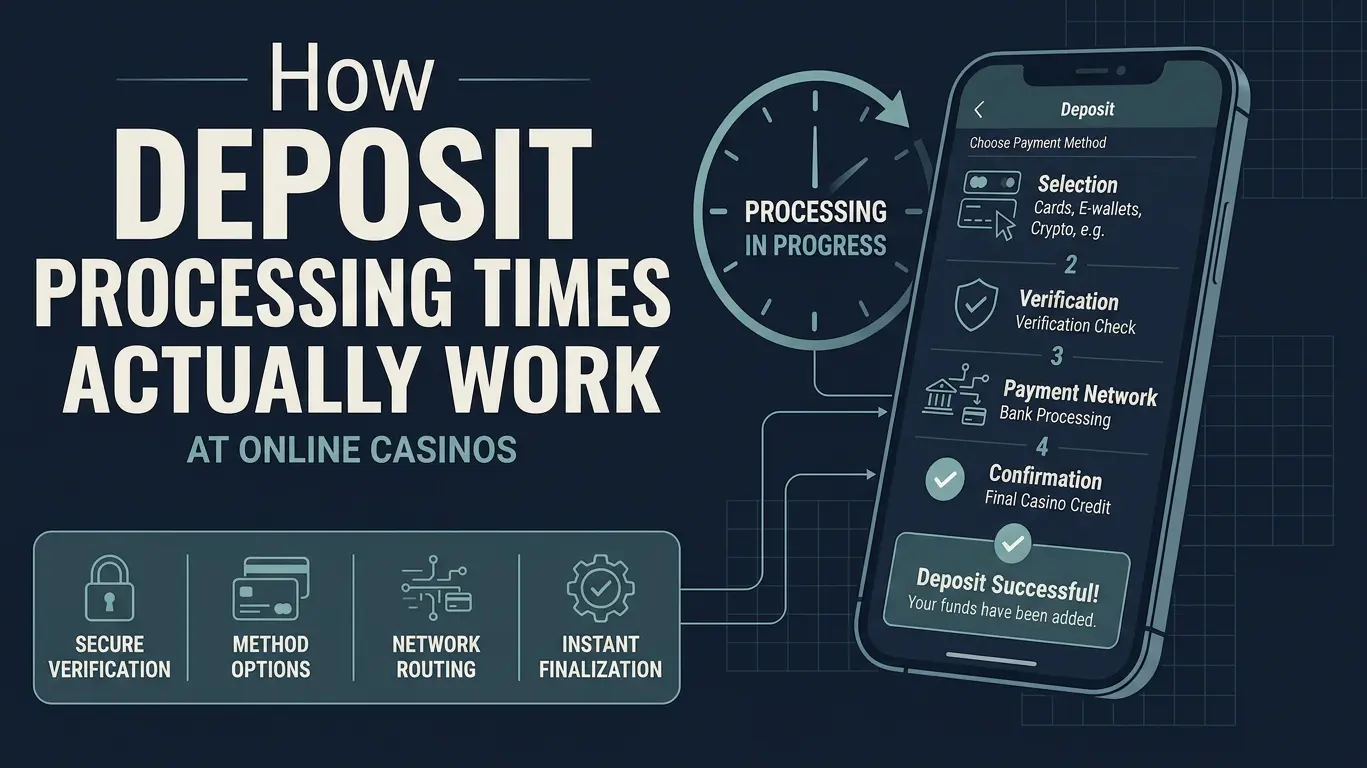
Your payment provider authorizes the transaction first. The casino’s system then runs a quick fraud and risk check in the background. Only after that does the money actually land in your casino wallet. Three steps, not one and online casino deposit processing time is really just the sum of however long each of those three takes.
You rarely see any of this happen. You only notice it exists the moment it takes longer than you expected.
Fast Deposit Processing Payment Methods: Timelines and Key Factors
How quickly an online casino can process a deposit varies depending on the type of payment method that is being used, as well as the casino’s payment processing methods, the security steps taken, and the banking networks involved. Some payment methods allow for deposits to be made instantly while others might take days.
ATM and Credit Card Payments
One of the most popular ways to make a deposit at the casino is by bank card. There are many banks issue different cards and almost all players use credit and debit cards for making universal casino payments.
Typical processing time:
- Instant to 5 minutes in many cases
- Up to several hours if additional verification is required
- Occasionally 1–3 business days due to bank authorization issues
Card deposits are usually processed through payment gateways that authorize the transaction immediately. However, delays can occur when a bank flags the transaction for security reasons, when international payments require approval, or when the casino performs anti-fraud checks.
Factors affecting card deposit speed:
- Bank approval and fraud monitoring
- Card issuer restrictions on gambling-related transactions
- Incorrect billing information
- Casino verification procedures
- Currency conversion requirements
E-Wallets
E-wallets are widely regarded as one of the fastest online casino deposit methods. Popular digital wallets allow users to transfer funds electronically without directly sharing bank account information with the casino.
Typical processing time:
- Instant to a few minutes
- Occasionally up to several hours for account reviews or technical issues
Because e-wallet transactions are processed through established payment platforms, funds are often credited almost immediately after authorization.
Factors affecting e-wallet deposit speed:
- Whether the e-wallet account is fully verified
- Casino payment gateway performance
- Payment provider availability
- Security checks for unusual transactions
- Account limits or restrictions
E-wallets are particularly popular among players who prioritize speed, privacy, and convenience.
Bank Transfers
Bank transfers are one of the most secure payment methods but are generally slower than digital payment solutions. They involve direct movement of funds between financial institutions, which can require additional processing stages.
Typical processing time:
- Domestic transfers: same day to 1–2 business days
- International transfers: 2–5 business days or longer
- Some casino banking partners may process deposits faster through dedicated systems
Factors affecting bank transfer speed:
- Bank operating hours
- Weekends and public holidays
- International payment networks
- Currency exchange procedures
- Compliance and anti-money laundering checks
Bank transfers are often preferred for larger deposits because they may support higher transaction limits, despite slower processing times.
Cryptocurrency
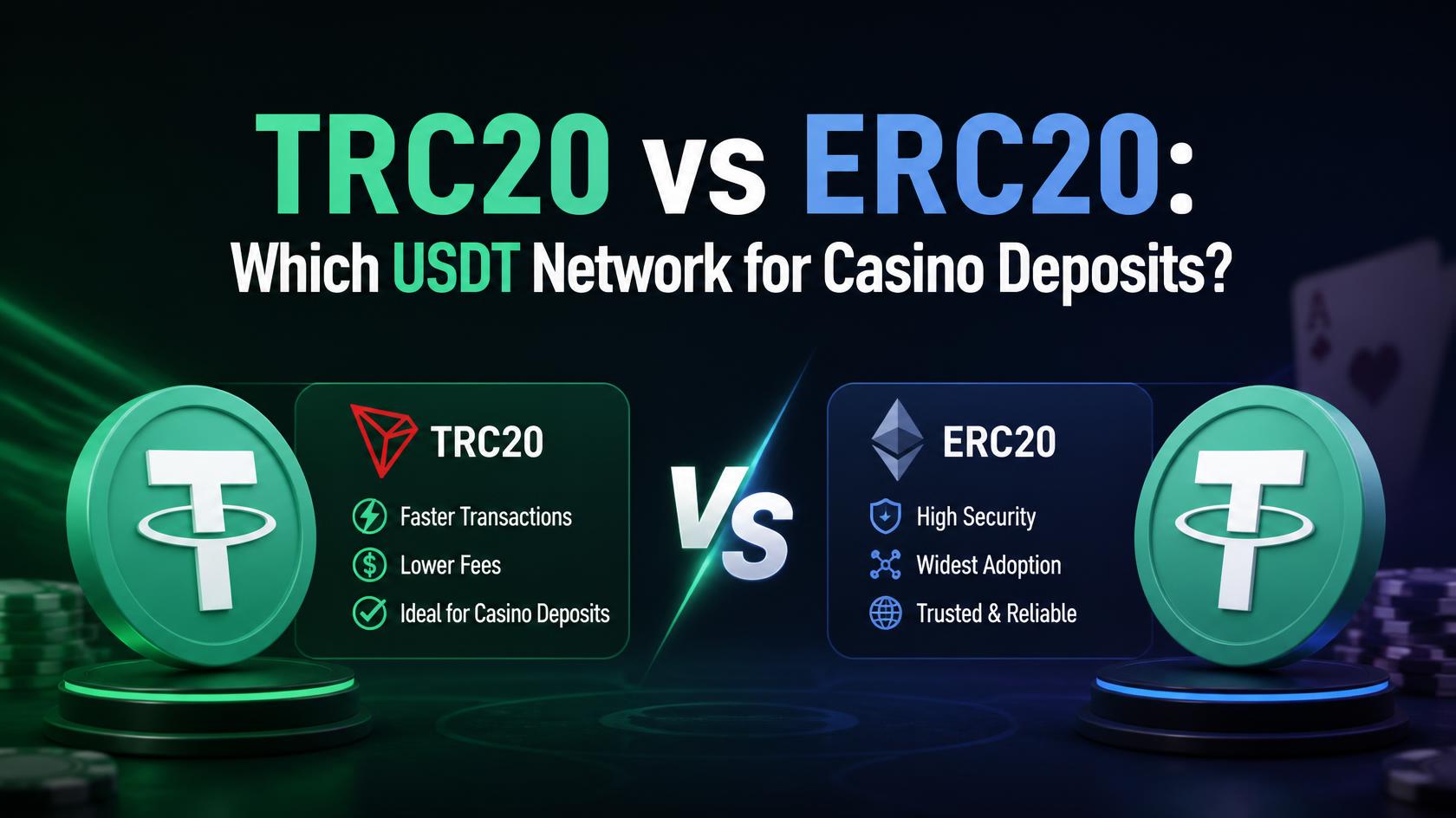
Cryptocurrency deposits use blockchain networks to transfer funds directly to the casino’s wallet system. Processing speed depends heavily on the cryptocurrency used and the current condition of the blockchain network.
Typical processing time:
- Fast blockchain networks: seconds to a few minutes
- Bitcoin transactions: approximately 10 minutes to several hours depending on network congestion and required confirmations
- High network activity periods: several hours or longer
Casinos usually require blockchain confirmations before crediting deposits. This improves transaction security but can add waiting time.
Factors affecting cryptocurrency deposit speed:
- Blockchain confirmation requirements
- Network congestion
- Transaction fees
- Cryptocurrency type and network used
- Incorrect wallet addresses or network selection
Deposit Speed Comparison
| Payment Method | Average Processing Time | Main Causes of Delays |
| E-wallets | Instant–5 minutes | Verification, technical issues |
| Cryptocurrency | Seconds–several hours | Blockchain confirmations, congestion |
| Credit/Debit Cards | Instant–several hours | Bank approval, security checks |
| Bank Transfers | Same day–5+ business days | Banking networks, compliance checks |
Instant Deposit Casinos vs Authorization-Based Crediting
Not every instant deposit casino processes deposits in exactly the same way. In many cases, your account balance is updated shortly after the payment has been authorized, while the final settlement continues in the background through the payment provider or banking network.
The deposits may appear to the player to be instant, and this enables them to start playing right away without delay. In reality, the payment processor, bank, or blockchain is still finalizing and reconciling the transaction.
This approach is commonly known as authorization-based crediting, where funds become available after payment authorization rather than after final settlement. The exact process varies depending on the operator’s payment policies, the payment method, and any fraud or security checks that may apply.
You’ll often notice this with smaller deposits as well. In our guide to $20 minimum deposit casinos, we explain how lower-value deposits may sometimes move through payment and verification processes more quickly because they can require fewer manual reviews. While every operator follows its own policies, smaller transactions are often simpler to process than larger ones.
The key point is that an instant deposit casino doesn’t necessarily mean every stage of the payment has already been completed. In many cases, your balance is made available after authorization, while the remaining payment process finishes securely in the background.
Common Reasons for Deposit Delays
Three things cause most delays: bank-side holds, network congestion, and incomplete verification. Here’s how each one actually works.
Bank-Side Holds and Fraud Checks
Banks flag gaming transactions automatically, sometimes new cards, unusual amounts, it varies. This hold sits entirely outside the casino’s system. Could be ten minutes. Could be a full business day.
Network Congestion (Crypto-Specific)
Blockchain networks slow down for everyone during high-traffic periods, not just for gaming transactions. It’s a network-wide condition, and no casino can speed it up on their end.
Incomplete Verification
Some platforms simply hold deposits until identity verification finishes. It’s a compliance step, not an error, and it’s usually resolved the moment documents clear review.
How Deposit Amount Can Affect Processing
Here’s something most players don’t expect: the size of your deposit changes how fast it clears. Larger amounts draw closer fraud scrutiny, simply because they represent more risk from the platform’s side.
Smaller deposits, the $20 minimum common across many platforms, for example often skip that extra scrutiny entirely, since they fall below typical review thresholds. It’s part of why low-entry platforms often feel noticeably quicker to use. Our $20 minimum deposit casinos checklist digs further into how deposit size interacts with processing speed, along with a few other factors worth checking first.
How to Check If Your Deposit Is Still Processing
A stalled balance is annoying, but usually easy to diagnose:
- Pull up your transaction history bank app, wallet, or a blockchain explorer for crypto and confirm the funds actually left your account.
- Refresh properly. Some casino dashboards cache your balance and won’t update until you force a reload.
- Look for a “pending” status in your account. That almost always means confirming, not failed.
- Reach out to support with your transaction ID if 30+ minutes have passed on a method that’s normally instant. Having that ID ready speeds up their lookup considerably.
Nine times out of ten, one of these four steps explains exactly what’s going on.
Knowing What to Expect Before You Deposit
Processing time comes down to three things: payment method, deposit size, and the occasional bank or network hiccup. None of it is random once you know what’s driving it. A little context here means a lot less second-guessing every time you fund an account.
FAQs
Why is my deposit still pending?
How long does it take for a crypto deposit to appear?
What should I do if my deposit doesn’t appear?
Can a deposit be declined after I’ve sent the payment?
Does the payment method affect deposit speed?
This version is fully synchronized between the HTML accordion and the JSON-LD FAQ schema, making it ready to paste directly into your page.