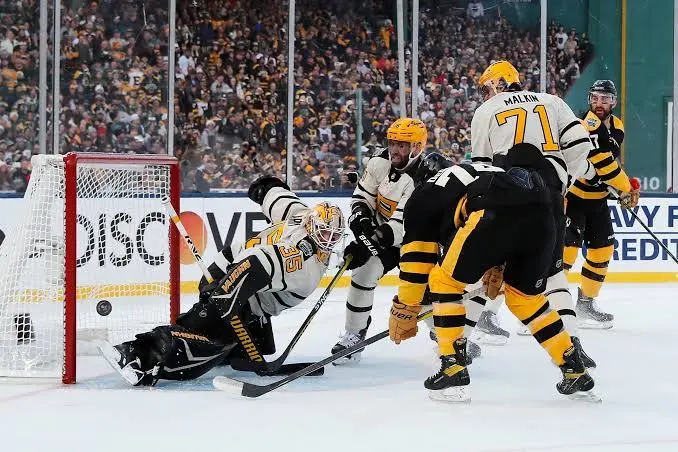
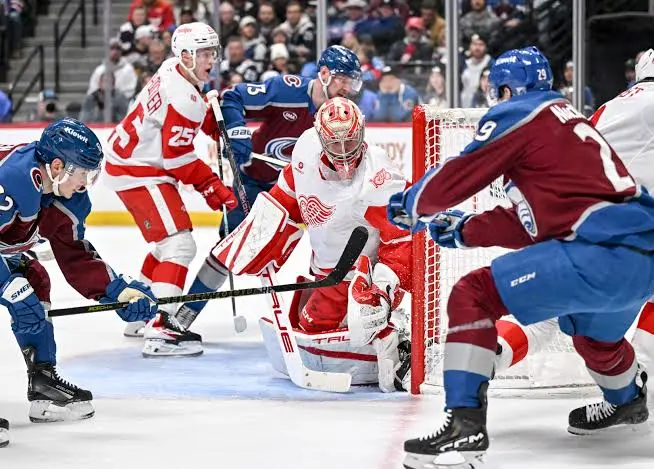


Detroit Red Wings visit Colorado Avalanche at Ball Arena on 7 November after both teams secured wins in their latest completed games. Detroit edged Edmonton Oilers in a shootout, while Colorado defeated New Jersey Devils 5–2 with a strong third-period performance. These results provide useful context for assessing the matchup, although neither guarantees a repeat performance.
Our Prediction
Colorado hold the stronger overall season record, but Detroit’s recent five-game results make this a competitive fixture. Nathan MacKinnon and Cale Makar remain important attacking options for the Avalanche, while Detroit’s comeback against Edmonton demonstrated their ability to stay in contention under pressure.
Prediction: Colorado Avalanche to win 4–2.
The forecast favours Colorado because of their home advantage and attacking depth. However, the projected score is illustrative rather than a model-generated result, and the final outlook may change with updated team news, player availability and confirmed starting goaltenders.
Six Essentials for the Colorado Avalanche vs Detroit Red Wings Match
|

Why Colorado Avalanche Get the Initial Winner Preference
The Colorado Avalanche have home-ice advantage, a stronger overall season record and the attacking quality to change a close game quickly. Their recent 5–2 victory over the New Jersey Devils supports the home-team prediction, although defensive consistency remains an important factor.
Colorado enter this matchup with a 6–5–1 record in the research snapshot. Their attacking potential at Ball Arena gives them a promising foundation, but maintaining defensive coverage and managing transitions will be important against Detroit.
The Detroit Red Wings arrive with a 5–4–3 record after overcoming the Edmonton Oilers in a shootout. Their recent comeback demonstrated their resilience, making them capable opponents despite Colorado’s stronger overall record.
The First Lead Matters Less Than the Next Response
Both teams have shown they can respond when a game does not go according to plan.
- Colorado’s resilience: The Avalanche recovered from an early deficit against New Jersey before producing a four-goal third period to secure a 5–2 win.
- Detroit’s determination: The Red Wings overcame three separate one-goal deficits against Edmonton before earning the shootout victory.
Both sides will need to create quality scoring opportunities without compromising their defensive structure. Controlling transitions through the neutral zone and responding effectively to pressure could be just as important as scoring first.
Colorado Avalanche Need Their Attack to Stay Connected
Nathan MacKinnon and Cale Makar remain central to Colorado’s offensive threat, but contributions from the supporting cast could also influence the outcome.
- Nathan MacKinnon and Cale Makar: Key offensive players who can create scoring opportunities and contribute to power-play production.
- Artturi Lehkonen and Martin Necas: Forward options who can add speed and attacking support around Colorado’s leading players.
- Gabriel Landeskog and Nazem Kadri: Experienced forwards who can contribute to the forecheck and create pressure around the opposing net.
These players provide Colorado with several potential attacking options, although their impact will depend on the confirmed lineup and roles. Puck management and limiting Detroit’s counterattacks will also be important.
Detroit Red Wings Have a Credible Route to an Upset
Detroit’s shootout win over Edmonton offered encouraging signs, but their earlier road defeat to Calgary highlighted areas that need improvement.
- Against Edmonton Oilers: Lucas Raymond contributed to Detroit’s comeback, helping the team remain competitive before the shootout.
- Goaltending contribution: Michal Postava stopped 25 of 28 shots in regulation and saved all three shootout attempts in his first NHL start.
- Main challenge: Improving penalty-kill execution and making better use of power-play opportunities could help Detroit contain Colorado’s attack.
Detroit’s recent resilience gives them a route to a competitive contest. However, defensive discipline and special-teams execution could be decisive against Colorado’s attacking depth.
Colorado Avalanche vs Detroit Red Wings Prediction
Colorado Avalanche are tipped to win at Ball Arena, with their home advantage and attacking options supporting a narrow preference. Detroit’s recent performances suggest the visitors can remain competitive, so a comfortable home victory should not be taken for granted.
Predicted score: Colorado Avalanche 4–2 Detroit Red Wings
The prediction remains provisional until starting goaltenders, line combinations and player availability are confirmed closer to faceoff.
Detroit Red Wings: Current Form and the Road-Trip Response
Detroit Red Wings have three wins and two losses across their latest five completed games. Two victories and one defeat were decided in shootouts, so the sequence should not be described as three recent regulation wins.
The four-game trip through Seattle, Vancouver, Calgary and Edmonton produced a 2-1-1 record. Detroit Red Wings earned five of a possible eight points while showing different performance levels from game to game. A strong finish does not erase the Calgary defeat, but it does prevent that loss from defining the whole trip.
The 5-2 win at Vancouver Canucks included a 31-13 shot advantage, with Detroit Red Wings allowing no shots in the second period. That is a different kind of positive evidence from winning a shootout after a tied game. Keeping those differences visible makes the form section more useful.
Detroit Red Wings’ Latest Five Completed Games
The table uses local North American fixture dates and identifies shootout results. That distinction matters because the final score includes a deciding team goal that is not an additional regulation goal by an individual player.
| Date | Opponent | Venue status | Detroit Red Wings goals | Opponent goals | Result |
| 26 October 2026 | Edmonton Oilers | Away | 4 | 3 | Won in shootout |
| 24 October 2026 | Calgary Flames | Away | 1 | 4 | Lost in regulation |
| 22 October 2026 | Vancouver Canucks | Away | 5 | 2 | Won in regulation |
| 20 October 2026 | Seattle Kraken | Away | 3 | 4 | Lost in shootout |
| 17 October 2026 | San Jose Sharks | Home | 4 | 3 | Won in shootout |
Detroit Red Wings scored 17 final-score goals and conceded 16 across this sequence. Those totals include the shootout adjustments shown in the table, so they should not be used as an unqualified count of actual player goals or regulation scoring.
The form window will change before 7 November. Only completed games belong in the table, and future scheduled fixtures should replace older entries once they have been played. A forthcoming opponent is not evidence of another win, loss or scoring pattern.
Detroit Red Wings’ Reported Playing Squad
The latest reported lineup provides a reference for Detroit’s available players, although the final combinations and starting goaltender against Colorado Avalanche remain unconfirmed.
- Forwards: Alex DeBrincat, Emmitt Finnie, Viktor Arvidsson, Michael Brandsegg-Nygard, Dylan Larkin, Lucas Raymond, Michael Rasmussen, Andrew Copp, J.T. Compher, Carter Mazur, Nate Danielson and Keegan Kolesar.
- Defensemen: Ben Chiarot, Moritz Seider, William Wallinder, Justin Faulk, Albert Johansson and Anton Johansson.
- Goaltenders: Michal Postava and John Gibson.
- Additional listed skaters: Andreas Englund and Axel Sandin-Pellikka.
- Players on the dated injury report: Mason Appleton, Marco Kasper and Daniil Tarasov.
- Head coach: Todd McLellan.
The 26 October report listed Appleton with an undisclosed issue, Kasper with an upper-body issue and Tarasov with an undisclosed issue. These are dated updates and do not confirm their availability for 7 November. A newer report is needed to establish their current status.
Postava’s winning first start does not confirm that he will start against Colorado. Gibson remains another reported option, and the final goaltending decision should be checked closer to faceoff.
Detroit Red Wings’ Possible Game Lineup and Player Roles
The following provisional lineup reflects the recently reported forward combinations and defensive pairings. It is a reference for expected player roles, not a confirmed selection for 7 November.
- Alex DeBrincat: Forward alongside Finnie and Arvidsson in the reported combination.
- Emmitt Finnie: Forward alongside DeBrincat and Arvidsson.
- Viktor Arvidsson: Forward option in the same reported unit.
- Michael Brandsegg-Nygard: Forward alongside Larkin and Raymond.
- Dylan Larkin: Forward alongside Brandsegg-Nygard and Raymond.
- Lucas Raymond: Attacking option in the Larkin combination.
- Michael Rasmussen: Forward alongside Copp and Compher.
- Andrew Copp: Forward in the reported Rasmussen and Compher unit.
- J.T. Compher: Forward option alongside Rasmussen and Copp.
- Carter Mazur: Forward alongside Danielson and Kolesar.
- Nate Danielson: Forward in the reported Mazur and Kolesar unit.
- Keegan Kolesar: Forward option in the same combination.
- Ben Chiarot: Defenseman paired with Seider in the recent report.
- Moritz Seider: Defenseman paired with Chiarot.
- William Wallinder: Defenseman paired with Faulk.
- Justin Faulk: Defenseman paired with Wallinder.
- Albert Johansson: Defenseman paired with Anton Johansson.
- Anton Johansson: Defenseman paired with Albert Johansson.
- Michal Postava: Goaltending option; starting assignment unconfirmed.
- John Gibson: Goaltending option; starting assignment unconfirmed.
Andreas Englund and Axel Sandin-Pellikka remain additional listed skaters, while the availability of Appleton, Kasper and Tarasov requires an updated report. Detroit may adjust its combinations before the game, so the final lineup should not be inferred from an earlier report.
Being absent from this provisional group does not establish that a player is injured or unavailable. Confirm the final selection, expected ice time and special-teams role before assessing individual player markets. An active player may still have a different role from the one held in the previous game.
Colorado Avalanche: A Strong Response After the Nashville Defeat
Colorado Avalanche have two wins and three losses across the latest five completed games. The 5-2 victory over New Jersey Devils is included, so the record does not stop at the earlier Nashville Predators defeat.
The latest game remained close through two periods before Colorado Avalanche scored four times in the third. Kadri and Schwartz each finished with a goal and an assist. The result offered a meaningful response after conceding six in Nashville without proving that all consistency concerns have been resolved.
The same five-game window also includes a 6-3 win over Tampa Bay Lightning and narrow defeats against New Jersey Devils and Philadelphia Flyers. That mix supports the home side’s scoring potential but gives reason to keep confidence measured.
Colorado Avalanche’s Latest Five Completed Games
The results below are current through the completed 28 October game. Local fixture dates are retained even when an overseas score service displays the following day.
| Date | Opponent | Venue status | Colorado Avalanche goals | Opponent goals | Result |
| 28 October 2026 | New Jersey Devils | Home | 5 | 2 | Won in regulation |
| 25 October 2026 | Nashville Predators | Away | 2 | 6 | Lost in regulation |
| 23 October 2026 | Tampa Bay Lightning | Home | 6 | 3 | Won in regulation |
| 20 October 2026 | New Jersey Devils | Away | 3 | 4 | Lost in regulation |
| 19 October 2026 | Philadelphia Flyers | Away | 2 | 3 | Lost in regulation |
Colorado Avalanche scored 18 goals and conceded 18 across these five games. That balanced total does not mean every match was evenly played, and it should not be mistaken for a team scoring average specific to the Detroit Red Wings matchup.
The two wins in this window came at home, while the three losses came away. That is useful context for the venue discussion, but five games do not establish an unbeatable home record. The intervening schedule can change the picture before faceoff.
Colorado Avalanche’s Reported Playing Squad
The recent official projected lineup contains the following Colorado Avalanche group. The categories organise the available information without confirming selection, line positions or goaltending duties for 7 November.
- Forwards: Artturi Lehkonen, Nathan MacKinnon, Martin Necas, Gabriel Landeskog, Brock Nelson, Nazem Kadri, Jaden Schwartz, Fedor Svechkov, T.J. Hughes, Parker Kelly, Nicolas Roy and Logan O’Connor.
- Defensemen: Devon Toews, Cale Makar, Brett Kulak, Sam Malinski, Josh Manson and Brent Burns.
- Goaltenders: Mackenzie Blackwood and Scott Wedgewood.
- Additional listed defenseman: Noah Juulsen.
- Player covered by the dated injury report: Zachary L’Heureux.
- Head coach: Jared Bednar.
The 28 October report listed L’Heureux with an upper-body issue. Roy returned after missing six games with a lower-body issue, giving the coaching group another forward option. Neither note should be converted into an unsupported claim about workload or availability more than a week later.
Blackwood was the goaltender in the latest victory, while Wedgewood remains another reported option. The next starting assignment needs confirmation. Lineup inclusion and a starting role are different pieces of information, especially for saves and opposition-goals markets.
Colorado Avalanche’s Possible Game Lineup and Player Roles
One possible Colorado Avalanche arrangement uses the recent official lineup as its starting point. The forward combinations remain provisional because Roy’s return and later line adjustments create room for changes.
- Artturi Lehkonen: Forward alongside MacKinnon and Necas in the recent report.
- Nathan MacKinnon: Attacking focal point in the reported top unit.
- Martin Necas: Forward alongside Lehkonen and MacKinnon.
- Gabriel Landeskog: Forward listed alongside Nelson and Kadri.
- Brock Nelson: Forward in the reported Landeskog and Kadri unit.
- Nazem Kadri: Attacking option whose line assignment can change.
- Jaden Schwartz: Forward listed alongside Svechkov and Hughes.
- Fedor Svechkov: Forward option in the recent projected group.
- T.J. Hughes: Forward listed with Schwartz and Svechkov.
- Parker Kelly: Forward listed alongside Roy and O’Connor.
- Nicolas Roy: Returning forward option; final line role requires checking.
- Logan O’Connor: Forward in the reported Kelly and Roy combination.
- Devon Toews: Defenseman paired with Makar in the recent report.
- Cale Makar: Defenseman paired with Toews.
- Brett Kulak: Defenseman paired with Malinski.
- Sam Malinski: Defenseman paired with Kulak.
- Josh Manson: Defenseman paired with Burns.
- Brent Burns: Defenseman paired with Manson.
- Mackenzie Blackwood: Goaltending option; November starting assignment unconfirmed.
- Scott Wedgewood: Goaltending option; November starting assignment unconfirmed.
Juulsen provides another listed defensive option, while L’Heureux’s status needs updating. The forward group can be rearranged without a player becoming unavailable. A changed line assignment should not be reported as an injury or treated as proof of reduced participation.
Comparing the Teams Without Hiding the Contradictions
Colorado Avalanche have the stronger overall record in this snapshot, while Detroit Red Wings have the better latest-five win count. Both facts belong in the preview because they describe different windows of performance.
The table below compares the Detroit Red Wings and Colorado Avalanche ahead of their 7 November matchup, covering their latest verified season records, recent form, previous results, venue roles, coaching staff and reported goaltending options.
| Comparison point | Detroit Red Wings | Colorado Avalanche |
| Latest verified season record | 5-4-3 | 7-5-1 |
| Latest five completed games | Three wins, two losses | Two wins, three losses |
| Latest completed result | Beat Edmonton Oilers 4-3 in shootout | Beat New Jersey Devils 5-2 |
| Venue role on 7 November | Away | Home |
| Head coach | Todd McLellan | Jared Bednar |
| Goaltending options recently listed | Michal Postava, John Gibson | Mackenzie Blackwood, Scott Wedgewood |
| Starting goalie for this fixture | Not confirmed | Not confirmed |
Detroit Red Wings’ latest-five record includes two shootout victories and a shootout defeat. Colorado Avalanche’s five games all finished in regulation. A simple win count therefore does not explain how comfortably either team played or which market would have succeeded.
The home preference rests on Colorado Avalanche’s available attacking quality and setting, not a claim that every recent indicator favours them. A good analysis should acknowledge contrary evidence instead of stretching the data to match a preferred selection.
Individual Contests That Could Decide the Game
The central matchups involve Colorado Avalanche’s leading attackers, Detroit Red Wings’ response and the confirmed goaltenders.
The following table highlights key players to monitor in the Detroit Red Wings vs Colorado Avalanche matchup on 7 November, focusing on recent performances, reported line combinations, attacking contributions, defensive responsibilities and goaltending decisions that remain unconfirmed.
| Player | Team | Reason to monitor |
| Dylan Larkin | Detroit Red Wings | Important reported forward combination |
| Lucas Raymond | Detroit Red Wings | Recent assists and shootout contribution |
| Alex DeBrincat | Detroit Red Wings | Attacking role and recent late equalizer against San Jose Sharks |
| Viktor Arvidsson | Detroit Red Wings | Reported combination with DeBrincat and Finnie |
| Moritz Seider | Detroit Red Wings | Defensive responsibilities and puck movement |
| Michal Postava | Detroit Red Wings | Successful first start; next selection unconfirmed |
| Nathan MacKinnon | Colorado Avalanche | Attacking focal point and latest-game goal |
| Martin Necas | Colorado Avalanche | Reported top-unit involvement |
| Cale Makar | Colorado Avalanche | Defensive and attacking contribution |
| Nazem Kadri | Colorado Avalanche | Goal and assist in the latest victory |
| Jaden Schwartz | Colorado Avalanche | Goal and assist in the latest victory |
| Mackenzie Blackwood | Colorado Avalanche | Latest winning goaltender; next selection unconfirmed |
MacKinnon’s Unit Against Detroit Red Wings Coverage
MacKinnon, Lehkonen and Necas form the recently reported attacking combination, but the precise defensive assignments remain unconfirmed. Detroit Red Wings need to limit dangerous chances rather than merely reduce the total number of attempts.
Coverage around the net and decisions after turnovers can matter as much as the first challenge on the puck. Colorado Avalanche benefit when their attackers receive support without exposing the defensive side of the play. Reputation alone cannot determine the number of shots or goals in one game.
Raymond and Larkin Against the Home Defense
Raymond and Larkin give Detroit Red Wings an established reference point in the reported forward structure. The latest Edmonton Oilers result showed Raymond’s involvement beyond the shootout through his regulation assists.
Colorado Avalanche need to defend the next pass as well as the player carrying possession. Detroit Red Wings need support if the leading combination receives close attention. A useful team performance can come from different units rather than one expected scorer supplying every goal.
The Starting Goaltenders Could Shift the Assessment
The actual starting goalies may change the winner and totals outlook more than a small adjustment to an early score forecast. Neither team’s November starter is confirmed in this preview.
Postava’s first-start success and Blackwood’s latest victory are relevant, but recent participation is not a future selection announcement. If Gibson or Wedgewood starts instead, reassess the matchup and any goalie-specific markets. Do not leave a saves prediction attached to a player who is not starting.
Recent Meetings: Two Shutouts With Different Winners
The most recent verified meetings produced opposite winners and very different implications for a repeat prediction. They provide context without establishing a guaranteed pattern for the next game.
The table below summarises the two most recent head-to-head meetings between the Detroit Red Wings and Colorado Avalanche, showing the dates, venues, goals scored by each team and final results. These results provide recent matchup context ahead of their next meeting.
| Date | Venue | Detroit Red Wings goals | Colorado Avalanche goals | Result |
| 2 February 2026 | Denver | 2 | 0 | Detroit Red Wings won in regulation |
| 31 January 2026 | Detroit | 0 | 5 | Colorado Avalanche won in regulation |
Detroit Red Wings answered the 5-0 home defeat by winning 2-0 at Ball Arena two days later. Gibson made 21 saves in the shutout, Raymond recorded a goal and an assist, Kasper scored and Larkin contributed two assists.
The reversal is a direct reason not to assume that one impressive win settles the next meeting. It also challenges a simplistic home-ice argument, since the visiting team won both games. Current personnel and form should carry more weight than forcing a trend from two results.
What the February Result Means for the Early Pick
Detroit Red Wings have a verified example of winning in Denver against this opponent. That is a legitimate counterargument to the Colorado Avalanche preference, not a detail to omit because it complicates the forecast.
It does not prove another shutout is likely. The new season has different combinations and availability, including Kasper’s dated injury note. Historical results should inform the questions to check rather than stand in for the current answer.

Betting Markets: Separate the Winner From the Price
Colorado Avalanche are the editorial choice, but no verified live price is quoted here. Readers researching NHL betting online should remember that a plausible winner does not automatically represent good value, particularly when the return is too short for the uncertainty involved.
When checking NHL odds today, confirm that the market applies to the 7 November fixture rather than another game involving either club. Compare the available prices with confirmed starting goaltenders, player availability and recent team form before deciding whether a selection is worth considering. Anyone looking to bet on NHL hockey should also check the market rules, including whether overtime and shootouts count toward settlement.
| Market | Early position | Essential check |
| Full-game moneyline | Colorado Avalanche preference | Price, starters and overtime coverage |
| Regulation result | Separate assessment needed | Draw outcome and 60-minute rules |
| Puck line | Do not assume minus 1.5 | Margin probability and price |
| Game total | Wait for the actual line | Number, starters and settlement |
| Player shots | Assess confirmed roles | Ice time and official statistics |
| Goalscorer | No automatic selection | Participation and shootout treatment |
| Goalie saves | Wait for starter confirmation | Workload and specific rules |
A standard two-way full-game moneyline generally includes overtime and a shootout. A three-way regulation market ends after 60 minutes and can include a draw. Read the label rather than assuming both markets require the same outcome.
For illustration only, -150 American odds require a 150-unit stake to win 100 units of profit. At +130, a 100-unit stake would win 130 units of profit. These examples explain the notation and are not current prices for either team.
Moneyline: Colorado Avalanche, Subject to a Suitable Return
The early full-game winner lean is Colorado Avalanche because of the home setting and their attacking options. Detroit Red Wings’ recent recovery means the selection should not be presented as low risk or attached to an invented win probability.
Review the price after confirming the goaltenders and current availability. A shorter return can make an otherwise reasonable forecast unsuitable. There is no obligation to back the preferred team if the market does not offer an acceptable balance between risk and reward.
Prediction: Colorado Avalanche to win, subject to a suitable price and confirmation of the starting goaltenders.
Puck Line: A Two-Goal Scenario Needs Its Own Case
The illustrative 4-2 score would cover Colorado Avalanche minus 1.5, but an exact-score forecast is not a measured probability of a two-goal win. A one-goal victory would win the standard moneyline and lose that handicap.
A plus 1.5 selection on Detroit Red Wings would succeed if they won or lost by one, under the relevant full-game rules. Its apparent protection must be weighed against the offered return. Neither side of the handicap is automatically valuable because the main prediction names a winner.
Prediction: Colorado Avalanche -1.5 is a possible option only if the confirmed lineup and available odds support a two-goal winning margin.
Totals: The Posted Number Determines the Selection
Six goals in the illustrative scenario do not justify an over at every available total. The same result has different consequences at 5.5, 6.0 or 6.5, and a whole-number line can allow a push under the applicable rules.
Standard full-game totals generally include overtime and the single goal added for a shootout winner, while regulation-only totals differ. Check the rule set, the goalies and attacking availability before selecting a direction. Recent high-scoring games alone do not establish the correct line.
Prediction: Consider Over 5.5 only if the posted line and confirmed team news support the scoring outlook; reassess at 6.0 or 6.5.
Player Props: Confirm the Opportunity Before the Target
Shots, points, goals and saves are different statistical outcomes. A player can contribute strongly to a win while failing one of those markets, so team preference should not be copied automatically into a player selection.
Check participation, expected ice time and special-teams use. Ordinary individual statistical props generally do not count shootout attempts as player goals or shots, even where the final team score includes a deciding adjustment. The specific market terms remain the controlling reference.
Prediction: Avoid committing to a player prop until the lineup, expected ice time and relevant market line are confirmed.
Prediction: Colorado Avalanche 4-2
Colorado Avalanche are the early pick to win at home, with a projected 4-2 scoreline. Their attacking options support the forecast, but Detroit’s recent results and the unconfirmed starting goaltenders leave meaningful uncertainty. Treat the score as an estimate rather than a guaranteed outcome, and reassess the selection once lineups, availability and market prices are confirmed.
Final Prediction: Colorado Avalanche With a Measured Advantage
The early winner choice is Colorado Avalanche, with an illustrative 4-2 regulation result. Their attacking options and home setting support the view, while Detroit Red Wings’ better latest-five win count and recent success in Denver keep the assessment cautious.
The prediction does not establish a verified market edge, exact probability or guaranteed scoring margin. Starting goaltenders and the intervening games could materially change the outlook. A responsible update should revise the winner, score and betting commentary together if the evidence shifts.
Responsible Gambling
Every wager carries uncertainty, and no match prediction can remove the possibility of a loss. Before participating, check local regulations and age restrictions, then decide how much you can comfortably afford to lose. Keep gambling separate from financial goals and everyday spending. If a game becomes frustrating or you feel pressure to win money back, step away rather than make another wager. Gambling should never come at the expense of personal commitments or peace of mind. If it starts causing difficulties, reach out for confidential advice through BeGambleAware or Gamblers Anonymous. Predictions are for information only and should not be viewed as guaranteed outcomes.
Disclaimer
This article examines the upcoming Detroit Red Wings vs Colorado Avalanche matchup on 7 November 2026, drawing on available results and team updates as of 29 October. The analysis and score prediction are provisional, as final lineups, starting goaltenders and current market prices remain subject to change before the game.