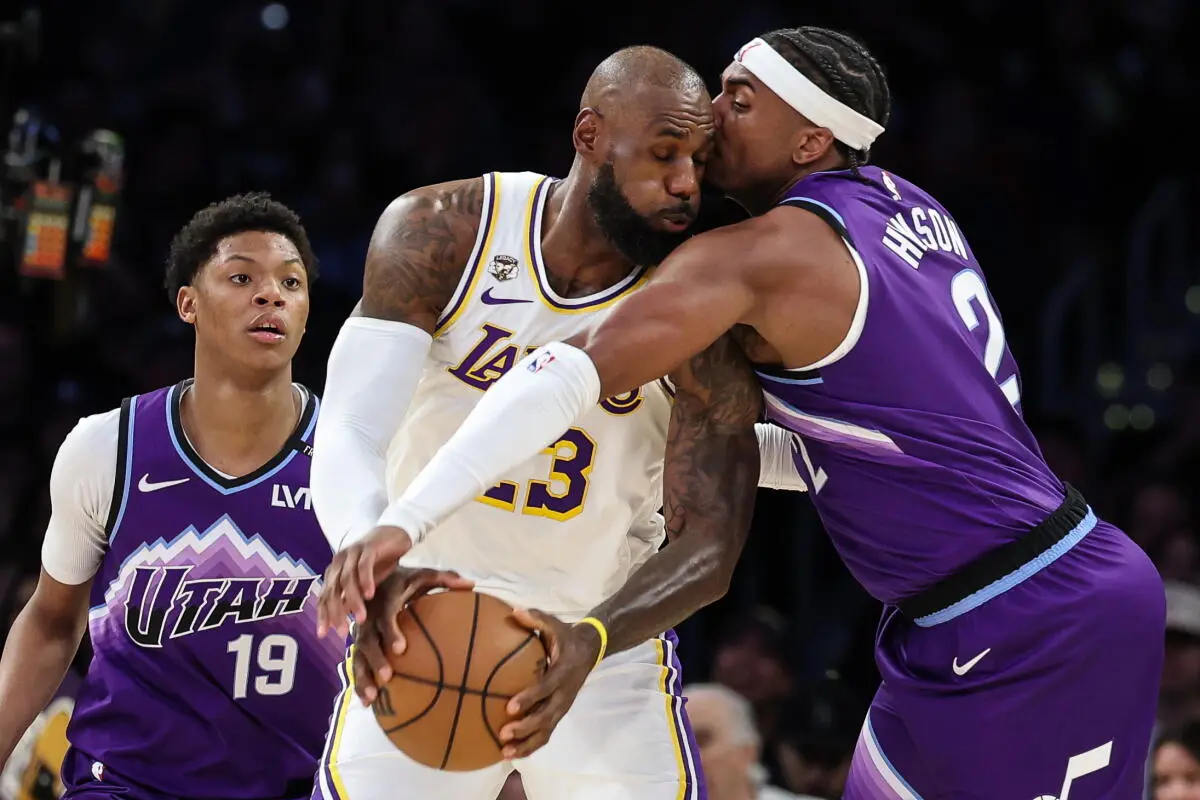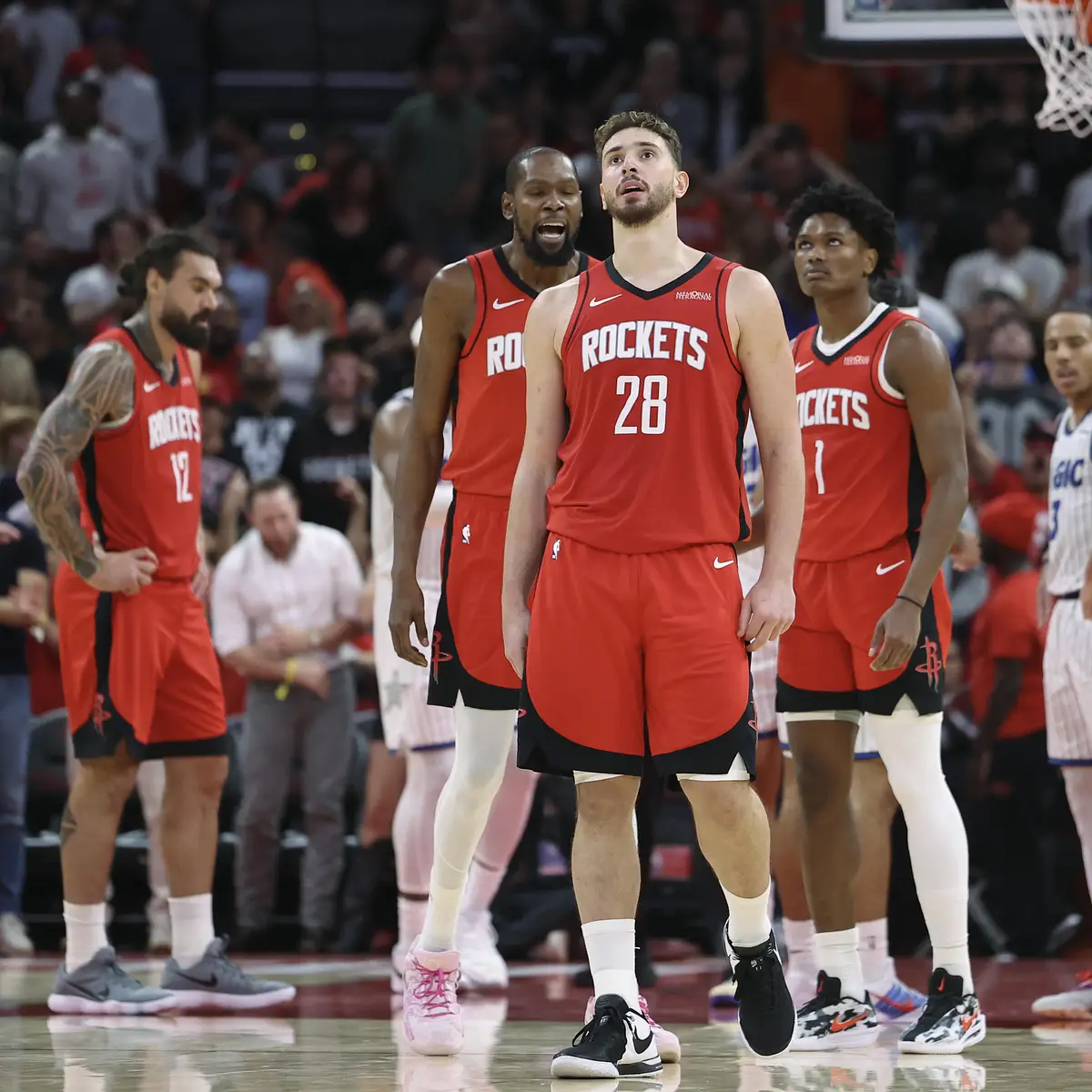


Dallas heads to Houston for the regular-season opener after the teams split two preseason games in Macao. Houston won the first by 18 points before Dallas responded with a 17-point victory on Kyrie Irving’s return. Kevin Durant’s scoring and Alperen Şengün’s passing give the Rockets several ways to attack, while Irving adds another creator alongside Cooper Flagg. Anyone planning to bet on basketball should weigh expected minutes more heavily than those exhibition margins. Houston’s home advantage earns the narrow pick, with a projected 118-113 win in a competitive Texas matchup.
Our Prediction
Dallas Vs. Houston Opening-Night Picks
|
Mavericks Vs. Rockets Winner Prediction for Opening Night
Houston is the early preference, with a projected 118-113 home victory. Its varied creators and home setting narrowly outweigh Dallas’s improvement with Irving back. The Mavericks’ rematch win keeps the margin modest, while better late-possession scoring from Irving offers a clear route to an away upset.
Houston’s stronger previous-season record helps explain the preference, but it is not the whole argument. The current return of both point guards changes the matchup. Dallas plus a substantial handicap can fit the same narrow Houston forecast without requiring a different winner.
How Recent Performances Shape the Opening-Night Pick
Neither team has a winning-streak advantage from the two exhibitions. Houston’s efficient first game and Dallas’s improved rematch offence make player participation and defensive execution the most useful comparison points.
Dallas must limit clean scoring opportunities, while Houston must handle a fuller creation group than it faced on 9 October. The exhibitions were high scoring, but regular-season defensive priorities and minutes can change that pace.
What the Previous Meetings Add to the Forecast
The latest competitive meeting in Houston finished as a four-point Rockets win. The five-game record favours Dallas overall, but combines different venues, lineups and competitions.
That mixed sample supports a restrained margin more clearly than a comfortable home victory. It also argues against using one historical performance to claim a player will easily reach a new threshold.
Projected Score and the Decisive Matchup
Projected score: Dallas Mavericks 113, Houston Rockets 118. The main contest is Dallas’s ball-handlers against Houston’s perimeter pressure, followed by the visitors’ response to Şengün’s interior passing.
A 117-114 Dallas victory is the leading alternative. The selected score totals 231 points, which places the main forecast above 226.5 but only half a point above 230.5. That small difference makes the higher total a weaker preference.
What Can Dallas Bring to the Houston Opener?
Dallas brings Irving’s returning creation, Flagg’s versatility and several options on the wings. The Mavericks are 1-1 in their completed preseason games, with the second Macao meeting providing their latest win.
A 26-56 finish last season explains the need for improvement, but the current group is different. Irving gives Dallas another way to organise possessions, while Santi Aldama and Zaccharie Risacher expand the supporting cast. Defensive consistency remains the priority after Houston scored 135 and 115 in the exhibitions. Dallas needs stronger resistance at the point of attack as well as enough scoring to punish Houston’s mistakes.
Dallas’s Results Before the Rockets Meeting
Dallas split its two completed preseason games against Houston. The table separates those exhibitions from the regular-season opener rather than presenting them as league form.
| Date | Opponent | Venue | Final score, Dallas first | Result |
| 9 Oct 2026 | Houston | Macao | 117-135 | Preseason loss |
| 11 Oct 2026 | Houston | Macao | 132-115 | Preseason win |
Dallas scored 249 points and conceded 250 across the pair. The rematch brought 15 more Dallas points and 20 fewer Houston points, but Irving’s return changed the personnel. The turnaround is encouraging without establishing a settled scoring level. The opener will depend on competitive minutes, defensive execution and the final players available.
Mavericks Squad Options for 21 October
Irving, Flagg, Max Christie, P.J. Washington and Daniel Gafford form the projected starting group. Dereck Lively II’s recent foot-related absence remains important when assessing Dallas’s frontcourt options.
- Guards: Kyrie Irving and Max Christie, with Marcus Sasser and Sergio De Larrea among the additional options.
- Wings: Cooper Flagg, P.J. Washington, Naji Marshall, Zaccharie Risacher and Tarik Biberović.
- Bigs: Daniel Gafford, Santi Aldama and Morez Johnson Jr.; Lively’s involvement depends on recovery.
Irving returned with 17 points in just under 22 minutes. Flagg recorded 14 points and seven assists in the rematch, while Risacher added 16 points. Those contributions show the different ways Dallas can create and finish possessions. Irving’s appearance does not establish a 34-to-36-minute opening-night workload, so his minutes remain a central factor in player-market assessment.
Dallas’s Possible Starting Five and Bench Roles
The projected five is Irving, Christie, Flagg, Washington and Gafford. It combines guard creation, wing size and an interior finishing target, but Dallas has not announced its opening-night starters.
Projected starting five: Kyrie Irving, Max Christie, Cooper Flagg, P.J. Washington and Daniel Gafford.
Flagg can share creation rather than leaving every possession to Irving. Christie provides perimeter support, Washington balances the frontcourt and Gafford supplies finishing around the rim. Marshall and Risacher can change the wing mix, while Aldama offers another interior configuration. The final rotation matters more than assuming every listed player will receive substantial minutes.
What Can the Rockets Bring to the Dallas Matchup?

Houston brings Durant’s scoring, Şengün’s passing from the interior and Fred VanVleet’s returning organisation. The Rockets also finished their Macao games 1-1 and now have home court for the regular-season meeting.
Houston finished last season 52-30, but VanVleet’s return changes how the team distributes touches and creates shots. NBA Betting selections should reflect the current roles rather than rely entirely on last season’s usage patterns.
Houston’s Results Before the Mavericks Meeting
Houston won 135-117 before losing 115-132 in Macao. The current preseason record is separate from the Rockets’ previous 52-30 regular-season finish.
| Date | Opponent | Venue | Final score, Houston first | Result |
| 9 Oct 2026 | Dallas | Macao | 135-117 | Preseason win |
| 11 Oct 2026 | Dallas | Macao | 115-132 | Preseason loss |
The first game showed efficient Houston scoring, including 18 made threes from 36 attempts. The rematch exposed defensive problems against a Dallas group with Irving available. The series produced 252 and 247 combined points, but exhibition scoring does not establish an opening-night total. Home court helps Houston’s outlook without erasing the latest defeat.
Rockets Squad Options for 21 October
VanVleet, Amen Thompson, Durant, Jabari Smith Jr. and Şengün form the projected starting five. VanVleet’s return gives Houston another established organiser after he missed last season.
- Guards: Fred VanVleet, Reed Sheppard and Marcus Smart.
- Wings: Kevin Durant, Amen Thompson, Jabari Smith Jr., Tari Eason and Bogdan Bogdanović.
- Bigs: Alperen Şengün and Steven Adams.
VanVleet scored 17 points and supplied seven assists in 24 minutes on 9 October. Şengün recorded 16 points, 10 rebounds and 10 assists. Houston can therefore create through its point guard or its centre, with Durant providing a separate half-court scoring route. Player availability for the opener remains distinct from participation in either exhibition.
Houston’s Possible Starting Five and Bench Roles
A possible starting group pairs VanVleet and Thompson with Durant, Smith and Şengün. The combination offers size, interior passing and perimeter scoring, while the final starters remain to be announced.
Projected starting five: Fred VanVleet, Amen Thompson, Kevin Durant, Jabari Smith Jr. and Alperen Şengün.
Adams can alter the screening and rebounding profile, while Smart, Sheppard and Bogdanović provide different perimeter options. Thompson’s activity is valuable against Dallas’s creators, and Durant supplies difficult scoring matchups. Houston’s best route is balanced execution rather than relying on another 50% three-point performance like the first Macao game.
Mavericks Vs. Rockets H2H: Recent Scores and Season Context
Dallas won three of the five meetings listed, while Houston won two. The newest games were neutral-site exhibitions; the other three were regular-season contests in Texas.
The two Macao games had large winning margins in opposite directions. January’s competitive meetings were decided by four and six points, offering a different picture. Personnel changes limit comparisons: Irving returned during the exhibitions, and VanVleet missed last season. The results support considering a close opener, but they do not establish a recurring exact margin or make the home winner automatic.
| Date | Competition | Venue | Dallas | Houston | Winner |
| 11 Oct 2026 | Preseason | Macao | 132 | 115 | Dallas |
| 9 Oct 2026 | Preseason | Macao | 117 | 135 | Houston |
| 31 Jan 2026 | Regular season | Houston | 107 | 111 | Houston |
| 3 Jan 2026 | Regular season | Dallas | 110 | 104 | Dallas |
| 6 Dec 2025 | Regular season | Dallas | 122 | 109 | Dallas |
11 October 2026: Irving Helps Dallas Respond
Dallas’s 132-115 win over Houston marked Irving’s return with 17 points. Flagg supplied seven assists as the Mavericks finished the two-game preseason series at 1-1.
The changed lineup matters when comparing the exhibitions. Dallas showed another route to organised offence, but the margin is not a template for the Houston opener.
9 October 2026: Houston’s Creators Take Control
Houston won 135-117 and led 65-45 at half-time. Şengün recorded a triple-double, while VanVleet added seven assists.
Irving did not play, and Houston shot 50% from three. Both details limit direct comparisons with the next meeting, while still showing the Rockets’ attacking possibilities.
31 January 2026: Thompson Leads a Four-Point Home Win
Houston won 111-107 behind Thompson’s 21 points, nine assists and eight rebounds. Flagg scored 34 for Dallas.
The four-point margin provides a closer comparison than either Macao exhibition. However, the returning point guards change the current matchup, so that result is better used as historical background than as an exact guide to opening night.
3 January 2026: Dallas Wins a Tight Competitive Meeting
Dallas won 110-104, with Anthony Davis recording 26 points and 12 rebounds. Christie added 24 points.
Dallas combined strong interior scoring with Christie’s perimeter contribution to secure the six-point win. The result came with a different lineup from the one projected for this opener.
6 December 2025: Dallas Builds a Clear Home Advantage
Dallas beat Houston 122-109 as Davis scored 29 points. Durant contributed 27 for the Rockets.
A strong individual scoring night did not secure the team win. That distinction is useful when assessing Durant’s points separately from Houston’s moneyline.
Dallas Vs. Houston Selections for Game Lines and Player Stats
Houston moneyline and Dallas plus 8.5 are the main result preferences. The points and player selections below explore different outcomes rather than forming a single recommendation to back every market.
Houston is the preferred winner, but the NBA odds will determine whether backing the Rockets outright or taking Dallas with a handicap offers the more appealing return. The lines below are suggested thresholds, while player selections also depend on expected minutes and roles.
Houston Rockets Moneyline
A moneyline selection backs Houston to win the game outright. Standard full-game NBA markets include overtime, so a tied score after four quarters does not end the selection. A Dallas victory loses it.
Selection rationale: Home court and several creation routes support the Rockets preference. VanVleet can organise possessions, Şengün supplies interior passing and Durant offers half-court scoring. Dallas’s improved rematch performance keeps this a narrow choice rather than a comfortable winner assumption.
Dallas Mavericks Plus 8.5
Dallas plus 8.5 covers a Mavericks win or a defeat by eight points or fewer. A nine-point loss fails the handicap, even if Dallas remains competitive for most of the game.
Selection rationale: The projected five-point Houston win fits this threshold. Irving’s return adds creation and late-possession scoring, helping the visitors stay involved. However, the line is a proposed comparison, not proof that the current market overstates Houston’s advantage at home.
Alternative Spread: Dallas Plus 5.5
Dallas plus 5.5 covers a Mavericks victory or a defeat by five points or fewer. A six-point loss fails the selection. Compared with plus 8.5, it allows a narrower range of winning outcomes.
Selection rationale: The projected five-point Houston victory fits this line, but leaves little room for a larger margin. A higher return may compensate for reduced protection, depending on the price. Use it as an alternative to plus 8.5, not an equivalent selection.
Total Points: Over 226.5
Over 226.5 requires at least 227 combined points under the market’s settlement terms. Both teams contribute to the total, and neither needs to win for the selection to succeed.
Selection rationale: The projected 118-113 result produces 231 points, while the Macao games finished with 252 and 247. Those exhibitions support scoring potential, but different competitive rotations limit direct comparison. This is the stronger over preference of the two suggested full-game thresholds here.
Alternative Total: Over 230.5
Over 230.5 needs at least 231 combined points. Raising the threshold reduces protection compared with over 226.5, and the available price determines whether the additional risk receives an adequate return.
Selection rationale: The projected score only just clears this line. That makes it a secondary option rather than an automatic value selection. Neither a plus-money price nor a superior return is established without an actual market quote for this opening-night game.
First-Quarter Winner: Houston Rockets
A first-quarter winner selection settles after the opening 12 minutes rather than the final result. A tied quarter may be a separate outcome or trigger a refund, depending on the market type.
Selection rationale: Houston’s home setting and established creators support a modest early preference. The opening-night crowd alone does not establish an edge, and Dallas’s returning ball-handler improves its organisation. Treat this as a secondary angle rather than extending the full-game pick automatically.
First-Half Total: Over 114.5
Over 114.5 requires at least 115 combined points by half-time. Scoring after the second quarter does not count toward this selection.
Selection rationale: Both teams have several attacking options, but the first Macao meeting produced only 110 first-half points. That makes this a weaker option than the full-game over, rather than a leading recommendation.
Highest-Scoring Half: Second Half
This market compares points scored in the two halves. An equal total may be a separate outcome, while overtime treatment depends on the listed rules rather than the ordinary full-game convention.
Selection rationale: Late fouls in a close game can add scoring opportunities, making the second half a plausible scenario. However, longer star minutes and a late scoring surge have not been established. The selection therefore carries less support than the principal winner and handicap preferences.
Race to 20 Points: Houston Rockets
Race to 20 backs the team that reaches 20 points first, regardless of the eventual winner. A fast start matters more here than a recovery later in the game.
Selection rationale: VanVleet’s organisation and Şengün’s passing give Houston options to create efficient early possessions. The home preference supports consideration, but no opening-possession or early-scoring dataset establishes a strong advantage. This is a specialised alternative rather than a leading prediction for the season opener.
Kyrie Irving Over 22.5 Points
Irving over 22.5 needs at least 23 eligible points. Assists and rebounds do not count, and the selection depends on his own output rather than Dallas winning the game.
Selection rationale: His 17-point return in just under 22 minutes shows scoring ability after the layoff. It does not establish a 34-to-36-minute opener workload. Consider the threshold only alongside the expected minutes and role, rather than extrapolating exhibition scoring as a settled full-game rate.
Alperen Şengün Double-Double
A double-double means reaching at least 10 in two of these categories: points, rebounds, assists, steals or blocks. For Şengün, points and rebounds are the most familiar route, although his passing provides another possibility. The market’s rules determine the covered playing periods.
Selection rationale: His 16 points, 10 rebounds and 10 assists in the first exhibition demonstrate several routes to the milestone. Dallas’s interior options create a competitive matchup, not assured rebounding control. Expected minutes remain central to judging this individual selection for opening night.
Kevin Durant Over 24.5 Points
Durant over 24.5 requires at least 25 points within the market’s covered periods. A strong Houston performance does not satisfy the selection unless Durant reaches the individual scoring threshold.
Selection rationale: Durant is a Rockets player and an important half-court scorer. His 27-point December meeting with Dallas supplies a historical example, not a current scoring promise. Judge the proposed threshold against his expected participation, available minutes and share of attempts alongside Houston’s returning creators.
Cooper Flagg Over 4.5 Assists
Flagg over 4.5 assists needs at least five officially credited assists. Creating a chance is not enough unless a teammate converts the pass into a basket under the statistical scoring rules.
Selection rationale: Flagg recorded seven assists in the Macao rematch, showing his secondary creation role. His ability to create alongside Irving gives Dallas another passing option, although the distribution of touches will affect his assist opportunities.
Fred VanVleet Over 6.5 Assists
VanVleet over 6.5 requires seven or more assists. Houston winning or scoring heavily does not guarantee the point guard reaches that individual number, particularly if creation is shared through Şengün.
Selection rationale: He supplied seven assists in 24 minutes on 9 October, making the threshold relevant to assess. The opener’s minutes and teammates’ finishing will determine the opportunity. Avoid treating a single productive return game as evidence that he will comfortably clear this line.
Amen Thompson Over 18.5 Points and Rebounds
This combined market adds Thompson’s points and rebounds, requiring at least 19 in total. Assists do not contribute, even though they are an important part of his all-round game.
Selection rationale: Thompson recorded 21 points and eight rebounds in Houston’s January win over Dallas. His size and activity make the combination worth considering. However, that historical total does not establish his opening-night minutes or current scoring share alongside VanVleet, Durant and Şengün.
Houston to Score the First Basket
A first-basket team selection backs Houston to record the first qualifying score. Free throws may count differently depending on whether the market refers to the first basket, field goal or scoring event.
Selection rationale: VanVleet’s organisation and Şengün’s interior passing give Houston several ways to create an opening attempt. However, the first score depends on a very small sequence of possessions. Keep this as a speculative alternative, separate from the broader case for Houston winning the game.
Combined Made Threes: Over 26.5
Over 26.5 combined three-pointers requires at least 27 successful triples by the two teams. Three-point attempts do not count unless made, and the included playing periods follow the specific market rules.
Selection rationale: Dallas and Houston each made 18 threes in the first Macao game, showing perimeter scoring potential. One exhibition does not establish repeat shooting efficiency. Christie, Risacher and Smith offer relevant shooting roles, but minutes and the price still affect this specialised selection.
Dallas Team Total: Over 110.5
Dallas over 110.5 needs at least 111 Mavericks points, regardless of Houston’s score or the match winner. A narrow Dallas defeat can still satisfy the team-total selection.
Selection rationale: Dallas scored 117 and 132 in Macao, and the current forecast assigns the visitors 113. Irving’s return strengthens the attacking options, but those exhibitions do not establish a minimum scoring floor. The proposed line fits the forecast without making Dallas’s output a settled expectation.
Wire-to-Wire Winner: No
Wire-to-wire markets use provider-specific definitions, such as leading throughout or leading at each quarter break. The No selection succeeds only when the game fails the exact condition described in those rules.
Selection rationale: The projected close finish allows changes in the lead, but does not establish that they will occur. A competitive score can still involve one team leading throughout. Treat this as a speculative alternative and identify the settlement definition before interpreting the proposed No selection.
Same-Game Combination: Houston Win, Dallas Plus 8.5, Irving 20+
This combination needs Houston to win, Dallas to cover plus 8.5 and Irving to score at least 20 points. A one-to-eight-point Houston victory satisfies the two result conditions together.
Selection rationale: The narrow home-win forecast makes the result legs compatible, while Irving’s scoring supplies another requirement. The selections are correlated, so their prices cannot simply be multiplied independently. Availability varies, and a larger potential return also comes with more conditions that can fail.
Keep Dallas Vs. Houston Betting Manageable
Choose your spending limit before tip-off and include live bets within it. Avoid borrowing or raising stakes after a losing selection. If gambling affects daily life, pause and seek support.
- Gambling Therapy provides free global online advice and emotional support.
- GamCare’s international directory connects readers with gambling-help organisations across different countries.
- The Responsible Gambling Council offers safer-gambling guidance and pathways to help.
Legal Age and Gambling Risk Notice
Only adults meeting the legal gambling age in their jurisdiction should participate, and only where gambling is permitted. An 18+ label does not replace a higher local requirement.
Gambling involves financial risk and can cause harm. The winner, score and selections above are forecasts, while the starting teams are projected rather than announced lineups for the opener.