Online casinos are everywhere now, which is exactly why trust matters more than flashy design, oversized welcome offers, or a long list of games. A site can look polished and still fail players where it matters most, especially on withdrawals, support, licensing, and fair play protections. So before you deposit anything, the real question is not how exciting the casino looks, but whether it is actually built to protect you. This guide breaks down how to check if an online casino is legit, what warning signs to look for, and which details tell you a platform is genuine rather than risky.
Spotting a Legit Casino
|
What Does “Legit” Actually Mean?
When players ask whether a casino is legit, they usually mean one of four things. Is it licensed, are the games fair, will it pay withdrawals, and will support help if something goes wrong? Those are the right questions, because legitimacy is not a branding claim. It is a combination of legal, operational, and player-facing trust signals that show whether the platform is functioning like a real, accountable business.
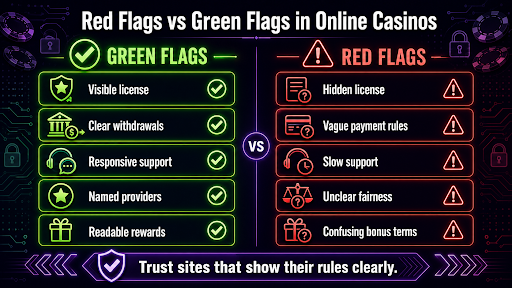
A legit casino does not need to look luxurious. It needs to be consistent. The licensing details should be visible. The payment methods should be explained clearly. The terms should tell players what happens with bonuses, withdrawals, and verification. Understanding how online casinos actually work helps here, because once you know what sits behind a real casino operation, it becomes easier to spot when a site is only performing trust instead of earning it.
Start With the License
The first serious checkpoint is licensing. If a casino is legit, it should clearly display the authority under which it operates, along with a registration or license number where applicable. That information is usually found in the footer, terms section, or about page. If you cannot find it easily, that alone is a concern.
A license is not just a logo. It is a signal that the casino operates under a regulatory framework that sets minimum standards for player protection, record-keeping, complaint processes, and fair game operation. The strongest platforms do not hide this information behind vague wording. They present it openly because it supports trust.
That said, a license on its own is not enough. Some weak platforms display licensing details but still provide poor support or delay withdrawals through unclear rules. Think of licensing as the first filter, not the final verdict.
Check the Withdrawal Process Before You Deposit
Many players focus on welcome rewards and game variety first, then investigate withdrawals only after winning. That is backward. One of the clearest ways to tell if a casino is legit is to study how it handles cash-outs before any money goes in.
Look for clear information on processing times, verification requirements, withdrawal limits, and payment methods. A reliable platform explains these details before they become a problem. If the rules are scattered, vague, or buried inside bonus terms, that is a red flag. How casino withdrawals work is useful context here because delayed withdrawals are not always evidence of fraud, but unexplained delays, moving rules, or inconsistent support responses often point to a platform that is not operating cleanly.
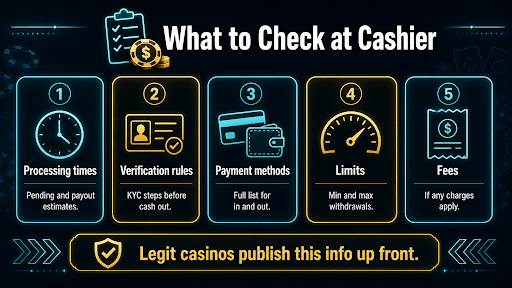
A legit casino understands that withdrawals are not a side process. They are the moment trust is tested most directly.
Look Closely at Support Quality
Customer support tells you more about a casino than most promotion banners ever will. A legit casino gives players multiple ways to get help, usually live chat, email, and a clear help centre. More importantly, support should be responsive, informed, and consistent.
The test is simple. Ask a pre-deposit question. It could be about withdrawal times, bonus eligibility, or account verification. If the reply is slow, generic, evasive, or clearly copied without addressing the question, that tells you something important. Support is not only for emergencies. It is one of the clearest indicators of whether a platform is prepared to handle real player issues responsibly.
Support quality also affects how rewards are experienced in practice. Even a generous reward structure loses value quickly when players cannot get straight answers about conditions, expiry, or game restrictions. Legit casinos do not rely on confusion to manage their offers.
Fair Games Need Transparent Systems
A casino can only be described as legit if the games themselves operate fairly. That means outcomes are driven by tested systems rather than manipulation, and the platform should make that clear. In digital casino games, the key concept is RNG, short for Random Number Generator. It is the system that determines outcomes in slots and many digital table games.
If you want to understand what fair play looks like in practice, how RNG works in online casinos is essential reading. A legit platform either explains this directly or provides enough game information and provider transparency for players to understand that outcomes are generated through certified random systems rather than hidden intervention.
This is also where game providers matter. Established studios with recognised products usually operate under testing and compliance standards that weak casinos cannot imitate convincingly for long. If a casino never names its providers, never explains how games are audited, or offers games that feel impossible to trace, caution is justified.
Terms and Rewards Should Make Sense Together
Rewards are one of the easiest ways for a weak casino to look strong. Large percentages, free spins, cashback offers, and tier bonuses can make almost any homepage feel attractive. The real test is whether the reward terms are readable, consistent, and realistic.
A legit casino explains wagering requirements, game restrictions, max cashout rules, and expiry periods in language that players can actually follow. If the rewards look good but the terms are loaded with contradictions, that is not generosity. It is friction disguised as value.
This is one reason it helps to compare visible promotions with the platform’s broader trust signals. If the rewards look oversized but the support is weak and the withdrawal section is vague, the offer should not be read as a positive signal. It should be read as compensation for weak trust elsewhere.
| Quick Check: If a casino makes claiming rewards easier than understanding them, the platform is prioritising conversion over clarity. |
Compare Design With Substance
Modern scammy or low-quality platforms often understand presentation very well. They copy premium design language, show polished game thumbnails, and highlight big-number rewards in all the right places. That is why design alone cannot tell you whether a casino is legit.
Instead, compare the visible polish with the hidden details. Does the quality of the help centre match the quality of the homepage? Are support channels easy to find? Are responsible gaming tools visible? Is the licensing section specific or generic? If the homepage feels premium but every trust page feels thin, that mismatch should not be ignored.
A useful next step is to look at what makes an online casino safe in broader terms, because safety is not only about legality. It is also about how clearly the platform handles player information, payments, account tools, and support expectations. That bigger picture often exposes weaknesses that a polished homepage hides.
Trust the Details, Not the Hype!
The best way to check if an online casino is legit is to stop thinking like a shopper and start thinking like a verifier. A legit platform proves itself through licensing, support, game fairness, withdrawal clarity, and terms that hold together under scrutiny. Those details matter far more than oversized rewards banners or glossy design.
Players do not need to investigate every casino like a regulator, but they do need to pause long enough to test the basics before depositing. When the details are clear, support is responsive, and the rules are easy to understand, trust becomes much easier to earn. Play responsibly, verify first, and let the structure of the casino guide your decision more than the promises on its homepage.