




Learning how to play slots properly is essential before spending real money on any slot machine. While many players assume slots are purely luck-based, modern machines are carefully designed systems built around probability, payout models, and player behavior. Understanding how slots work does not guarantee wins, but it does help you avoid costly mistakes and unrealistic expectations.
Slots are the most popular games in every casino, both online and land-based, because they are easy to access and require no prior experience. However, simplicity on the surface often hides important mechanics underneath. This guide breaks down how slot machines work, how casinos structure them, and what players should know before pressing spin.
What Are Slots?
Slots are gambling games where players spin reels in the hope of matching symbols according to predefined rules. Every slot machine operates independently, using software to determine outcomes instantly. Whether you are playing a digital slot online or a physical machine in a casino, the core principles remain the same.
Key Characteristics of Slots
- Outcome is determined randomly
- No skill or decision-making affects results
- Each spin is independent
- Payouts follow a predefined paytable
Slots appeal to players because they remove complexity. You don’t compete against other players, and you don’t need strategy charts. You simply choose a bet and play.
Why Slot Machines Dominate Every Casino?
Slot machines generate more revenue for casinos than any other game category. This dominance is not accidental. Machines are designed to be engaging, fast-paced, and visually stimulating.
Reasons Slots Are So Popular
- Low minimum bets
- Fast gameplay
- Wide variety of themes
- Bonus features and animations
- No learning curve
Online casinos amplify this appeal by offering hundreds or even thousands of slots, allowing players to switch machines instantly without waiting or pressure.
How Slot Machines Actually Work (RNG Explained Simply)?
Every slot machine runs on a Random Number Generator (RNG). This is a software system that produces random numbers continuously, even when the machine is idle. When you press spin, the RNG instantly selects a number that determines where each reel stops.
What This Means for Players?
- Past spins do not affect future spins
- A machine cannot become “hot” or “cold”
- Timing your spin does not improve odds
- Wins and losses are mathematically independent
This is one of the most important concepts to understand when learning how to play slots. Many players lose money because they believe patterns exist where none do.
Understanding RTP (Return to Player)
RTP is one of the few measurable metrics players can use when comparing slot machines. It represents the theoretical percentage of money a machine pays back to players over millions of spins.
RTP Example
| RTP Value | Meaning |
| 94% | Lower return, higher casino edge |
| 96% | Industry average |
| 98% | Very player-friendly |
Important:
RTP applies to long-term averages, not short sessions. A high-RTP slot can still lose in the short term, and a lower-RTP slot can still pay big.
Reels, Paylines, and How Wins Are Formed
Every slot is built around reels and paylines, but not all machines use them the same way.
Core Slot Components
- Reels – Vertical columns that spin
- Paylines – Paths where matching symbols create wins
- Symbols – Icons that determine payouts
To fully understand payouts, players should learn how slot machine symbols interact with paylines, wilds, and scatter mechanics. These relationships define how wins are calculated and why some machines feel more rewarding than others.
Payline Types Explained
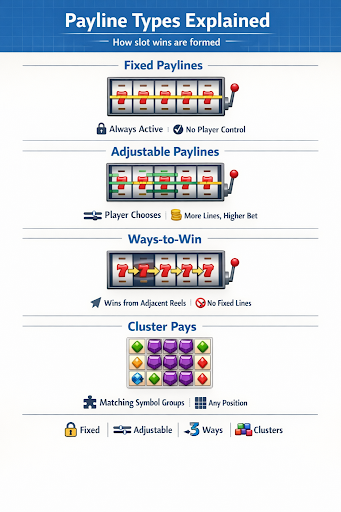
Modern machines often replace traditional paylines with more flexible systems, increasing engagement without changing underlying odds.
Online Slots vs Physical Casino Machines
Although online slots and land-based machines look similar, there are meaningful differences that affect gameplay.
Comparison Table
| Feature | Online Slots | Physical Machines |
| RTP | Usually higher | Usually lower |
| Game variety | Massive | Limited |
| Accessibility | Instant | Location-based |
| Bonuses | Frequent | Rare |
Online casinos often offer better payout structures because they operate with lower overhead. Physical machines compensate with atmosphere and social presence.
Volatility: Why Some Slots Feel “Tougher” Than Others?
Volatility describes how often a slot machine pays and how large those payments tend to be.
Volatility Breakdown
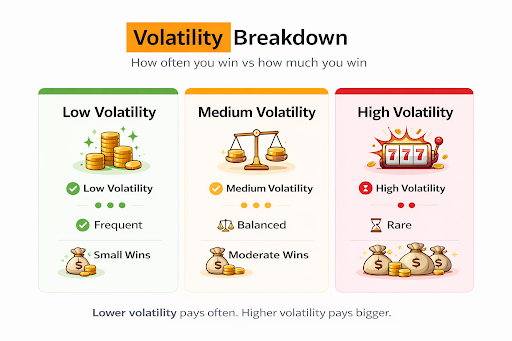
Example
- A low-volatility machine may pay small wins every few spins
- A high-volatility machine may pay nothing for long periods, then hit a large payout
Choosing the wrong volatility level is one of the most common beginner mistakes when playing slots in a casino.
Betting Options Explained: How Your Wager Impacts Slot Gameplay
One of the most misunderstood parts of learning how to play slots is betting structure. While slot machines appear simple, the way you place your wager directly affects session length, risk exposure, and payout size.
Most modern slot machines allow you to adjust your total bet rather than individual coin values. This makes gameplay easier, but it also hides how quickly your balance can change.
Common Betting Elements in Slots
| Betting Element | What It Controls | Why It Matters |
| Coin value | Value per credit | Affects payout size |
| Number of lines | How many paylines are active | More lines = more coverage |
| Total bet | Final amount per spin | Determines risk per spin |
| Buy feature | Instant bonus access | High risk, high cost |
Important:
Increasing your bet does not improve your odds of winning. Every slot machine calculates outcomes independently of wager size. Casinos benefit when players assume higher bets mean better chances, which is not the case.
Example
If a machine has a $0.20 minimum bet:
- $0.20 spins = longer playtime, smaller wins
- $5 spins = shorter sessions, larger swings
Choosing the right bet size is about control, not chasing wins.
Bonus Features: How Slots Pay Beyond the Base Game
Modern slots rely heavily on bonus mechanics to distribute payouts. While base spins handle small wins, bonus rounds often carry the majority of a machine’s potential value.
Common Bonus Types in Slot Machines
- Free Spins – Spins without deducting balance
- Multipliers – Increase win values (x2, x5, x10+)
- Wild Expansions – Wild symbols cover reels
- Re-spins – Locked symbols with extra chances
- Pick-and-Click Games – Interactive bonus rounds
Each slot machine distributes rewards differently. Some machines trigger bonuses frequently with low value, while others offer rare but massive payouts.
This is why two machines with the same RTP can feel completely different to play.
Understanding Volatility With Simple Examples
Volatility defines how a slot machine pays, not how much it pays over time.
Volatility Comparison Table
| Volatility Level | Win Frequency | Win Size | Best For |
| Low | Very frequent | Small | Casual play |
| Medium | Balanced | Moderate | Most players |
| High | Rare | Large | Risk-takers |
Practical Example
- A low-volatility slot might pay $2–$5 every few spins
- A high-volatility slot may pay nothing for 50 spins, then suddenly hit $500
Knowing this helps players choose machines that match their patience and bankroll instead of blaming the casino when results vary.
Bankroll Management: The Skill Most Slot Players Ignore
Even though slots require no decision-making skill, bankroll management is what separates controlled players from frustrated ones.
Simple Bankroll Rules for Slot Play
- Divide your balance into multiple sessions
- Risk no more than 1–2% per spin
- Set a loss limit before you start
- Stop after significant wins to protect gains
Example Session Plan
If your bankroll is $200:
- Session size: $50
- Bet size: $0.50–$1.00
- Spins per session: 50–100
This approach keeps machines entertaining instead of overwhelming.
Slot Myths That Hurt Players
Slot machines generate myths because outcomes feel emotional. Understanding facts removes unnecessary stress.
Common Slot Myths (Debunked)
- “This machine is due”
- “Switching machines increases chances”
- “Casinos control wins in real time”
- “Max bet is always best”
Reality:
- Each spin is independent
- RNG determines outcomes instantly
- Casinos cannot manually influence results
Once you understand this, slots become more enjoyable and less frustrating.
Choosing the Right Slot Machine for You
Not all machines are designed for the same type of player. Choosing the wrong slot can make even a good casino experience feel disappointing.
Slot Selection Checklist
- Check RTP (preferably 96%+)
- Match volatility to bankroll
- Review bonus mechanics
- Understand paylines or ways-to-win
- Learn how slot machine symbols interact
Players who explore different styles tend to enjoy slots more than those who stick blindly to one machine.
Where Slot Games Are Headed Next?
Slot machines continue to evolve with better visuals, deeper bonus structures, and more interactive gameplay. Developers are focusing on immersion, skill-inspired mechanics, and faster bonus access.
The future of slot games points toward:
- More player choice
- Smarter bonus triggers
- Cross-device compatibility
- Crypto-friendly integration
Understanding these trends helps players adapt and enjoy newer machines instead of sticking only to older formats.
Ready to Start Playing Slots?
Now that you know how to play slots, the next step is choosing a casino that offers the right games, fair mechanics, and real value. Twinqo offers a strong selection of slots, frequent promotions, and player-friendly bonuses, making it a practical place to put what you’ve learned into action.
Explore slots at Twinqo, start small, use the bonuses wisely, and always play responsibly.