






Online casinos attract millions of players for one simple reason: they combine entertainment, risk, and reward in a way few other activities can. But while winning moments are heavily advertised, winning more consistently is rarely explained clearly. Most guides either oversimplify the process or promise results that no casino game can realistically deliver.
This guide takes a different approach.
“Winning more” at online casinos does not mean beating the system, exploiting loopholes, or turning gambling into guaranteed income. Instead, it means understanding how online casino games actually work, recognizing where players lose value unnecessarily, and learning how smarter decisions can improve outcomes over time even in games driven by chance.
Whether you’re a beginner placing your first real-money bets or an experienced player looking to reduce costly mistakes, the goal here is clarity. That includes:
- Knowing what you can control and what you can’t
- Avoiding common misconceptions that drain bankrolls
- Making informed choices about games, sessions, and platforms
This article is designed to help you play with intention rather than impulse. It focuses on practical knowledge, realistic expectations, and disciplined habits — not tricks or false guarantees. Some sessions will still end in losses. Others may bring wins. The difference lies in how prepared you are for both.
By the end, you won’t have a “secret system.”
What you will have is a clearer framework for playing smarter, managing risk better, and getting more value out of the time and money you choose to spend at online casinos.
Understanding What “Winning” Actually Means in Online Casinos
Most players think they understand what winning looks like — until their expectations collide with reality. At online casinos, “winning” is often defined emotionally rather than logically, shaped by memorable moments instead of overall outcomes. Before learning how to improve results, it’s essential to reset how winning is understood in the first place.
Short-Term Wins vs Long-Term Results
A session win and a long-term result are not the same thing, even though players frequently treat them as equal.
Short-term wins happen inside individual sessions. They are immediate, emotional, and highly visible. A single strong payout can overshadow hours of losing play, creating the impression that a player is ahead even when they are not. Long-term results, on the other hand, reflect cumulative play across weeks, months, or years — something most players rarely measure accurately.
Occasional big wins distort perception because they stand out in memory. Losses tend to blend together, while wins feel special and repeatable. Casinos rely on this imbalance. Their systems are designed so that players remember peak moments rather than average outcomes, which keeps engagement high regardless of actual long-term results.
Casinos optimize for retention and engagement, not for session-by-session fairness. Players, however, tend to remember:
- The biggest win they ever had
- The session that “almost” changed everything
- The moment they felt close to a breakthrough
These memories shape future decisions, even when the long-term picture tells a very different story.
Why “Winning More” Does Not Mean Winning Every Session?
A common misconception is that improvement should lead to frequent or consistent wins. In reality, even informed and disciplined players experience losing sessions regularly.
This happens because variance is a built-in feature of casino games. Outcomes fluctuate naturally, producing streaks of wins or losses without any deeper meaning. These streaks are not signs of momentum, punishment, or adjustment — they are simply how randomness expresses itself over time.
Winning sessions tend to cluster, just as losing sessions do. This clustering creates the illusion that patterns are forming when none actually exist. A player can make better decisions overall and still encounter several losing sessions in a row without doing anything wrong.
Consistent play does not remove losing sessions; it only helps players understand them for what they are. Expecting constant success leads to frustration, overcorrection, and poor decisions later — all of which reduce the chance of finishing sessions on favorable terms.
The Role of Randomness in Casino Games
Randomness is often misunderstood. Many players treat it as chaos or unfairness, when in reality it serves a stabilizing purpose.
True randomness means each outcome is independent. Previous results do not influence future ones, even when outcomes appear clustered or repetitive. Human brains are wired to search for patterns, which makes random sequences feel intentional or biased when they are not.
Randomness protects both players and casinos. For players, it prevents manipulation and guarantees that outcomes are not pre-determined. For casinos, it ensures predictable long-term behavior across massive volumes of play.
What randomness does not mean:
- It does not guarantee fairness within a short session
- It does not ensure balance over a small number of rounds
- It does not “correct” losing or winning streaks
Understanding randomness removes the expectation that the game owes the player anything — a critical mindset shift before moving forward.
Choosing the Right Games Before You Ever Place a Bet
Many players focus on how they play while ignoring what they play. In reality, game selection has a larger impact on outcomes than most in-session decisions. Choosing the wrong type of game can quietly increase risk long before strategy or discipline come into play.
Why Not All Casino Games Are Designed the Same?
Casino games differ fundamentally in structure. Some are built around repeated rapid outcomes, while others slow the pace and introduce decision points. These design choices directly affect how much control a player has and how outcomes unfold over time.
Broadly, games fall into three structural categories:
- Automated games, where outcomes are resolved instantly
- Table-style games, where pacing and rules shape play
- Live dealer games, which introduce human interaction and timing delays
Each structure creates a different experience. Faster games increase exposure to variance. Slower games limit how often outcomes occur. Player-facing design may look similar across games, but the underlying mechanics can differ dramatically.
Understanding these structural differences helps players avoid games that quietly work against their goals.
Games With Player Decisions vs Games Without
One of the most important distinctions in online casinos is whether a game allows player decisions or not.
Decision-based games, such as Blackjack and Video Poker, require players to make choices that affect outcomes. These decisions introduce skill elements, learning curves, and the potential for improvement over time.
Outcome-only games, such as Slots and Roulette, resolve results automatically once a bet is placed. There are no in-round decisions that alter the outcome.
Decision depth changes risk exposure. Games without decisions concentrate risk into each bet, while decision-based games distribute risk across multiple choices. This difference matters long before any strategy is applied.
Over longer sessions, this also affects how losses and wins feel. Decision-based games tend to create smoother variance, as outcomes are influenced by a series of smaller decisions rather than a single spin or roll. Outcome-only games, by contrast, produce sharper swings, which can feel more volatile even at lower stakes.
How Game Rules Quietly Affect Your Chances?
Even within the same category, small rule variations can significantly change how a game behaves. These differences are often overlooked because they are buried in menus or presented as minor options.
Rule variations may include:
- Changes in payout handling
- Optional features that alter round flow
- Side mechanics that increase exposure per round
Players frequently assume all versions of a game behave the same, when in reality rules define how often outcomes resolve and how quickly risk accumulates. Choosing versions with unfavorable rules can increase losses without the player ever realizing why.
When “Fun Games” Are the Worst Choice for Winning?
Many modern casino games are designed primarily for entertainment. Bright visuals, bonus animations, and frequent small events create engagement but can reduce efficiency for players focused on results.
Entertainment-first mechanics prioritize:
- Constant stimulation
- Feature-heavy gameplay
- Emotional highs over outcome clarity
These elements keep players engaged longer but often blur the connection between bets and results. Games that feel exciting may encourage faster play, repeated betting, or misjudgment of performance.
Enjoyment has value, but players aiming to win more must recognize when entertainment design works against efficiency.
Learning RTP, Volatility, and House Edge Without Misusing Them
RTP, volatility, and house edge are among the most quoted concepts in online gambling — especially when discussing slot games — and also the most misunderstood. Many players first encounter these terms while browsing slot information panels or game reviews, but often apply them incorrectly, expecting them to predict short-term outcomes or guarantee better sessions. This section exists to clarify what these metrics actually describe, and just as importantly, what they do not.
What RTP Actually Measures (And What It Doesn’t)
RTP, or Return to Player, is a long-term statistical model, not a promise. In slots and other casino games, it represents the expected return across an enormous number of simulated outcomes, typically measured over millions or even billions of spins or rounds.
The key misunderstanding is scale.
RTP reflects lifetime behavior, not individual sessions. A player can experience results far above or far below a slot’s stated RTP across dozens, or even hundreds, of sessions without anything malfunctioning. This is not an exception — it is expected behavior in random systems.
RTP does not:
- Guarantee balance within a session
- Ensure fairness over short play periods
- Indicate when wins or losses will occur
It also does not adjust dynamically. A low-paying slot session does not “set up” a higher-paying one later. RTP only becomes visible across massive data sets, which individual players never reach.
Understanding RTP correctly is especially important in slots, as it prevents one of the most damaging assumptions in casino play: the belief that a game owes something back in the short term.
Volatility Explained Through Payout Behavior, Not Luck
Volatility describes how payouts are distributed, not how lucky a game is.
Low-volatility games tend to produce frequent, smaller outcomes. High-volatility games produce less frequent outcomes, but when they do appear, they tend to be larger. Neither is inherently better or worse — they simply behave differently across time.
This difference dramatically changes session flow:
- Low volatility creates smoother sessions with smaller swings
- High volatility creates long stretches of inactivity followed by sharp spikes
Players often confuse volatility with payout quality. A high-volatility session that pays nothing can feel unfair, even though it is functioning exactly as designed. Conversely, a low-volatility session may feel productive while slowly trending downward.
Volatility does not change the underlying fairness of a game. It changes how risk is expressed, which directly affects how long a session lasts and how results feel moment to moment.
House Edge as a Cost of Entertainment?
House edge represents the casino’s structural advantage. It is not a punishment, a trick, or a hidden rule it is the price players pay for access to games with real-money outcomes.
This edge exists in every casino game, regardless of format or provider. Without it, casinos could not operate sustainably. The important distinction is not whether a house edge exists, but how it is embedded into gameplay.
House edge does not dictate:
- Session outcomes
- Win frequency
- Individual payout timing
It simply defines the expected long-term cost of participation. Thinking of house edge as an entertainment cost — similar to a ticket price — helps players evaluate their play more realistically, without chasing impossible neutrality.
Comparing house edges can be useful for understanding structural differences, but those comparisons alone do not determine session success.
Common Player Mistakes When Using These Metrics
Even players familiar with RTP, volatility, and house edge frequently misuse them.
One common mistake is chasing RTP, assuming that higher RTP guarantees better short-term outcomes. In practice, RTP differences only emerge over extremely large sample sizes, far beyond typical play.
Another error is ignoring volatility tolerance. Players may choose games with payout behavior that conflicts with how they actually play — leading to frustration, premature exits, or forced bet changes later.
A third mistake is confusing frequency with profitability. Frequent small outcomes can feel productive while masking steady decline, while infrequent large outcomes can distort performance perception.
Used correctly, these metrics explain behavior. Used incorrectly, they fuel false confidence and unnecessary losses.
Bankroll Management That Actually Matches How People Play
Traditional bankroll advice often assumes ideal discipline and perfect planning — conditions that rarely exist in real play. This section focuses on realistic bankroll management that aligns with how players actually behave, rather than how they are told they should behave.
Defining a Bankroll the Right Way
A bankroll is not simply money deposited into a casino account. It is the portion of funds that a player has explicitly accepted as risk capital.
Disposable funds and session money are not the same. Disposable funds may be available, but once converted into a bankroll, they take on a specific purpose: to fund play without external pressure.
A common mistake is treating every deposit as a fresh bankroll. Deposits are transactions; bankrolls are planning tools. When deposits replace structure, players lose perspective and begin making reactive decisions based on account balance rather than intent.
A clearly defined bankroll exists before play begins, not during it.
Session Structuring Instead of “Daily Limits”
Many players rely on vague daily limits that are easy to override. Session structuring provides a more practical alternative.
Sessions can be framed by:
- Time spent playing
- Number of rounds or hands
- A predefined stopping condition
Time-based sessions reduce overexposure by limiting how long variance can act on the bankroll. Money-based sessions define acceptable fluctuation without requiring constant balance monitoring.
Session framing works because it shifts decision-making before play begins, reducing the need for judgment calls during play.
Bet Sizing and Survival Time
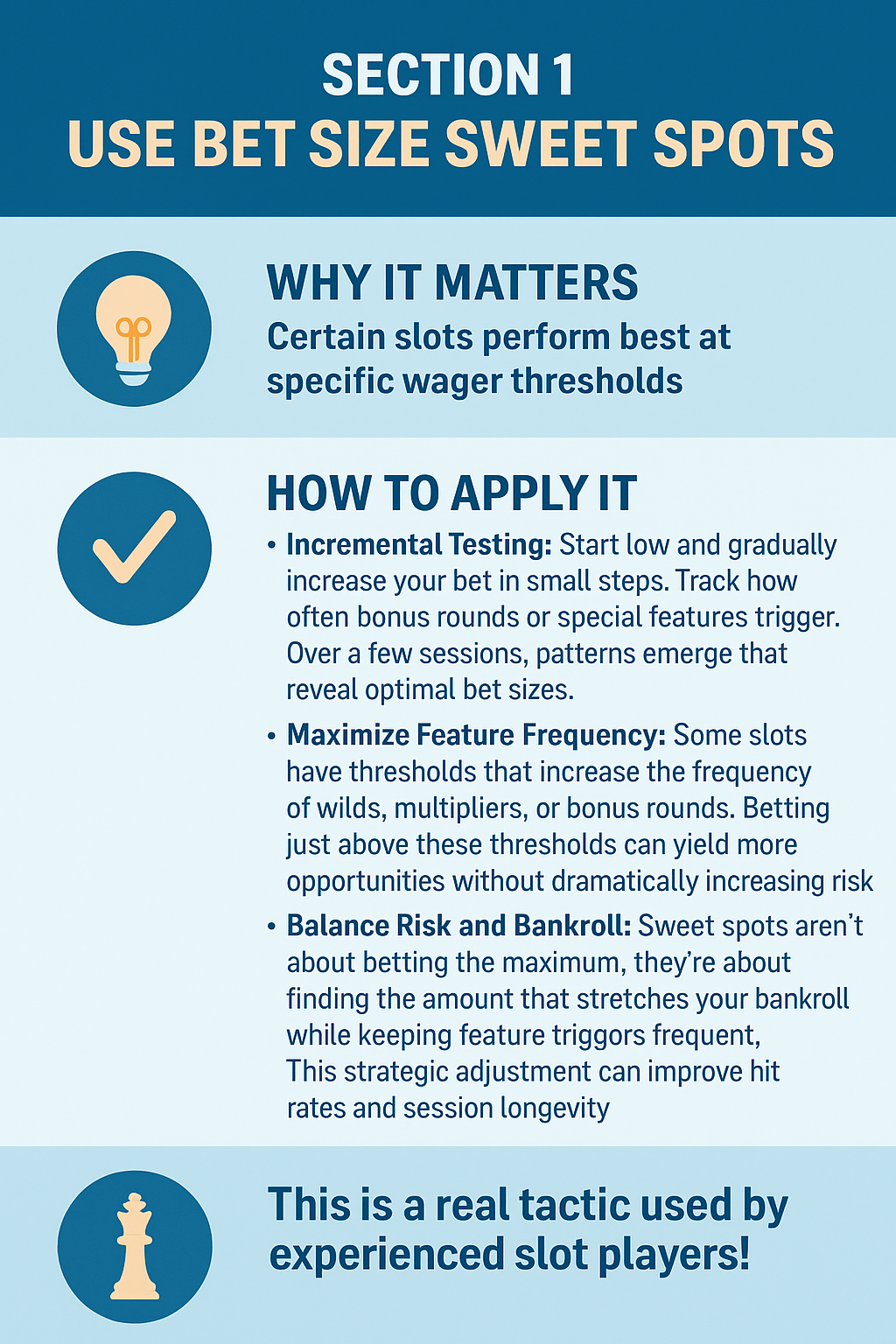
Bet size directly affects how long a bankroll can sustain play. Larger bets increase exposure to variance, accelerating both wins and losses. Smaller bets extend survival time, allowing more outcomes to occur before depletion.
Survival time matters because it:
- Reduces the impact of short negative streaks
- Allows volatility to express more naturally
- Creates more decision points per session
Smaller bets do not guarantee better results, but they provide more opportunities for outcomes to normalize within a session.
When to Stop Winning Sessions Early
One of the hardest skills in bankroll management is ending a session while ahead. Winning sessions create confidence, which often leads to continued play and increased exposure.
Locking in profits requires treating winning as a temporary condition, not a signal to escalate. Pressing luck increases variance exposure at the moment when discipline matters most.
Quitting while ahead feels psychologically uncomfortable because it interrupts momentum. However, bankroll stability improves when players recognize that strong sessions do not need to be maximized to be valuable.
Ending sessions intentionally is not about fear — it’s about control.
Bonuses, Promotions, and Why Most Players Lose Value on Them
Bonuses are one of the most persuasive tools online casinos use to attract and retain players. They appear generous on the surface, often framed as “extra money” or “free chances.” In practice, however, most players extract far less value from bonuses than they expect — and many lose more because of them.
How Casino Bonuses Are Designed to Be Used
Casino bonuses are not gifts; they are engagement mechanisms. Their primary purpose is to extend playtime, increase exposure to risk, and delay withdrawals.
Players often assume bonuses exist to improve winning chances. Casinos design them to do the opposite: to keep funds in play longer. This disconnect between casino intent and player assumptions is where value is lost.
Every bonus follows a predictable lifecycle:
- Claim: The bonus is activated, often automatically
- Restriction phase: Withdrawals are limited or blocked
- Completion or expiration: The bonus is either cleared or forfeited
Throughout this lifecycle, the casino controls how funds can be used, when they can be withdrawn, and under what conditions they are removed. Players who treat bonuses as flexible cash misunderstand how tightly they are governed.
Wagering Requirements and Their Real Cost
Wagering requirements determine how much play must occur before bonus-linked funds can be withdrawn. While commonly expressed as a simple multiplier, their real cost is not linear.
Turnover pressure forces players to continue playing regardless of session outcomes. Even when a session is going well, wagering requirements prevent players from locking in results, increasing exposure beyond what they might otherwise choose.
Wagering magnifies variance because:
- More rounds are required than a normal session
- Exposure increases without regard to timing or outcomes
- Short-term wins are forced back into play
What looks like “extra value” often becomes an enforced continuation of a structure that benefits the casino far more than the player.
Games That Quietly Disqualify Bonus Value
Not all games contribute equally toward bonus completion. Contribution rules define which games count fully, partially, or not at all toward wagering requirements.
Players frequently discover too late that:
- Certain games contribute at reduced rates
- Some games are excluded entirely
- High-variance games conflict with wagering timelines
Volatility conflicts with wagering because large swings increase the chance of early depletion before requirements are met. Even when wins occur, contribution limits can slow progress to the point where value evaporates.
These restrictions are rarely hidden, but they are often overlooked — quietly undermining the perceived benefit of the bonus.
When Playing Without a Bonus Is the Smarter Move?
Bonuses are not always the optimal choice. In many situations, playing without one provides greater flexibility and control.
Bonus-free play allows:
- Immediate withdrawals
- Session-based decision-making
- Lower exposure to forced continuation
Low-risk sessions benefit most from bonus-free play because results can be evaluated and acted upon without restrictions. For players who value clarity and exit control, avoiding bonuses can preserve more value than chasing promotional incentives.
Choosing not to take a bonus is not a missed opportunity — it is often a deliberate advantage.
Psychological Traps That Cost Players More Than Bad Luck
While casino games are governed by mathematics, player outcomes are heavily influenced by psychology. Many losses occur not because of unfavorable odds, but because mental shortcuts and emotional responses quietly override rational decision-making.
The “Getting Even” Mindset
The desire to recover losses is one of the most destructive mental traps in gambling. Known as the loss recovery fallacy, it convinces players that returning to even is both necessary and achievable within the same session.
This mindset reshapes decision-making by:
- Reframing losses as temporary setbacks
- Justifying continued play beyond original intent
- Increasing risk tolerance under pressure
Once the goal shifts from playing well to “getting even,” decisions become reactive rather than deliberate — often accelerating losses rather than correcting them.
Tilt and Subtle Emotional Drift
Tilt is commonly associated with anger, but it often emerges in quieter forms. Boredom, overconfidence, and fatigue can all alter decision-making without triggering obvious warning signs.
Subtle tilt sneaks in when:
- Players increase speed without noticing
- Attention drifts during repetitive play
- Confidence rises after minor success
Because these states feel neutral or even positive, they often go unchecked. The result is degraded judgment without the emotional intensity players expect from tilt.
Why Wins Can Be as Dangerous as Losses?
Winning introduces its own psychological risks. Success reinforces confidence, which can quickly turn into overconfidence.
After wins, players may:
- Increase bets without planning
- Extend sessions beyond intent
- Assume favorable conditions will continue
This escalation happens precisely when caution should increase. Wins feel like validation, but they do not change the underlying uncertainty of future outcomes.
Building Awareness Without Killing Enjoyment
Avoiding psychological traps does not require rigid control or joyless play. Awareness can be built through light-touch mechanisms that preserve enjoyment while limiting damage.
Effective techniques include:
- Brief pauses at natural breakpoints
- Asking simple self-check questions
- Resetting intent mid-session without quitting
The goal is not emotional suppression, but recognition. Players who notice mental shifts early retain more control without sacrificing entertainment.
Betting Systems: Why Most Don’t Work and When They Still Matter
Betting systems are one of the most searched topics in gambling, even among players who know they “don’t work.” This section exists to explain why they fail as profit tools — and why they still persist as behavioral frameworks.
Why Systems Can’t Beat House Edge?
At their core, betting systems attempt to rearrange risk, not eliminate it. No system changes the underlying probabilities of a game or removes the casino’s built-in advantage.
The mathematical limitation is simple: adjusting bet size does not alter outcome likelihood. Whether a player increases, decreases, or holds bets constant, each round resolves independently under the same structural conditions.
Progression systems fail long-term because:
- Losses compound faster than wins recover
- Required bet sizes escalate beyond practical limits
- A single extended losing streak collapses prior gains
These systems often appear effective in short demonstrations because they rely on favorable variance. Over time, however, variance exposes their fragility.
The failure is not due to poor execution — it is structural.
Popular Systems and Their Hidden Risks
Some systems persist because they feel intuitive and simple.
Martingale-style escalation systems rely on doubling or increasing bets after losses. Their appeal comes from frequent small recoveries, which reinforce confidence. The hidden risk lies in the exponential growth of required stakes, which quickly exceeds limits imposed by balances, tables, or personal tolerance.
Flat betting systems are often misunderstood as “safe.” While they reduce escalation risk, they do not improve outcomes. Flat betting merely stabilizes exposure without influencing expected results.
The danger of both approaches is expectation mismatch:
- Progression systems promise recovery
- Flat systems promise control
Neither delivers profit on its own.
When Systems Are Useful (Risk Control, Not Profit)?
Although systems cannot generate long-term profit, they can serve non-mathematical purposes.
Used correctly, systems help with:
- Structuring sessions consistently
- Defining how bets change — or don’t
- Preventing impulsive bet adjustments
A predefined system removes in-the-moment decisions. This reduces erratic behavior and creates predictability in how sessions unfold, even if outcomes remain uncertain.
In this role, systems act as discipline frameworks, not winning formulas. Their value lies in constraint, not advantage.
Platform-Level Factors That Affect Results More Than You Think
Players often evaluate performance solely through gameplay, overlooking the environment in which play occurs. Platform-level factors influence outcomes indirectly by shaping trust, pacing, and decision accuracy.
Game Providers and Fairness Transparency
Fairness in online casinos is enforced at the provider level, not at the interface level. Reputable providers use certified random number generators and submit their systems for independent testing.
Transparency matters because it:
- Confirms outcome integrity
- Reduces suspicion-driven behavior
- Builds confidence in results
When players trust that outcomes are fair, they are less likely to second-guess normal variance or chase imagined irregularities. Provider reputation functions as a stabilizing factor for long-term play.
Withdrawal Speed and Psychological Impact
Withdrawal speed affects behavior even before a player initiates a cashout.
Platforms that process withdrawals quickly create a sense of closure. This reduces the urge to keep funds in play “just a little longer.” Slow or uncertain withdrawals do the opposite, increasing friction and encouraging continued betting while waiting.
Fast withdrawals strengthen the link between:
- Trust in the platform
- Willingness to end sessions
- Adherence to intended limits
This is not a financial advantage — it is a behavioral one.
UI, Performance, and Decision Errors
Interface design influences accuracy. Lag, delayed confirmations, or cluttered layouts increase the likelihood of unintentional actions.
Common friction points include:
- Accidental repeat bets
- Misclicks on mobile devices
- Delayed feedback that causes double actions
These issues introduce errors that are not strategic failures, but execution failures. Over time, small interface-induced mistakes accumulate into meaningful losses.
Smooth performance reduces cognitive load, allowing players to focus on decisions rather than corrections.
Building a Sustainable Playing Approach Over Time
Short-term improvements matter, but long-term players succeed because they adjust how they think about casino play altogether. Sustainability is not about playing more often or finding better opportunities — it’s about maintaining clarity and control across many sessions, regardless of outcomes.
Tracking Results Without Obsession
Tracking can improve awareness, but only when it is selective. Attempting to record every detail often leads to fixation rather than insight.
Useful tracking focuses on:
- Session duration
- Entry and exit points
- Overall direction over time
What tends to mislead players are granular details that amplify noise rather than signal. Individual wins, losses, or streaks feel meaningful but rarely represent underlying performance.
Emotional memory is unreliable because it prioritizes intensity over accuracy. Strong wins are remembered vividly, while small or moderate losses fade. Tracking replaces emotional recall with neutral reference points, helping players see patterns without assigning meaning where none exists.
The goal is awareness, not control.
Adjusting Game Choices as Experience Grows
As players gain experience, their relationship with games changes. Early play often prioritizes familiarity and comfort. Over time, stagnation occurs when players stop reassessing those choices.
Skill development is not always about mastering mechanics. It includes:
- Understanding personal tolerance for uncertainty
- Recognizing which formats suit current goals
- Identifying when habit replaces intention
Avoiding stagnation requires periodic reassessment. Games that once felt engaging may become automatic, reducing attention and increasing error likelihood. Adjusting game choices doesn’t mean chasing novelty — it means aligning play with current awareness and experience.
Long-term players evolve not because they find perfect games, but because they revisit assumptions.
Knowing When Casino Play Stops Being Fun
Enjoyment is often the first signal that something has shifted. When play becomes mechanical, tense, or draining, outcomes matter less than the change in experience itself.
Early warning signs include:
- Playing out of routine rather than interest
- Extending sessions without clear intent
- Viewing breaks as interruptions instead of relief
Taking breaks does not require quitting permanently. Stepping away restores perspective and reduces the risk of play becoming compulsive rather than recreational.
Sustainable play respects timing. Knowing when to pause is as important as knowing when to play.
Final Thoughts: Playing Smarter, Not Chasing Guarantees
Online casinos are environments of controlled uncertainty. No strategy, system, or insight removes risk entirely — and expecting otherwise leads to frustration. Playing smarter means accepting uncertainty while reducing unnecessary exposure to it.
Winning is not defined by constant success, but by how risk is managed across time. Players who last longer, enjoy play more, and lose less unnecessarily tend to share one trait: discipline rooted in understanding, not hope.
Tricks fade quickly. Discipline compounds slowly.
Informed play does not change luck, but it changes reactions to luck. It limits damage during unfavorable stretches and preserves gains when conditions align. Over time, these small adjustments create meaningful differences in experience and outcomes.
The goal is not to outsmart the casino — it is to outgrow the mistakes that quietly cost most players more than chance ever could.
That is how players truly win more.