






Plinko-style casino games have become a distinct category in online gaming, recognizable for their simple mechanics, visual clarity, and fast-paced outcomes. Unlike traditional casino formats that rely on complex rules or extended gameplay, Plinko-style games focus on a single action: dropping an object down a pegged board and letting randomness determine the result.
Free-to-play versions of these games have grown in popularity alongside real-money Plinko titles. They allow players to explore how Plinko-style mechanics work, experience different board designs, and understand outcome behavior — all without financial pressure. For many players, free play is the first point of contact with this game type, shaping expectations long before real stakes are involved.
This article is designed to serve multiple purposes without blending them together. It explains what qualifies as a Plinko casino game, explores where and how free-to-play versions are available, evaluates what separates well-designed free casino games from poor ones, and examines how the free-play experience differs from real-money versions in meaningful ways.
Rather than ranking games immediately or pushing recommendations, the focus here is understanding. Plinko-style games may look simple, but their design choices — board structure, visual feedback, pacing, and randomness presentation — all influence how they feel and how players interact with them. Free-to-play environments make these differences easier to observe without risk.
By the end of this guide, readers will have a clear framework for identifying quality free-to-play Plinko casino games, understanding what free play can realistically offer, and recognizing its limitations. Whether the goal is casual entertainment, exploration, or preparation for real-money play, this article approaches Plinko-style games with clarity instead of hype.
Free-to-Play Plinko: Key HighlightsFree-to-play Plinko-style casino games blend chance, strategy, and physics-based gameplay, offering a unique online gaming experience. Players can explore multiplier patterns, adjust risk levels, and enjoy bonus features without wagering real money. Popular titles like Golden Plinko, Easter Plinko, Plinko Aztec, Lucky Tiger, and Thunder Plinko provide diverse themes, engaging visuals, and varying volatility. These demos are perfect for both casual fun and strategic experimentation, making every ball drop exciting and rewarding. |
What Makes a Game “Plinko Style” in Online Casinos
Before comparing free-to-play Plinko casino games or judging which ones are better designed, it’s important to define what “Plinko style” actually means in the context of online casinos. The term is often used loosely, but not every game with falling objects or multipliers qualifies as true Plinko. This section exists to establish clear criteria and prevent confusion later in the discussion.
The Core Mechanics Behind Plinko-Style Games
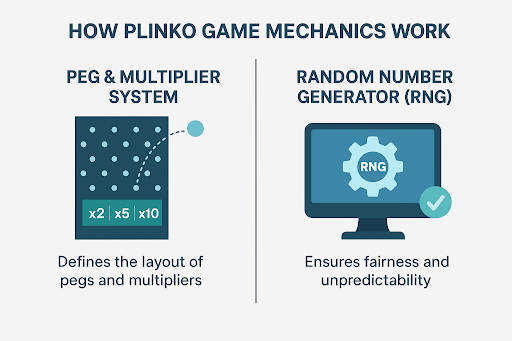
At its core, a Plinko-style game is built around a vertical drop system. A ball, chip, or token is released from the top of a board and travels downward through a fixed arrangement of pegs. The path it takes is unpredictable, shaped by repeated deflections until it reaches a final landing position.
Peg-based randomness is central to the Plinko identity. Each peg interaction introduces a directional change that visually represents randomness. While the outcome is determined by software, the peg layout creates the familiar zigzag motion that defines the experience. This visual randomness is a defining feature, even though it does not imply player influence.
At the bottom of the board are multiplier-based landing zones. These zones assign a value or multiplier to the drop’s final position. Unlike reel-based games where symbols combine, Plinko outcomes are tied to where the object lands, not what it displays.
Finally, Plinko-style games follow a one-input, outcome-driven design. The player performs a single action — initiating the drop — and the game resolves the result without further interaction. There are no mid-round decisions, bonus triggers, or branching paths. This simplicity is intentional and separates Plinko from more complex casino formats.
How Digital Plinko Differs From Physical Plinko
Although Plinko originated as a physical game, digital casino versions operate under fundamentally different principles.
Physical Plinko relies on real-world physics: gravity, material friction, peg shape, and slight imperfections all influence the ball’s movement. In contrast, digital Plinko uses software-based randomness. The visual drop is an animation representing an outcome generated by an algorithm, not a physics simulation determining the result in real time.
Digital environments also allow for adjustable board parameters. Developers can change peg density, board height, multiplier placement, and risk profiles without altering physical components. This flexibility enables multiple Plinko variants to exist within the same conceptual framework.
Another key difference is outcome calculation timing. In digital Plinko, the result is typically decided the moment the drop is initiated. The falling animation plays out afterward as a visual expression of that result. This distinction is important because it reinforces that the animation does not influence the outcome — it merely reveals it.
Why Plinko Became Popular in Online Casino Environments
Plinko’s rise in online casinos is not accidental. Its structure aligns well with digital play habits and modern user expectations.
One major factor is the low learning curve. New players can understand how Plinko works within seconds. There are no rules to memorize, paylines to track, or complex interfaces to navigate. This accessibility makes Plinko especially appealing in free-to-play environments.
High visual clarity also plays a role. The board, pegs, and landing zones are all visible at once. Players can immediately see how outcomes are structured, even if they can’t predict them. This transparency makes the game feel intuitive rather than opaque.
Plinko casino games also offer fast round resolution. Each drop completes quickly, creating a sense of momentum without requiring extended attention. This pacing suits casual play and aligns well with short, repeatable sessions.
Finally, streamer and social influence has amplified Plinko’s popularity. The visual nature of the drop, combined with dramatic multiplier zones, makes Plinko easy to watch and share. This visibility has helped establish Plinko as a recognizable casino game type rather than a novelty.
What Plinko Is Not (Common Misclassifications)
Because of its visual elements, Plinko is often confused with other game types. These misclassifications blur understanding and lead to incorrect expectations.
Plinko is not pachinko. Pachinko involves continuous ball movement, mechanical gates, and extended play loops. Plinko resolves outcomes in a single drop with no carryover mechanics.
Plinko is also not related to slot cascades or falling-symbol slots. While both involve downward motion, cascades depend on symbol combinations, reel logic, and chain reactions. Plinko has no reels, paylines, or symbol matching.
Structurally, Plinko is not a slot game. Slots rely on reel-based randomization and multiple concurrent outcomes. Plinko relies on a single resolved outcome per round, defined solely by landing position. This structural difference places Plinko in its own category within online casino games.
Understanding Free-To-Play Plinko Games vs Real-Money Versions
Free-to-play Plinko casino games are often described casually as “the same game without money,” but that description is incomplete. While free versions closely mirror real Plinko gameplay on the surface, they operate within a very different context. This section exists to clarify what free-to-play actually means in online casinos, how accurately these versions simulate real games, and where the differences matter most.
What “Free-To-Play” Actually Means in Online Casinos
In online casinos, “free-to-play” does not refer to a single format. Instead, it covers several closely related play environments that share one defining trait: no real-money withdrawals.
The most common form is demo mode. Demo modes allow players to launch a game instantly without registering or depositing. Credits are provided automatically and replenish freely, making the experience continuous and unrestricted.
Another format uses practice credits. These credits function like a balance but have no monetary value. They exist purely to enable interaction with the game and are reset or replenished without consequence.
Some platforms also offer play-for-fun environments, where free games are grouped separately from real-money sections. These environments emphasize exploration and entertainment rather than outcomes.
Across all formats, one rule is consistent: there are no withdrawal mechanics. Free-to-play Plinko casino games do not include cashout processes, balance conversions, or any link to real funds. This absence fundamentally changes how the game is experienced, even when the gameplay itself appears identical.
How Free Versions Simulate Real Plinko Gameplay
Despite operating without real stakes, most free-to-play Plinko casino games are designed to closely replicate their real-money counterparts.
The board layout is typically identical. Peg placement, board height, and landing zone distribution match the real version, ensuring the visual structure remains the same.
The drop mechanics are also consistent. The way the ball or token moves through the pegs, the speed of the animation, and the overall flow of the drop are designed to mirror real gameplay as closely as possible.
In addition, multiplier positioning remains unchanged. The same values appear in the same locations at the bottom of the board, preserving the structural logic of outcomes.
This level of simulation allows players to become familiar with how a Plinko game looks and feels without interacting with real funds. From a mechanical standpoint, free versions are meant to educate through exposure, not to simplify or alter gameplay.
Key Limitations of Free-To-Play Plinko Games
While free Plinko casino games accurately simulate mechanics, they cannot replicate the full experience of real play.
The most significant limitation is the absence of balance pressure. Without real funds at stake, outcomes carry no practical consequence. Wins and losses are informational rather than impactful, which changes how results are perceived.
Free play also lacks withdrawal logic entirely. There is no need to consider timing, exit conditions, or balance conversion. As a result, free sessions do not reflect the decision constraints present in real-money environments.
Most importantly, there is no real risk exposure. Risk is central to how casino games are experienced, even when outcomes are identical. Removing risk alters attention, pacing, and perception. Free-to-play Plinko shows how a game operates, but not how it feels when outcomes matter.
These limitations do not make free play misleading — they simply define its boundaries.
Why Free Play Exists From the Casino’s Perspective
Free-to-play Plinko casino games are not offered purely as entertainment; they serve clear functional roles within online casinos.
One primary role is as an onboarding tool. Free play lowers the barrier to entry, allowing new users to interact with games immediately without commitment. This reduces friction and increases familiarity with the platform.
Free versions also act as a familiarization mechanism. Players can learn how a Plinko game behaves, understand its visual structure, and recognize its pacing before encountering real-money environments.
Finally, free play supports engagement without financial friction. It keeps users active, exploring, and returning to the platform without requiring deposits. From the casino’s perspective, this sustained engagement builds comfort and recognition over time.
Understanding why free play exists helps clarify its purpose: it is designed for exposure and learning, not for replicating the full emotional and financial context of real-money play.
How Plinko Games Generate Outcomes Without Player Influence
Plinko-style games feel interactive because the outcome unfolds visually, but that interaction is representational rather than influential. To understand how Plinko works properly, it’s important to separate what players see from what actually determines the result. This section explains how outcomes are generated in Plinko casino games and why player input does not alter them.
Drop Mechanics vs Outcome Resolution Timing
In digital Plinko casino games, the falling motion of the ball or token is not what decides the outcome. The visual drop and the backend calculation are two separate processes.
When a player initiates a drop, the game’s system immediately determines the final result. This calculation happens before the animation begins. The position where the object will land is already fixed at the moment of input.
Outcomes are decided instantly because digital casino games are built for consistency and integrity. Resolving results upfront ensures that:
- Each round is independent
- External factors cannot interfere
- Outcomes remain consistent across devices and connections
The falling animation that follows does not influence the result. Instead, it serves as a visual representation of a pre-determined outcome. The ball’s path is animated to match the resolved landing position, creating a coherent visual narrative for the player.
This distinction is essential. While the animation suggests cause-and-effect through peg collisions, the animation itself is not the cause — it is the reveal.
Peg Interaction as Visual Randomness
Peg interaction is the most recognizable feature of Plinko-style games and the primary reason they feel unpredictable.
Each deflection gives the impression that the ball is reacting dynamically to its environment. Peg contact feels meaningful because it visually represents uncertainty: every bounce appears to create a new possibility.
In reality, randomness is expressed through the animation, not by it. The peg layout provides a familiar and intuitive way to show unpredictability, even though the outcome has already been determined.
This leads to common misconceptions, such as the idea of a “good drop” or a “bad bounce.” Players may believe that certain peg interactions signal favorable or unfavorable outcomes, when in fact those interactions are simply part of the visual path leading to a fixed result.
The randomness players perceive is real in outcome distribution, but the visual journey is symbolic rather than causal.
Why Player Timing and Drop Position Don’t Matter
Because Plinko casino games rely on a single, simple input, there is no mechanism for player skill to affect the outcome.
Timing does not matter. Releasing the drop earlier or later does not change the result, because the outcome is not influenced by animation timing or input speed.
Drop position also does not matter in games where the starting point is fixed or where multiple starting points resolve identically. Even when games allow cosmetic positioning choices, those inputs do not introduce skill-based adjustment.
The perception of control is illusory. The game presents movement, variation, and choice in a way that feels interactive, but the underlying system does not respond differently based on player behavior.
This illusion is not deceptive by design — it is a consequence of translating abstract randomness into a visual format that humans can intuitively understand.
Recognizing this separation between interaction and influence helps players approach Plinko casino games with clearer expectations and prevents assumptions about control where none exists.
Fairness and Randomness in Free-To-Play Plinko Games
When money is removed from casino gameplay, questions about fairness don’t disappear — they change shape. Many players assume that free-to-play games operate under different rules or are manipulated to create a certain experience. This section exists to clarify how randomness works in demo Plinko casino games and why fairness still matters, even when no real funds are involved.
How Randomness Works in Demo Casino Games
Free-to-play Plinko casino games typically use the same underlying randomness logic as their real-money counterparts. The system that determines outcomes does not change simply because the mode is free. The primary difference lies in what happens after an outcome is resolved, not how that outcome is generated.
Demo outcomes aren’t “rigged to win” because there is no functional need for them to be. In free play, wins do not translate into withdrawals, and losses do not remove real value. Manipulating outcomes would provide no meaningful advantage to the platform and would undermine trust without delivering benefit.
Randomness in demo games serves the same purpose as in real games: ensuring that each round resolves independently and unpredictably. This consistency allows free play to act as a legitimate representation of how the game behaves, rather than a scripted experience designed to mislead.
Are Free-To-Play Plinko Games Truly Fair?
Fairness and consequence are often confused. Fairness refers to whether outcomes are generated honestly and consistently. Consequence refers to whether those outcomes affect something of value.
In free-to-play Plinko casino games, consequences are removed — fairness is not. Each outcome still follows the same rules of independence and unpredictability as any other version of the game.
Fairness still matters without money because:
- Players form expectations based on free play
- Trust is established before any commitment
- Transparency affects long-term credibility
If free-to-play games behaved differently from real versions, they would create confusion rather than familiarity. Maintaining fairness ensures that free play serves as a reliable point of reference, even if the emotional impact of outcomes is reduced.
Common Myths About Free Plinko Outcomes
Several misconceptions persist around free-to-play Plinko casino games, often fueled by assumptions rather than evidence.
One common myth is that “free mode pays better.” This belief usually stems from the absence of real consequences, which makes wins feel more frequent or meaningful. In reality, perception changes when losses carry no weight.
Another misconception is that “demo mode is fake.” While free games remove financial mechanics, the randomness itself is not staged or scripted. The experience may feel different, but the outcome generation remains consistent.
Some players also believe that “free play trains bad habits.” Free play does change how players react to outcomes, but it does not inherently teach incorrect mechanics. It reflects the same structural behavior without the pressure of real stakes.
Understanding these myths helps players interpret free-to-play Plinko casino games accurately — as representations of mechanics, not predictors of future results.
Types of Plinko Casino Games Available Online
Plinko casino games may look similar at first glance, but they exist in several distinct design categories. These variations are not superficial; they influence how outcomes are distributed, how sessions feel, and how players interact with the board. This section organizes Plinko-style games into clear types based on structural design, not performance or desirability.
Classic Vertical Plinko Boards
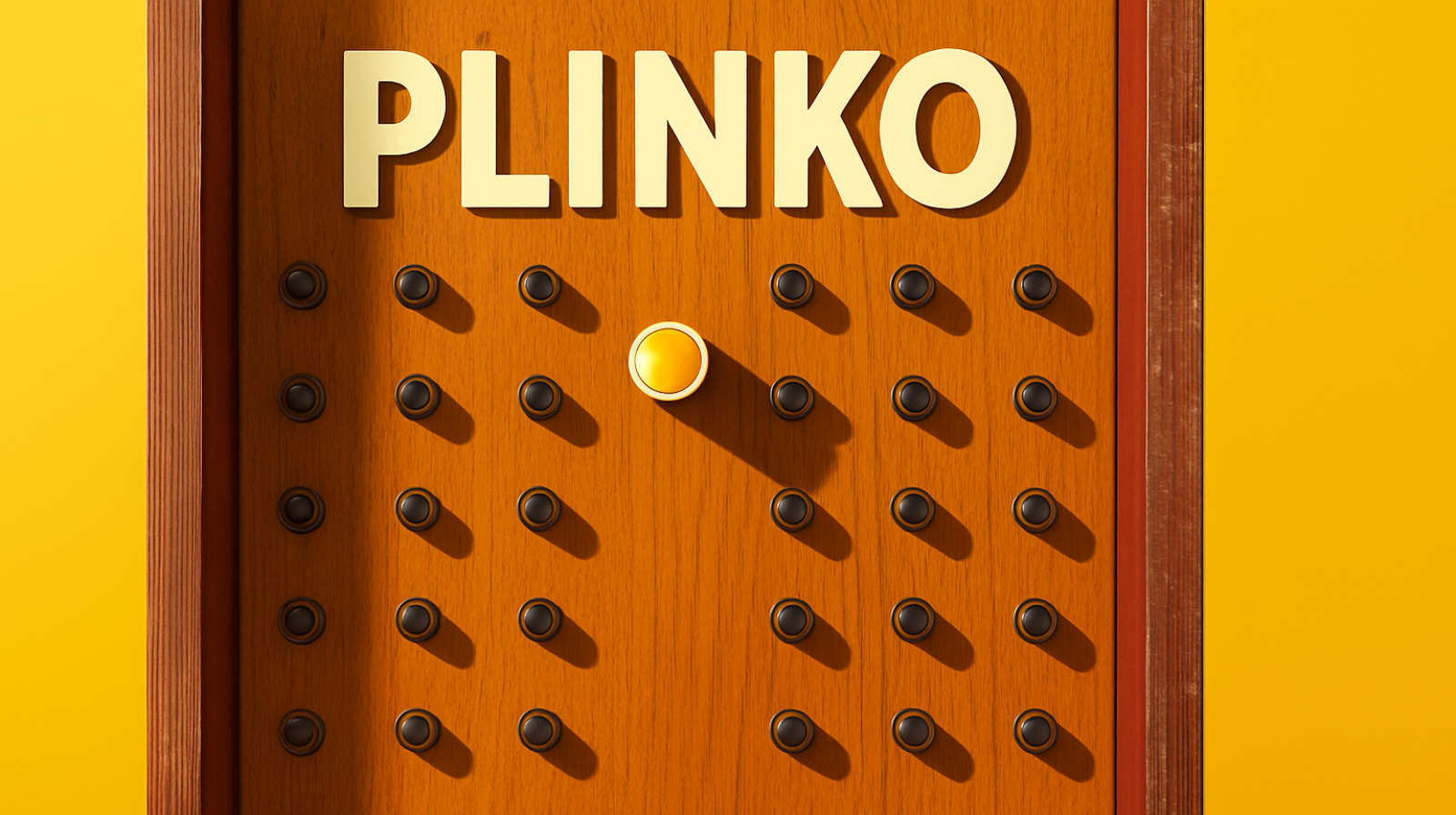
Classic vertical Plinko boards are the closest digital representation of traditional Plinko. They feature a single, fixed board with evenly spaced pegs arranged in a symmetrical pattern from top to bottom.
Traditional peg density defines this format. Pegs are distributed evenly, creating a balanced zigzag path as the object falls. The movement appears smooth and predictable in motion, even though the final landing position remains uncertain.
The multiplier distribution on classic boards is typically straightforward. Values are placed symmetrically along the bottom, often with lower values toward the center and higher values toward the edges. This layout emphasizes clarity and familiarity rather than complexity.
These boards are widely used because they are visually intuitive. Players can immediately understand how the game works without interpreting layered mechanics or changing layouts. As a result, classic vertical boards often serve as the baseline against which other Plinko variants are compared.
High-Risk / High-Variance Plinko Variants
High-risk Plinko variants are defined by extreme multiplier layouts and intentionally uneven value distribution. These designs emphasize contrast rather than balance.
In these variants, high-value landing zones are often placed at the far edges of the board or in narrowly defined positions. The surrounding areas are populated with significantly lower values, creating sharp outcome disparities.
Sparse high-value zones are a defining feature. The board may look similar to a classic Plinko layout, but the spacing and placement of multipliers create a much wider gap between common and rare outcomes. This structural choice increases outcome dispersion rather than changing how drops function.
These designs visually reinforce uncertainty. The board makes it obvious that certain outcomes are rare, not because of hidden mechanics, but because of visible layout choices. The entire experience is shaped by how values are positioned, not by how the ball moves.
Low-Variance Plinko Designs

Low-variance Plinko designs focus on compressed outcome ranges and visual consistency. Rather than emphasizing extreme differences between landing zones, these boards prioritize uniformity.
Narrow multiplier ranges are the most noticeable characteristic. The values at the bottom of the board differ only slightly from one another, reducing the visual contrast between outcomes.
These boards often produce frequent small outcomes, not because of altered mechanics, but because the layout minimizes extreme result zones. The object still travels through pegs in the same manner, but the landing zones themselves are designed to limit disparity.
Low-variance designs tend to feel smoother and more predictable in appearance. The visual experience reinforces stability, even though randomness still governs each drop. This design approach appeals to players who prefer consistency over dramatic swings, without introducing additional complexity.
Multi-Level or Expanding Plinko Boards
Multi-level and expanding Plinko boards introduce structural variation without altering the core Plinko mechanic. Instead of relying on a single static board, these designs evolve as play continues.
Dynamic layouts may include boards that change height, add rows of pegs, or modify landing zones between drops. The vertical drop remains central, but the environment shifts.
Some variants incorporate progressive difficulty structures, where later drops occur on larger or more complex boards. Peg density, board width, or multiplier positioning may change incrementally, creating a sense of progression.
Despite these changes, each drop still resolves independently. The progression is visual and structural, not cumulative. These designs add variety while preserving the single-input, outcome-driven nature of Plinko.
Multi-level boards appeal to players looking for extended visual engagement without transitioning into multi-stage gameplay.
Themed Plinko Games (Visual & Audio Layers)
Themed Plinko casino games apply cosmetic layers to the core Plinko structure without changing how outcomes are generated.
Cosmetic themes may include seasonal visuals, fantasy motifs, arcade-inspired designs, or branded aesthetics. Pegs, boards, and landing zones are reskinned to fit the theme, often accompanied by custom sound effects or animations.
It’s important to understand that themes do not affect mechanics. The peg layout, drop resolution, and outcome logic remain unchanged beneath the surface. Themes exist to enhance immersion and differentiate presentation, not to alter behavior.
Audio cues and visual effects can influence perception, making outcomes feel more dramatic or rewarding, but they do not introduce additional variables. The underlying structure remains consistent with non-themed versions.
Themed Plinko casino games demonstrate how flexible the format is visually, while reinforcing that Plinko’s identity is mechanical, not aesthetic.
Criteria for Evaluating the Best Free-To-Play Plinko Games
Not all free-to-play Plinko casino games are built with the same level of care. Some are clear, responsive, and informative, while others feel cluttered, confusing, or unpolished. To evaluate free Plinko casino games meaningfully, players need criteria that focus on design quality and usability, not outcomes.
This section establishes the core framework readers can use to judge whether a free-to-play Plinko game is well designed, regardless of theme or variant.
Board Design and Visual Clarity
Board design is the foundation of the Plinko experience. A well-designed board communicates how the game works at a glance, while a poorly designed one obscures important information.
Peg spacing visibility is critical. Pegs should be clearly separated and evenly displayed so players can visually follow the path of the drop. Overcrowded boards or poorly contrasted pegs make the animation harder to interpret, reducing clarity rather than enhancing randomness.
Multiplier readability is equally important. Landing zones should be clearly labeled, legible at all screen sizes, and visually distinct from one another. When multipliers are too small, overly stylized, or hidden behind effects, players lose transparency into how outcomes are structured.
Outcome transparency refers to how clearly the game communicates results. The final landing position should be obvious, with no ambiguity about which zone was reached. Visual effects should reinforce clarity, not distract from it. A strong Plinko design makes outcomes immediately understandable without explanation.
Responsiveness and Performance
Performance quality strongly affects how a Plinko game feels, even in free-to-play mode. Delays, stutters, or inconsistencies can undermine the experience and create confusion.
Drop animation smoothness matters because Plinko relies heavily on visual motion. Smooth, continuous animation helps the drop feel coherent, while choppy or inconsistent motion breaks immersion and can make outcomes feel unclear.
Input latency is another key factor. When there is a noticeable delay between initiating a drop and seeing the animation begin, the connection between action and result weakens. Even in free play, responsive input reinforces a sense of control and polish.
Mobile vs desktop stability is increasingly important. A well-built free Plinko game should perform consistently across devices. Layouts should adapt cleanly to smaller screens, animations should remain smooth, and interface elements should not overlap or become difficult to interact with on mobile devices.
Strong performance does not enhance outcomes, but it prevents unnecessary friction that can distort how the game is perceived.
Customization Options in Free Mode
Customization in free-to-play Plinko casino games serves an educational and experiential purpose rather than a strategic one. It allows players to explore how the game behaves under different configurations without consequences.
Adjustable rows are one of the most common customization options. Changing the number of rows alters the visual complexity of the board and exposes players to different drop paths. In free mode, this helps users understand how board structure influences the flow of the game.
Risk presets are often presented as selectable options that modify board layouts or multiplier distributions. In free play, these presets allow players to observe how different configurations look and behave, without attaching meaning to results.
Visual scaling options improve accessibility. Being able to zoom, resize, or clearly view the board ensures that players can follow the drop regardless of screen size or resolution. Good scaling enhances clarity without changing mechanics.
Customization should feel optional and intuitive. When it becomes confusing or excessive, it detracts from learning rather than supporting it.
Learning Value for New Players
One of the main reasons free-to-play Plinko casino games exist is to help players understand the format. Learning value is therefore a key quality marker.
Intuitive feedback helps players immediately understand what happened after each drop. Clear visual cues, consistent animations, and obvious landing zones reinforce comprehension without requiring instructions.
Clear cause-effect signaling is about coherence, not control. Even though the outcome is not influenced by the animation, the visual sequence should logically lead to the final result. When the path and landing feel disconnected, players struggle to interpret the experience.
Reduced cognitive load is essential for accessibility. A well-designed free Plinko game avoids unnecessary overlays, excessive effects, or distracting elements. By limiting visual noise, the game allows players to focus on understanding the core mechanic rather than decoding the interface.
High learning value does not mean oversimplification. It means presenting Plinko mechanics clearly enough that players can understand what they are seeing without effort.
Why Some Free Plinko Games Feel Better Than Others
Two free-to-play Plinko casino games can use the same mechanics and still feel completely different. This difference isn’t about outcomes or features — it comes from how the game communicates movement, timing, and resolution to the player. This section explains why some free Plinko casino games feel smoother, clearer, and more engaging than others, even when nothing fundamental has changed.
Visual Feedback and Perceived Fairness
Visual feedback plays a central role in how Plinko casino games are experienced. Because outcomes unfold through animation, the quality of that animation directly affects how trustworthy and coherent the game feels.
Smooth animations help the drop feel continuous and intentional. When the ball or token moves fluidly through the pegs, players can follow its path without distraction. In contrast, abrupt movements, skipped frames, or unnatural direction changes can make the outcome feel disconnected from the drop itself.
Immediate outcome clarity reinforces confidence in what just happened. A well-designed game makes it obvious where the object landed and which zone resolved the result. Clear highlighting, clean transitions, and consistent visual cues prevent ambiguity. When players don’t need to question the outcome, the experience feels more reliable — even though nothing about the mechanics has changed.
This sense of coherence is often interpreted as fairness, not because the game behaves differently, but because it communicates results cleanly.
Pace of Play and Engagement
The pace at which a Plinko game unfolds shapes how engaging it feels over time. Free-to-play environments amplify this effect because there is no external pressure guiding session length.
Round speed determines momentum. Drops that resolve too slowly can feel tedious, while overly rapid drops may feel mechanical or detached. A balanced pace allows players to observe the animation without feeling delayed.
Downtime perception matters just as much as actual speed. Transitional moments — loading delays, unnecessary animations, or pauses between drops — break flow. Even short interruptions can make a game feel less polished and reduce engagement.
Games that manage pacing well maintain a steady rhythm. Each drop begins promptly, resolves clearly, and transitions smoothly into the next, creating an experience that feels responsive rather than repetitive.
Sound Design and Sensory Reinforcement
Sound design is often underestimated in free-to-play Plinko casino games, yet it significantly influences how outcomes are perceived.
Audio cues help anchor attention. Subtle sounds during peg contact, landing, or resolution reinforce the visual experience and make each drop feel complete. When audio is synchronized with motion, it enhances coherence rather than distraction.
Reward signaling without real stakes is another key function of sound. Even in free play, audio effects signal completion and closure. A resolved drop feels final when sound and animation align, regardless of whether the outcome has real value.
Importantly, effective sound design avoids exaggeration. Overly dramatic audio can feel artificial in free play, while restrained cues support immersion without overstimulation.
Together, visuals, pacing, and sound determine whether a Plinko game feels refined or rough. These elements don’t change how the game works — they change how it’s experienced.
Using Free-To-Play Plinko Games as a Learning Tool
Free-to-play Plinko casino games are often dismissed as purely recreational, but they also serve a clear educational purpose. While they cannot replicate the emotional weight of real play, they provide a safe environment for observing how Plinko-style games behave over time. This section explains what free play can genuinely teach — and where its usefulness ends.
Understanding Board Behavior Over Time
Repeated play in a free environment allows patterns of behavior to become visible, even though individual outcomes remain unpredictable.
One such observation is outcome clustering. Over multiple drops, results often appear to group visually around certain areas of the board. These clusters do not indicate patterns or trends, but they help players see how randomness naturally produces uneven distributions in the short term.
Free play also increases visual exposure to randomness. Watching many drops unfold without interruption makes it easier to accept that outcomes vary widely without intention. Peg deflections, near-edge landings, and unexpected paths become familiar rather than surprising.
This extended exposure helps players separate expectation from observation. They learn what randomness looks like when expressed visually, rather than interpreting each drop as meaningful on its own.
Familiarity With Risk Settings Without Consequences
Many free-to-play Plinko casino games include adjustable settings that alter the board’s appearance or configuration. In a free environment, these options can be explored without pressure.
By observing distribution changes, players can see how different configurations affect where outcomes appear across the board. The structure remains consistent, but visual emphasis shifts, revealing how layout choices influence the overall experience.
Free play also allows for understanding extremes safely. Boards with wide value ranges or concentrated landing zones can be explored without attaching importance to results. This helps players recognize how visual extremes are presented, without internalizing them as signals or opportunities.
The absence of consequences makes experimentation informational rather than emotional. Players can focus on observation instead of reaction.
What Free Play Can Teach — and What It Can’t
Free-to-play Plinko casino games are effective at teaching mechanical familiarity. Players learn how the board is structured, how drops resolve, and how outcomes are visually communicated. This understanding reduces confusion and builds comfort with the format itself.
However, free play has clear limits as a simulation. It cannot replicate:
- The impact of outcomes on real balances
- Decision pressure tied to loss or gain
- The emotional weight of risk
Free play shows how the game operates, not how it feels when outcomes matter. Confusing these two leads to misplaced confidence or false assumptions.
Understanding both the value and the limits of free play ensures it is used intentionally — as a tool for observation, not a predictor of future results.
Common Mistakes Players Make With Free Plinko Games
Free-to-play Plinko casino games are useful for exploration and familiarity, but they also create misunderstandings when players treat free outcomes as meaningful indicators. These mistakes usually don’t come from ignorance — they come from misinterpreting what free play is designed to show. This section outlines the most common errors players make before transitioning away from free environments.
Assuming Free Results Predict Real Outcomes
One of the most frequent mistakes is believing that results seen in free play have predictive value.
Memory misleads because free play removes consequences. Wins feel frequent and losses feel irrelevant, which distorts recall. Players tend to remember standout drops or visually satisfying outcomes while ignoring the full sequence of results. Over time, this selective memory creates a false sense of consistency.
There is also a perception gap between demo and paid play. Even when mechanics are identical, the absence of real stakes changes how outcomes are experienced and remembered. Free results feel lighter and more repeatable, which can lead players to assume similar outcomes will feel just as manageable later.
Free play demonstrates structure, not expectation. Treating it as a preview of future results introduces assumptions that the game itself does not support.
Overconfidence From Risk-Free Play
Free play encourages experimentation, but it can also produce false comfort.
Because outcomes have no real impact, players may become accustomed to extended play without consequence. This creates the impression that unfavorable stretches are easy to tolerate or dismiss, even though that tolerance exists only because nothing is at stake.
This environment can also lead to misjudging volatility. Large swings or quiet stretches feel neutral in free play, making it difficult to appreciate how noticeable those same patterns would feel when outcomes matter. Without pressure, extremes seem less extreme.
Overconfidence doesn’t come from success — it comes from the absence of cost. When free play is mistaken for resilience, expectations become misaligned.
Ignoring Structural Differences When Switching Modes
Another common mistake is overlooking how the context of play changes when transitioning away from free environments.
Speed changes are often subtle but impactful. Free games may encourage rapid, uninterrupted drops, while other environments introduce friction through confirmations, transitions, or interface differences. These changes alter pacing and attention.
There are also decision pressure differences. In free play, continuing or stopping carries no weight. When outcomes matter, even identical mechanics feel different because decisions now have consequences. This shift affects focus, patience, and interpretation.
Players who assume the experience will feel the same often underestimate how context reshapes perception. The mechanics do not change — but the environment does.
Are Free-To-Play Plinko Games Worth Playing Long-Term?
Free-to-play Plinko casino games are easy to access and simple to understand, which makes them appealing well beyond a first encounter. However, long-term value depends on why someone continues to play. This section looks at free Plinko casino games from a retention and usefulness perspective, separating entertainment from practical benefit.
Entertainment Value vs Practical Use
As entertainment, free-to-play Plinko casino games hold clear appeal. The visual drop, instant resolution, and clean presentation make them easy to return to for short, casual sessions. There’s no setup, no commitment, and no friction — which suits light, distraction-free play.
That appeal, however, has limits tied to repetition. Because Plinko relies on a single core mechanic, extended play eventually becomes familiar. Once the novelty of the board and animations fades, free play offers fewer new experiences unless the game introduces visual or structural variation.
From a practical standpoint, free play is most useful early on. It provides exposure and understanding, but it does not continuously add new information. Over time, the value shifts from learning to pure entertainment. Whether that’s enough depends on the player’s expectations.
Who Free Plinko Games Are Best Suited For?
Free-to-play Plinko casino games are not universally valuable for all users, but they serve specific audiences very well.
They are particularly suited for beginners who want to understand what Plinko-style games look and feel like without pressure. Free play removes barriers and allows exploration without commitment.
They also appeal to casual users who treat Plinko as a visual pastime rather than a focused activity. For these players, repetition is less of a drawback because sessions are short and infrequent.
Exploratory players benefit from free play as well. Those who enjoy examining different layouts, themes, or board variations can use free versions to satisfy curiosity without consequences.
For these groups, free Plinko casino games remain enjoyable even when practical learning has plateaued.
When Free Play Stops Being Useful?
Free play reaches a plateau point when exposure no longer adds understanding. Once players are familiar with how boards behave, how outcomes resolve visually, and how variations differ structurally, repeated play stops offering new insight.
At this stage, diminishing learning returns become noticeable. Drops feel interchangeable, outcomes blend together, and sessions provide little beyond momentary distraction.
This does not mean free play loses all value — only that its role changes. What was once informative becomes purely recreational. Recognizing this shift helps players decide whether they are playing for enjoyment or out of habit.
Understanding when free play has served its purpose allows it to be used intentionally rather than passively.
The Future of Free-To-Play Plinko Games in Online Casinos
Free-to-play Plinko casino games have already moved beyond novelty status. As online casinos continue refining user experience and onboarding flows, free Plinko formats are evolving into more deliberate tools rather than simple demos. This section explores how free Plinko games are likely to change in structure, social integration, and platform positioning.
Increasing Complexity in Board Design
Early free-to-play Plinko casino games focused on simplicity and familiarity. Future designs are likely to introduce greater structural complexity without abandoning the core Plinko mechanic.
Adaptive layouts are one area of development. Boards may change shape, size, or peg configuration dynamically, creating visual variation across sessions without altering the single-drop resolution model. These adaptations can refresh the experience while preserving mechanical clarity.
Another direction is deeper visual simulation. Enhanced animations, layered depth effects, and more realistic motion modeling can make drops feel richer and more engaging. These improvements are visual rather than functional, designed to increase immersion without changing how outcomes are generated.
The goal of increased complexity is not to add difficulty, but to extend visual interest and reduce repetition in long-term free play.
Social and Competitive Free Play Models
Free-to-play environments are increasingly being shaped by social interaction, and Plinko is well suited to this shift due to its simplicity and visual clarity.
Leaderboards are one emerging feature. These may track activity, participation, or non-monetary achievements rather than results. In free play, leaderboards function as engagement tools rather than competitive measures tied to value.
Another concept is shared boards, where multiple users observe or interact with the same visual environment. While each drop still resolves independently, shared visibility creates a communal experience. Watching outcomes unfold together adds a social layer without introducing direct competition or financial stakes.
These models transform free Plinko from a solitary activity into a shared one, increasing time spent and return visits without altering mechanics.
The Role of Free Plinko in Casino Onboarding
As online casinos refine acquisition and retention strategies, free-to-play Plinko casino games are becoming more central to onboarding design.
In terms of funnel positioning, free Plinko often appears early in the user journey. It provides immediate interaction without requiring decisions, learning, or commitment. This makes it effective as a first-touch experience.
There is also a shift toward education-first design. Free Plinko casino games are increasingly framed as learning environments rather than promotional tools. Clear interfaces, explanatory overlays, and guided exposure help users understand the format without pressure.
This approach benefits both players and platforms. Players gain clarity and confidence, while platforms establish trust and familiarity before introducing more complex experiences.
As onboarding becomes more experience-driven, free-to-play Plinko casino games are likely to remain a key entry point — not as simplified versions of casino games, but as intentional, standalone experiences.
Final Thoughts — Enjoying Plinko Without Financial Pressure
Free-to-play Plinko casino games occupy a unique space within online casinos. They are neither simplified novelties nor substitutes for real-money play. Instead, they function as experiences in their own right — blending visual entertainment with an opportunity to understand how Plinko-style games are structured and presented.
As entertainment, free Plinko offers immediacy and accessibility. There is no commitment required, no barrier to entry, and no consequence attached to outcomes. This makes it easy to enjoy the visual flow of the game without distraction. For many players, that simplicity is the appeal. A few drops can provide a complete experience without the need for extended engagement.
At the same time, free play offers educational value when used deliberately. It allows players to observe board layouts, outcome presentation, and pacing in a way that feels natural rather than instructional. This exposure builds familiarity without pressure — but only up to a point. Understanding where free play ends is just as important as recognizing what it provides.
Free Plinko cannot replicate the weight of real outcomes, nor is it meant to. Its value lies in clarity, not consequence. When players expect more from free play than it can offer, disappointment or false assumptions tend to follow.
Using free Plinko intentionally means recognizing its role. It can be a space for casual enjoyment, exploration, or learning — but not a predictor or rehearsal for future results. Approached with clear expectations, free-to-play Plinko casino games remain one of the most approachable and visually engaging formats available online, precisely because they remove financial pressure from the experience.